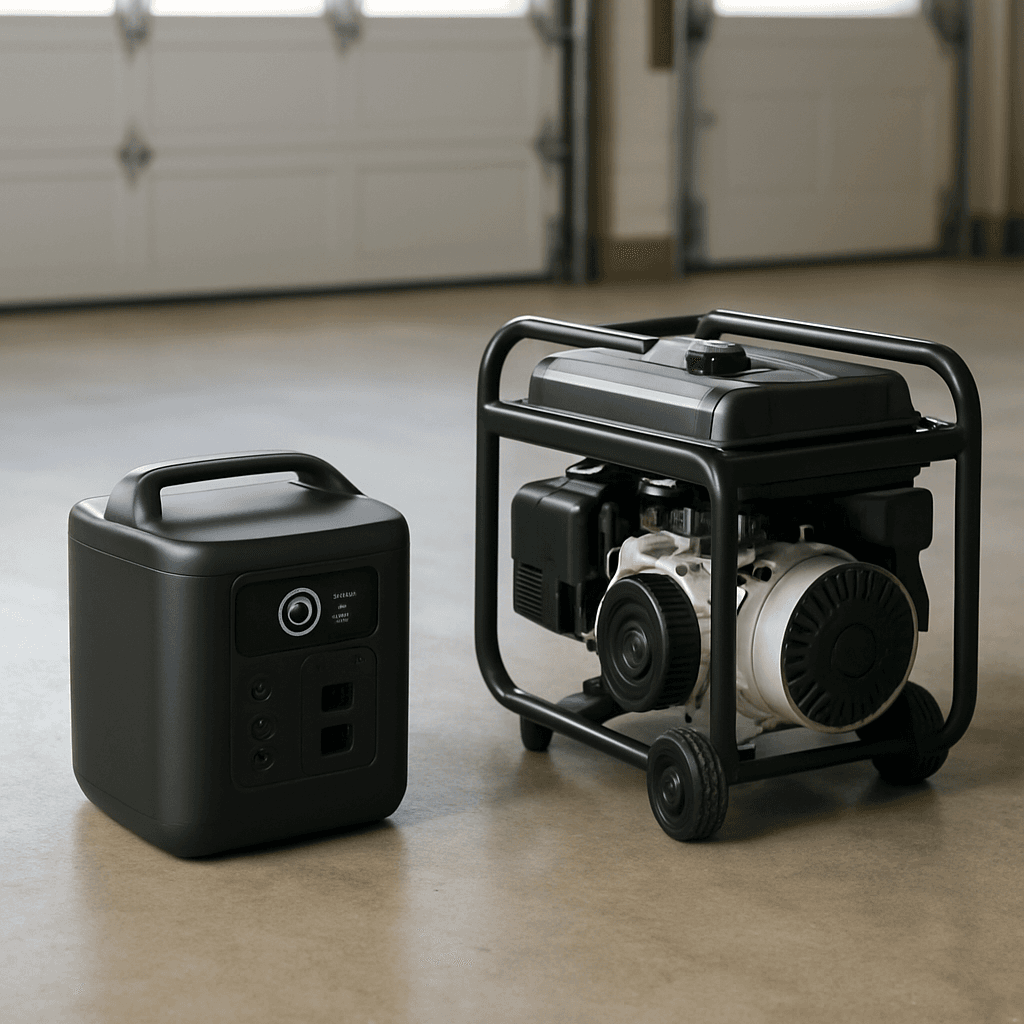
Portable Power Station vs Gas Generator: Which Is Better?
For home backup power, the classic choice used to be a gas generator by default. Portable power stations now offer a genuine alternative — but each has real tradeoffs depending on your situation. If you're also weighing a fixed whole-home battery system against either option, see our portable power station vs. whole-home battery comparison.
Head-to-Head Comparison
| Factor | Portable Power Station | Gas Generator |
|---|---|---|
| Runtime | Limited by battery capacity; recharge via AC/solar/car | Unlimited, as long as fuel supply lasts |
| Indoor use | Safe — zero emissions | Never safe indoors — carbon monoxide risk |
| Noise | Silent or near-silent | Loud (60-90 dB typical) |
| Setup complexity | Plug and play | Requires fuel storage, occasional maintenance |
| Upfront cost | $400-2,000+ depending on capacity | $400-1,500+ depending on output |
| Ongoing cost | Minimal (electricity to recharge) | Fuel costs, which spike during emergencies |
| Best for | Short-to-medium outages, medical equipment, indoor use | Extended multi-day outages with reliable fuel access |
Where Power Stations Win
Zero emissions and indoor safety is the single biggest advantage — a power station can sit in your living room or bedroom running a CPAP machine (see our CPAP power outage guide) with zero carbon monoxide risk. They're also silent, require no fuel storage, and need essentially no maintenance.
Where Gas Generators Win
Unlimited runtime as long as fuel is available is the core generator advantage — for extended multi-day outages where recharging a power station isn't practical, a generator with a stocked fuel supply keeps running indefinitely. Generators also typically offer higher continuous output at a lower upfront cost per watt for whole-home coverage.
The Real-World Answer: Many Households Use Both
Increasingly, the smartest approach isn't choosing one exclusively — a power station covers quiet, indoor-safe, immediate backup for medical equipment and essentials, while a generator (used safely outdoors, following all ventilation guidance) handles extended high-draw needs like a well pump or central systems. During a hurricane or extended grid failure, this combination avoids the single point of failure that either option has alone.
Cost Over Time
A power station's ongoing cost is minimal (just electricity to recharge, or free if using solar), while a gas generator's fuel costs compound over an extended outage — and fuel often becomes scarce or price-gouged immediately after a major storm, precisely when you need it most. See our full cost breakdown for the exact per-kWh math.
Frequently Asked Questions
Can a power station replace a generator entirely?
For most households running essentials (fridge, medical equipment, lighting, device charging), yes — a properly sized power station covers this without a generator. For whole-home coverage including central AC, electric ranges, or well pumps over an extended period, a generator or larger fixed battery system is usually still necessary.
Is it safe to run a gas generator during a hurricane?
Only outdoors, at least 20 feet from any structure, with the exhaust pointed away from windows and doors — never indoors or in a garage, even with the door open, due to carbon monoxide risk. See our full hurricane preparedness checklist for complete safety guidance.
Related Articles
 Comparisons & Buying Guides
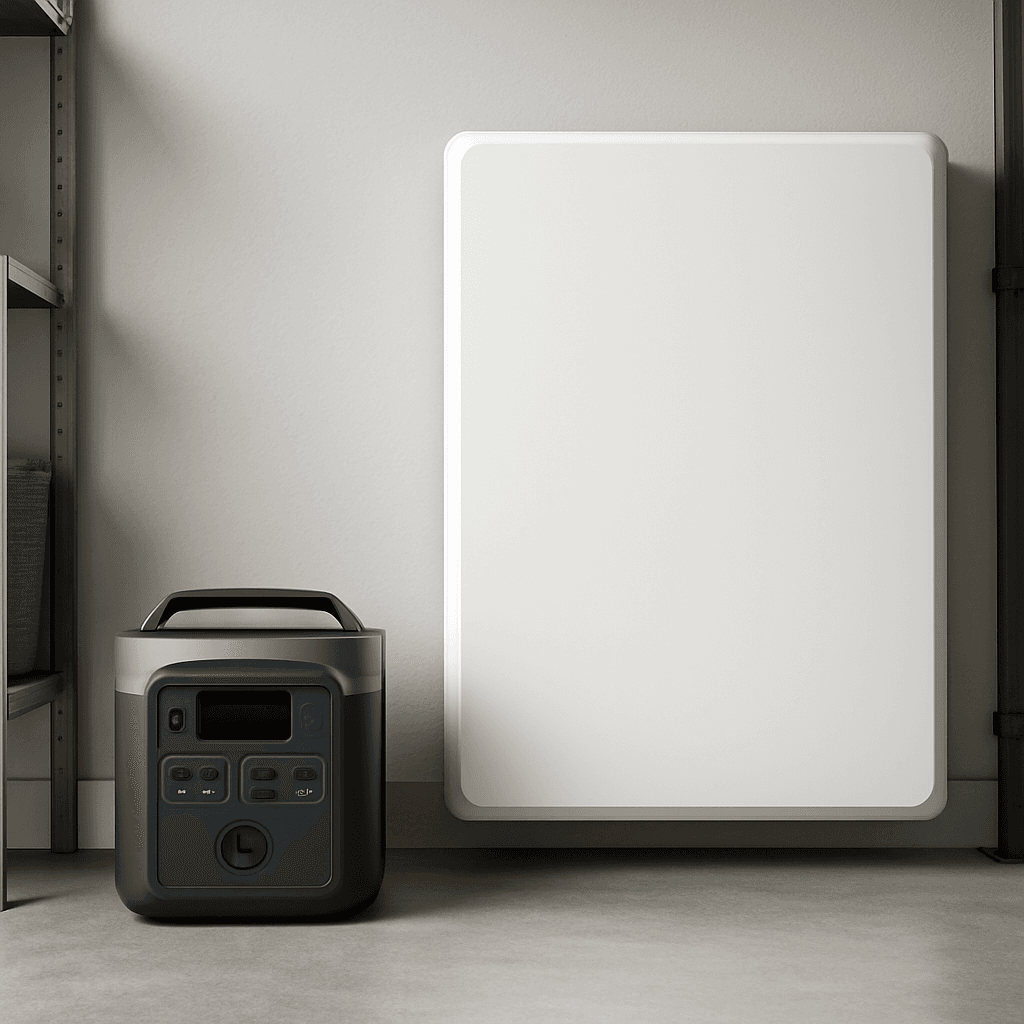
Portable Power Station vs. Whole-Home Battery System: Which Do You Actually Need?
A Tesla Powerwall costs $11,500-$16,000+ installed. A portable power station covers most of the same essentials for a fraction of that. Here's how to actually decide.
 Comparisons & Buying Guides
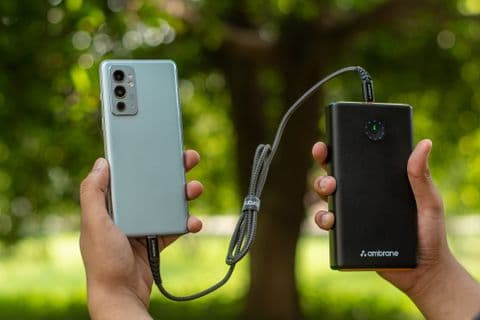
Power Bank vs. Power Station: What's the Real Difference?
They both store and dispense electricity, but a power bank and a power station aren't interchangeable. Here's what actually separates them and which one you need.
 Comparisons & Buying Guides
Can You Rent a Portable Power Station Instead of Buying One?
Renting is a real option if you only need backup power for a single trip or event. Here's where to actually rent one, real costs, and when renting beats buying.