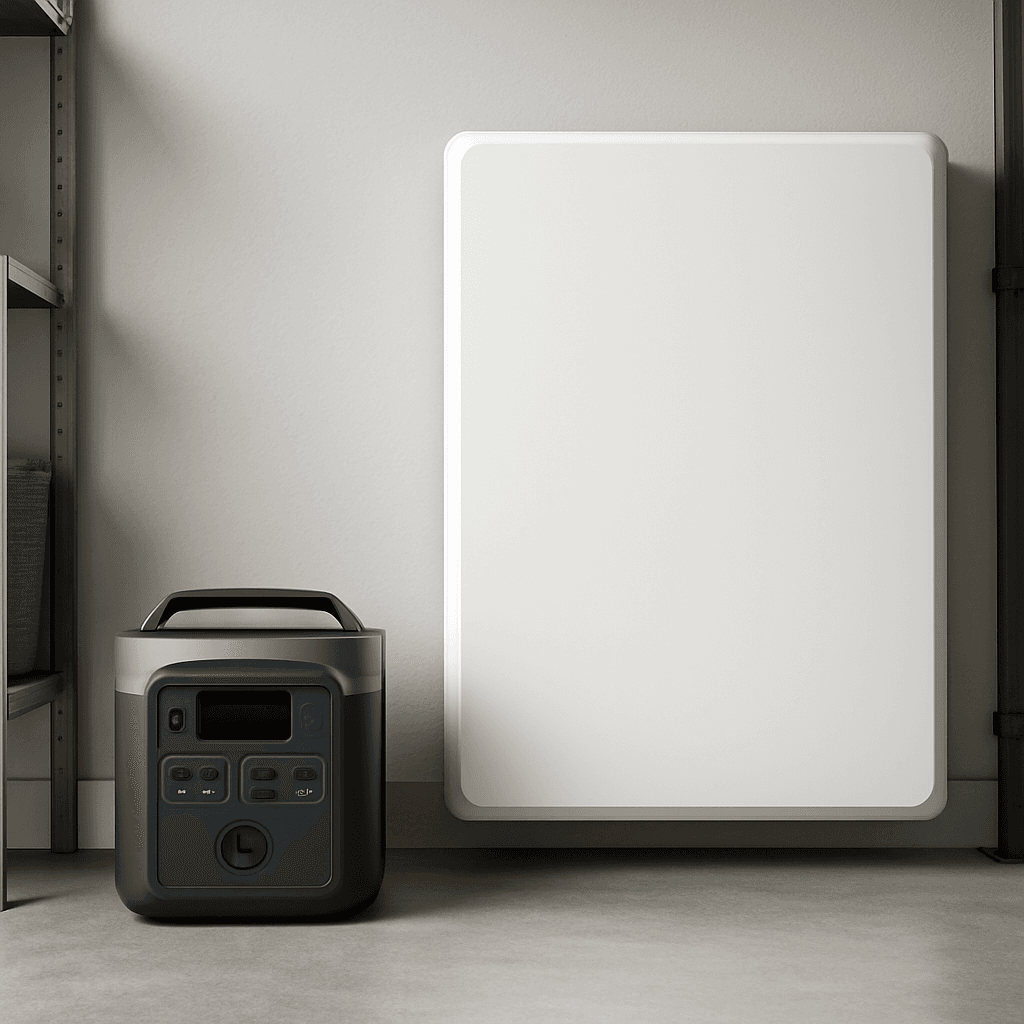
Portable Power Station vs. Whole-Home Battery System: Which Do You Actually Need?
For most households, a portable power station covers 80-90% of what a whole-home battery system does, at roughly 20-30% of the cost. The right choice depends on whether you need to run your entire house through an outage or just the essentials — here's how to tell which one is actually you.
The Core Difference
| Portable Power Station | Whole-Home Battery (e.g. Tesla Powerwall) | |
|---|---|---|
| Typical cost | $500–$2,500 | $11,500–$16,000+ installed |
| Installation | Plug-and-play, no electrician | Professional installation required |
| Capacity | 250Wh–4,000Wh+ (expandable on some models) | ~13.5kWh per unit, stackable |
| Coverage | Essentials you choose (fridge, medical equipment, lights, devices) | Whole-home circuits, automatically |
| Portability | Fully portable | Fixed, wall-mounted |
| Switchover during an outage | Manual (plug devices in) | Automatic, often under a second |
What a Whole-Home Battery Actually Buys You
The premium isn't really about raw capacity — it's about automation and integration. A system like a Tesla Powerwall wires directly into your home's electrical panel, switches over automatically when the grid drops (no plugging anything in), and can power your whole house, including central HVAC, without you doing anything. For households that want zero-effort backup and can afford the installed cost, that's a real advantage a portable unit can't fully replicate.
What a Portable Power Station Actually Buys You
You give up automation, but you keep flexibility: no electrician, no permanent installation, and the same unit can go camping, ride in your car, or move with you if you relocate. Modern expandable units — the EcoFlow Delta Pro 3 or EcoFlow Delta Pro Ultra, for example — can scale from a few kWh up into whole-home-adjacent territory, blurring the line between the two categories, though at that scale you're approaching similar installation complexity and cost to a dedicated home battery.
The Real Question: What Are You Actually Trying to Cover?
- Fridge, medical equipment, Wi-Fi, phone charging, some lighting — a portable power station in the 1,000–2,000Wh range handles this comfortably. See our wattage sizing guide to get your exact number.
- That plus central AC/heat, well pump, and running your whole house without thinking about it — this is where a whole-home battery system, or an expanded system like the Delta Pro Ultra with a Smart Home Panel, starts to make more sense.
- Somewhere in between, and you're not sure yet — a portable unit is the lower-risk starting point. You can always upgrade to whole-home later; going the other direction (already having a $15,000 fixed installation and deciding you only needed the essentials) isn't really reversible.
Cost Per Watt-Hour, Roughly
A whole-home battery like a Tesla Powerwall 3 (~13.5kWh, installed) works out to roughly $850–$1,200 per kWh once you include installation. A portable power station in the 2,000Wh class typically costs $400–$900, or roughly $200–$450 per kWh — meaningfully cheaper per unit of stored energy, though you're paying for automation and whole-home integration with the pricier option, not just raw storage.
Who Should Actually Consider a Whole-Home System
If you have critical continuous medical equipment that can't tolerate any switchover gap, live somewhere with frequent multi-day outages, or simply want to never think about backup power again and have the budget for it, a whole-home system is a legitimate choice — just go in knowing you're paying a real premium for automation and integration, not just extra capacity.
Frequently Asked Households Actually Ask
Can I just buy a portable power station and add capacity later instead of a whole-home system?
Yes, for expandable models — see our expandable capacity power stations guide. This is a reasonable middle path if you're not ready to commit to a whole-home installation but want room to grow.
Does a portable power station need an electrician to install?
No — that's one of its main advantages. You plug devices directly into it. A whole-home battery system, by contrast, requires professional electrical installation to integrate with your home's panel.
Is a whole-home battery system worth it just for occasional short outages?
Usually not on cost alone — if your outages are infrequent and brief, a portable power station covers the same essentials at a fraction of the cost. Whole-home systems make more sense for frequent, extended, or medically critical backup needs.
Related Articles
 Comparisons & Buying Guides
Power Bank vs. Power Station: What's the Real Difference?
They both store and dispense electricity, but a power bank and a power station aren't interchangeable. Here's what actually separates them and which one you need.
 Comparisons & Buying Guides
Can You Rent a Portable Power Station Instead of Buying One?
Renting is a real option if you only need backup power for a single trip or event. Here's where to actually rent one, real costs, and when renting beats buying.
 Comparisons & Buying Guides
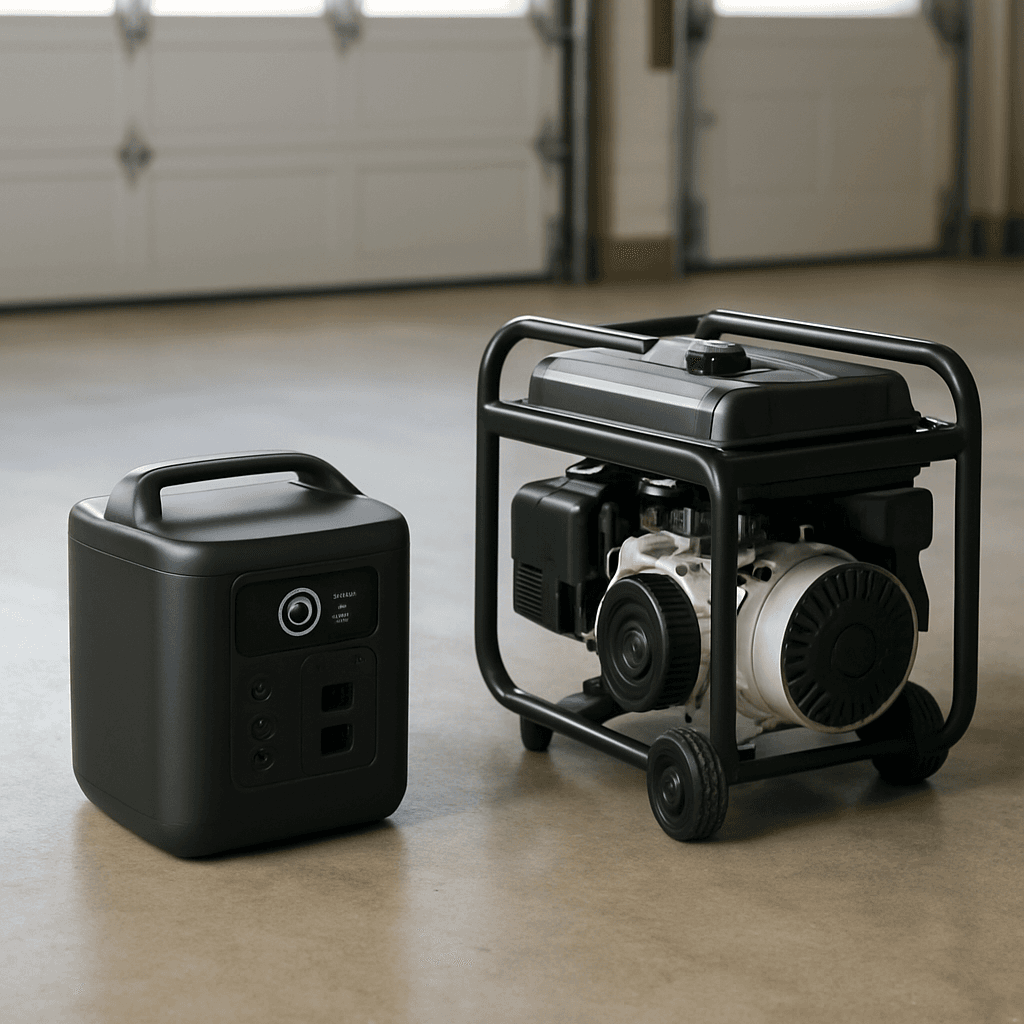
Portable Power Station vs Gas Generator: Which Is Better?
Power stations and gas generators solve the same problem differently. Here's an honest comparison of cost, runtime, noise, safety, and maintenance.