Best Power Station With Expandable Battery Capacity
Expandable power stations solve a real problem: you don't always know how much capacity you'll need long-term when you're making your first purchase. Starting with a base unit and adding capacity later avoids both overbuying upfront and being stuck with too little down the line.
How Expansion Ecosystems Work
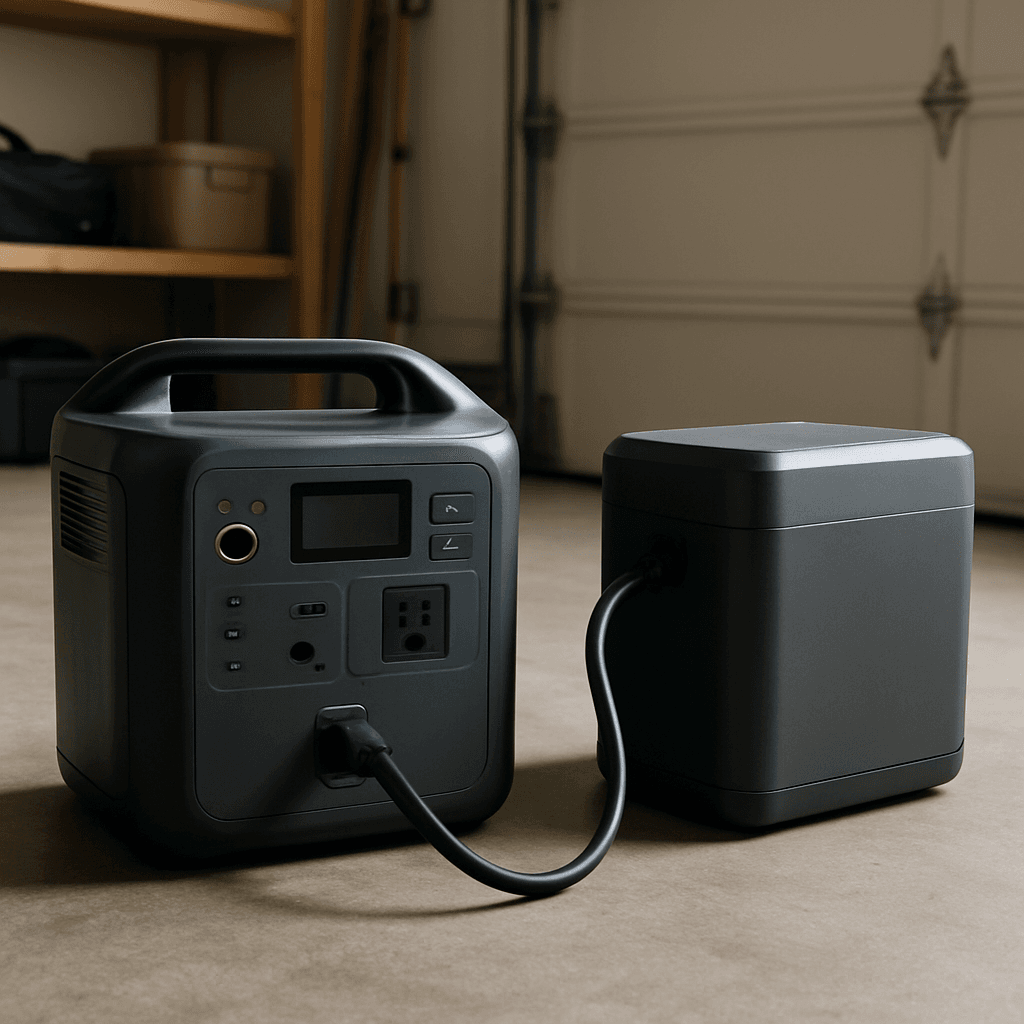
Each brand's expansion batteries are purpose-built to pair with specific base units, adding capacity (and sometimes just capacity, not output) without requiring you to replace the whole system. Expansion batteries are typically not usable standalone — they need to be paired with a compatible base unit.
Our Top Picks by Expansion Ceiling
Jackery Explorer 2000 Plus — starts at 2,042Wh, expands to 12kWh with up to 5 battery packs. The highest expansion ceiling on this list, putting it in genuine whole-home-scale territory.
EcoFlow Delta 2 Max — starts at 2,048Wh, expands to 6,144Wh. A strong middle ground, with EcoFlow's typically fast charging carried through the expanded system.
Bluetti Elite 200 V2 — starts at 2,073.6Wh, expands to 8,192Wh, combined with an industry-leading ~6,000-cycle battery rating for long-term durability even under heavy expanded use.
For buyers who want to go well beyond these ceilings, the EcoFlow Delta Pro Ultra scales from 6kWh to 90kWh with a Smart Home Panel, and the Point Zero Energy Titan takes a fully modular, user-serviceable approach for buyers who want direct control over their expansion path.
Expansion Ceiling Comparison
| Model | Base Capacity | Max Expanded Capacity |
|---|---|---|
| Jackery Explorer 2000 Plus | 2,042Wh | 12,000Wh (12kWh) |
| Bluetti Elite 200 V2 | 2,073.6Wh | 8,192Wh |
| EcoFlow Delta 2 Max | 2,048Wh | 6,144Wh |
Should You Buy Into an Expandable System From the Start?
If there's a real chance you'll need more capacity within a year or two — a growing household, moving toward full-time RV or off-grid living, or building out whole-home backup gradually — starting with an expandable base unit avoids replacing your whole system later. If your needs are well-defined and unlikely to grow (e.g., dedicated CPAP backup, weekend camping only), a fixed-capacity unit is usually more cost-effective since you're not paying for unused expansion infrastructure.
Cost of Expansion Batteries
Expansion batteries typically cost proportionally similar to (or sometimes slightly more per watt-hour than) the base unit, so budget accordingly rather than assuming expansion is a minor add-on cost — it's closer to buying a second unit's worth of capacity each time you expand.
Frequently Asked Questions
Can I mix expansion batteries from different brands?
No — expansion batteries are brand- and often model-specific, designed to pair with a particular base unit's charging and battery management system. You can't mix Jackery, EcoFlow, and Bluetti expansion components.
Do expansion batteries also increase output (watts), or just capacity (watt-hours)?
This varies by brand and model — some expansion systems increase both capacity and continuous output, while others only add capacity. Check the specific base unit's expansion specs before assuming both will scale together.
Related Articles
 Comparisons & Buying Guides
Portable Power Station vs. Whole-Home Battery System: Which Do You Actually Need?
A Tesla Powerwall costs $11,500-$16,000+ installed. A portable power station covers most of the same essentials for a fraction of that. Here's how to actually decide.
 Comparisons & Buying Guides
Power Bank vs. Power Station: What's the Real Difference?
They both store and dispense electricity, but a power bank and a power station aren't interchangeable. Here's what actually separates them and which one you need.
 Comparisons & Buying Guides
Can You Rent a Portable Power Station Instead of Buying One?
Renting is a real option if you only need backup power for a single trip or event. Here's where to actually rent one, real costs, and when renting beats buying.