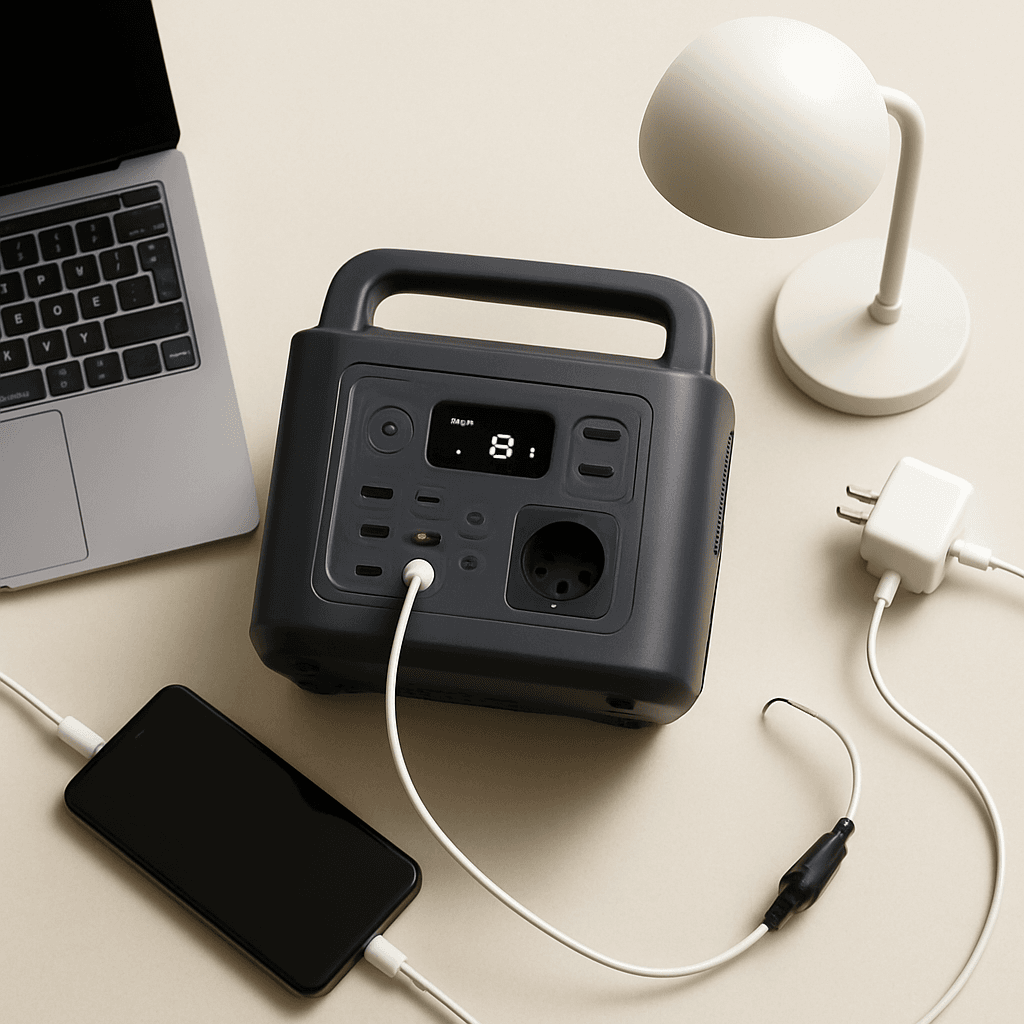
How Many Watts Do You Need? Power Station Sizing Calculator Guide
Most single-use needs fall into a predictable range: under 200Wh for phone charging, 200–500Wh for weekend camping, 1,000–2,000Wh for van life or CPAP-plus-fridge backup, and 2,000–3,000Wh+ for a multi-day home outage. The exact number comes from multiplying each device's watts by hours of use — see the formula below. Buying a portable power station without knowing your actual wattage needs is the single most common (and most expensive) mistake shoppers make. Buy too small and your fridge shuts off mid-outage. Buy too big and you've overpaid by hundreds of dollars for capacity you'll never use. This guide walks through the exact calculation professionals use, so you can size your power station with confidence. Want the math done for you? Try our runtime calculator.
The Two Numbers That Actually Matter
Every power station is sold with two specifications, and confusing them is where most buyers go wrong:
- Watts (W) — how much power a device draws at any given instant. This determines whether the power station can run a device at all.
- Watt-hours (Wh) — the total energy stored in the battery. This determines how long the power station can run that device before it dies.
Think of watts as the size of the pipe and watt-hours as the size of the tank. For a deeper breakdown of this distinction, see our guide on watt-hours vs. watts, and our power station ports explained guide if you're also trying to figure out which output port fits which device.
Step 1: List Every Device You Need to Power
Start with a simple inventory. Common household and outdoor devices draw roughly the following continuous wattage (check the label on your specific device for exact numbers, since wattage varies by model). If a label only lists volts and amps instead of watts, use our watts to amps calculator to convert it.
| Device | Typical Running Watts | Startup Surge |
|---|---|---|
| LED light / phone charger | 5–15W | Negligible |
| Laptop | 60–90W | Negligible |
| Wi-Fi router | 10–20W | Negligible |
| CPAP machine (no humidifier) | 30–60W | Negligible |
| Mini fridge | 60–100W | 2–3x running watts |
| Full-size refrigerator | 150–400W | 3–5x running watts |
| Space heater | 750–1,500W | Negligible |
| Window AC unit | 500–1,200W | 2–3x running watts |
| Sump pump | 800–1,300W | 3–5x running watts |
| Microwave | 600–1,200W | Negligible |
Motors and compressors (fridges, pumps, AC units) briefly draw several times their running wattage the instant they switch on. Your power station's peak/surge rating — not just its continuous rating — needs to cover this spike, or the unit will trip and shut off.
Step 2: Add Up Your Wattage (For the "Can It Run This" Question)
Add the running watts of everything you plan to use simultaneously. If you'll run a mini fridge (80W) and a few LED lights (30W) and charge a laptop (75W) at the same time, that's 185W of continuous draw — comfortably within even an entry-level power station's output rating. Compare that total against the power station's continuous output (W) spec, and add roughly 20% headroom as a safety margin.
Step 3: Calculate Watt-Hours Needed (For the "How Long" Question)
Multiply each device's running watts by the number of hours you need it to run, then add it all up:
Watt-hours needed = Watts × Hours of use
Example: powering a mini fridge (80W) for 24 hours during an outage needs 80 × 24 = 1,920Wh. Add a few phone charges (20Wh each) and some LED lighting for 6 hours (30W × 6 = 180Wh), and you're looking at roughly 2,150Wh of total daily energy need — which is why most serious home-backup buyers land in the 2,000Wh+ class, like the EcoFlow Delta 2 Max.
Real-World Sizing by Use Case
- Weekend camping (lights, phone charging, small fan): 200–500Wh is usually enough.
- Van life / RV daily living (fridge, laptop, lights, CPAP): 1,000–2,000Wh, ideally with solar input.
- CPAP backup for a single night: 300–600Wh, depending on humidifier use — see our dedicated CPAP power outage guide.
- Multi-day home outage (fridge + essentials): 2,000–3,000Wh, or an expandable system.
- Whole-home backup (fridge, well pump, some HVAC): 3,000Wh+ with expansion batteries or a dedicated home backup unit.
- Holiday lighting off-grid (Christmas lights, no outlet access): Usually under 300Wh — see our powering Christmas lights off-grid guide for the specific calculation.
For hurricane or winter-storm scenarios where the outage could last multiple days, also check our Hurricane Preparedness Checklist for a full essentials list beyond just the power station itself.
Quick Reference: Capacity by Scenario
The short answer, before the math: most single-purpose needs fall into one of these ranges.
| Scenario | Recommended Capacity |
|---|---|
| Phone/device charging only | Under 200Wh |
| Weekend camping | 200–500Wh |
| CPAP backup, no humidifier | 300–600Wh |
| Van life / RV daily living | 1,000–2,000Wh |
| Multi-day home outage (fridge + essentials) | 2,000–3,000Wh |
| Whole-home backup | 3,000Wh+ or expandable system |
Use this table as a starting point, then run the actual calculation in Steps 1–3 above for your specific devices — general ranges can't account for exactly what you're running.
Don't Forget Recharging
Sizing isn't just about the battery — it's also about how you'll refill it during an extended outage. If you're planning to recharge via solar, oversize your battery slightly, since real-world solar input is rarely as fast as the marketing numbers suggest on cloudy days.
Frequently Asked Questions
Is it better to buy a bigger power station than I need?
A moderate buffer (20–30% above your calculated need) is smart, since real-world efficiency losses and battery aging reduce usable capacity over time. But doubling your calculated need just "to be safe" usually just means overpaying — an expandable system is a better hedge if your needs might grow.
Does cold weather affect how many watt-hours I actually get?
Yes. Lithium batteries lose usable capacity in cold temperatures, so if you're sizing for winter storm outages, add extra buffer or keep the unit in a heated space when possible.
Related Articles
 Solar & Technical Guides
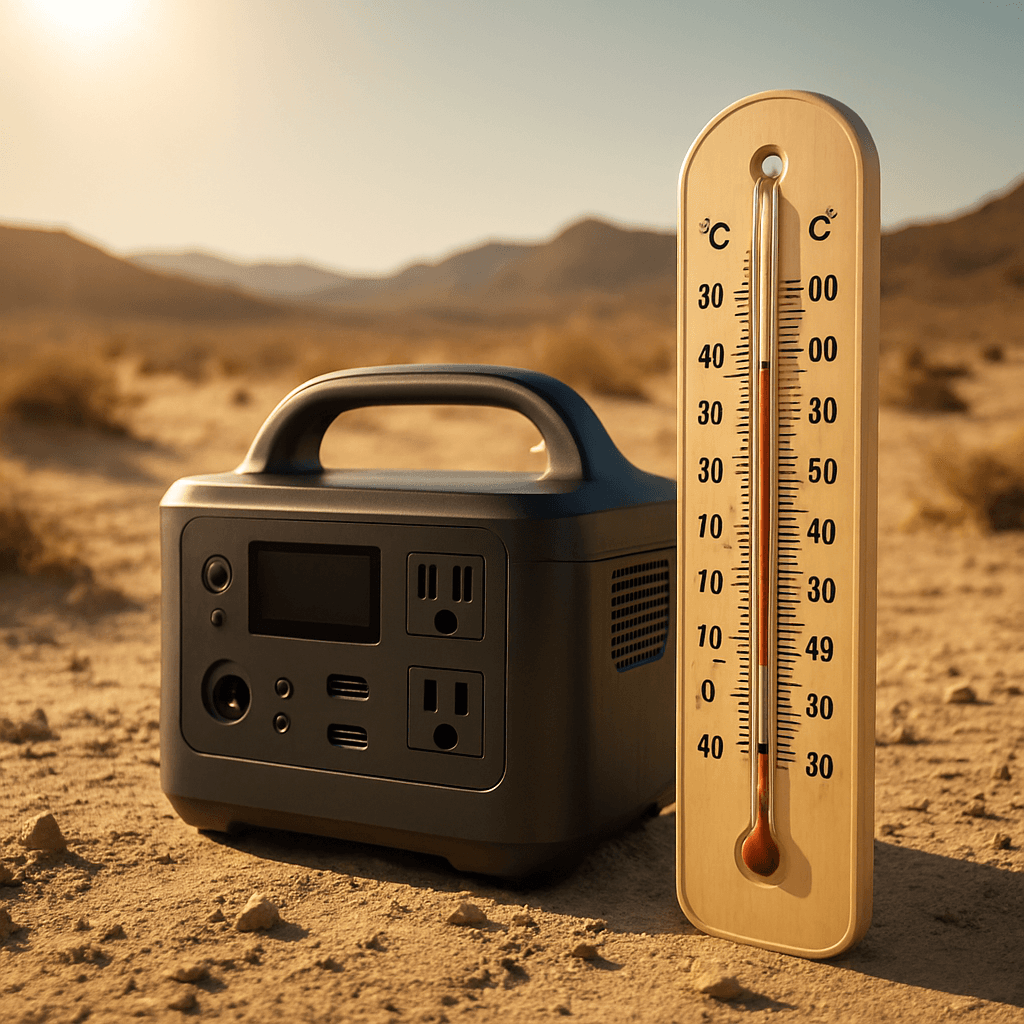
How Extreme Heat Affects Your Power Station (And What Desert Climates Need to Know)
Sustained heat above 113°F can cut a power station's usable lifespan roughly in half. Here's the real degradation math and what to actually do about it in hot climates.
 Solar & Technical Guides
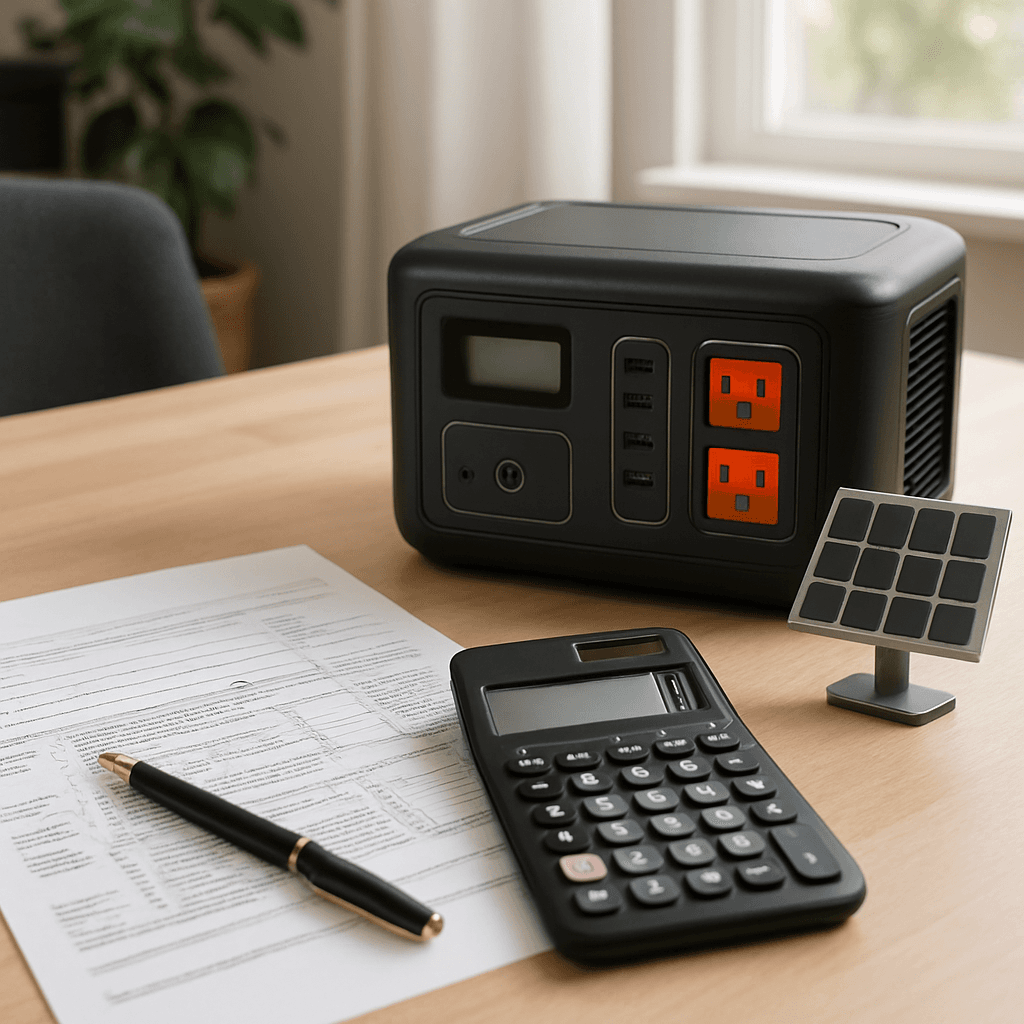
Do Portable Power Stations Qualify for Tax Credits or Rebates?
Most portable power stations don't qualify for the federal battery tax credit — here's why, which setups actually might, and where state and utility rebates can still help.
 Solar & Technical Guides
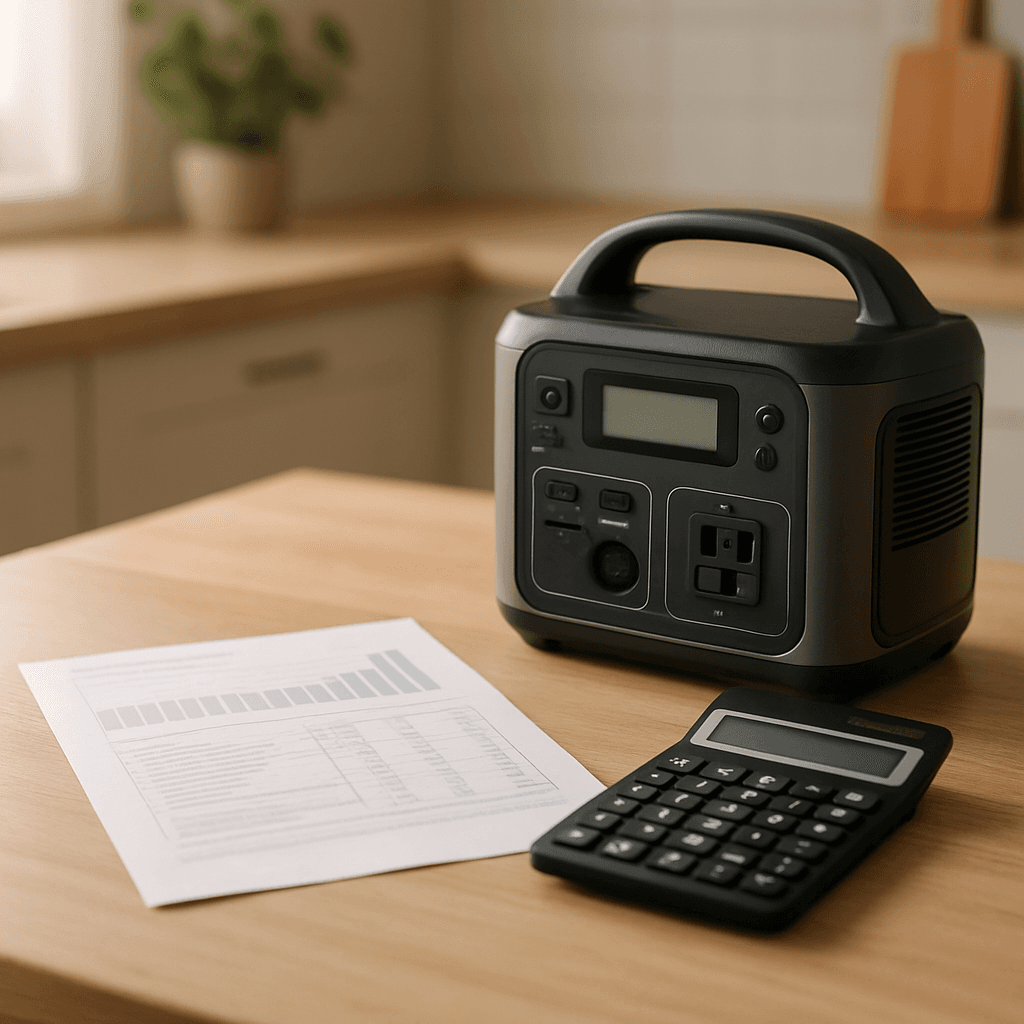
How Much Does It Actually Cost to Run a Power Station vs. Grid Electricity?
A power station doesn't generate cheaper electricity — it stores grid or solar power for later. Here's the honest math on what that actually costs you per kWh.