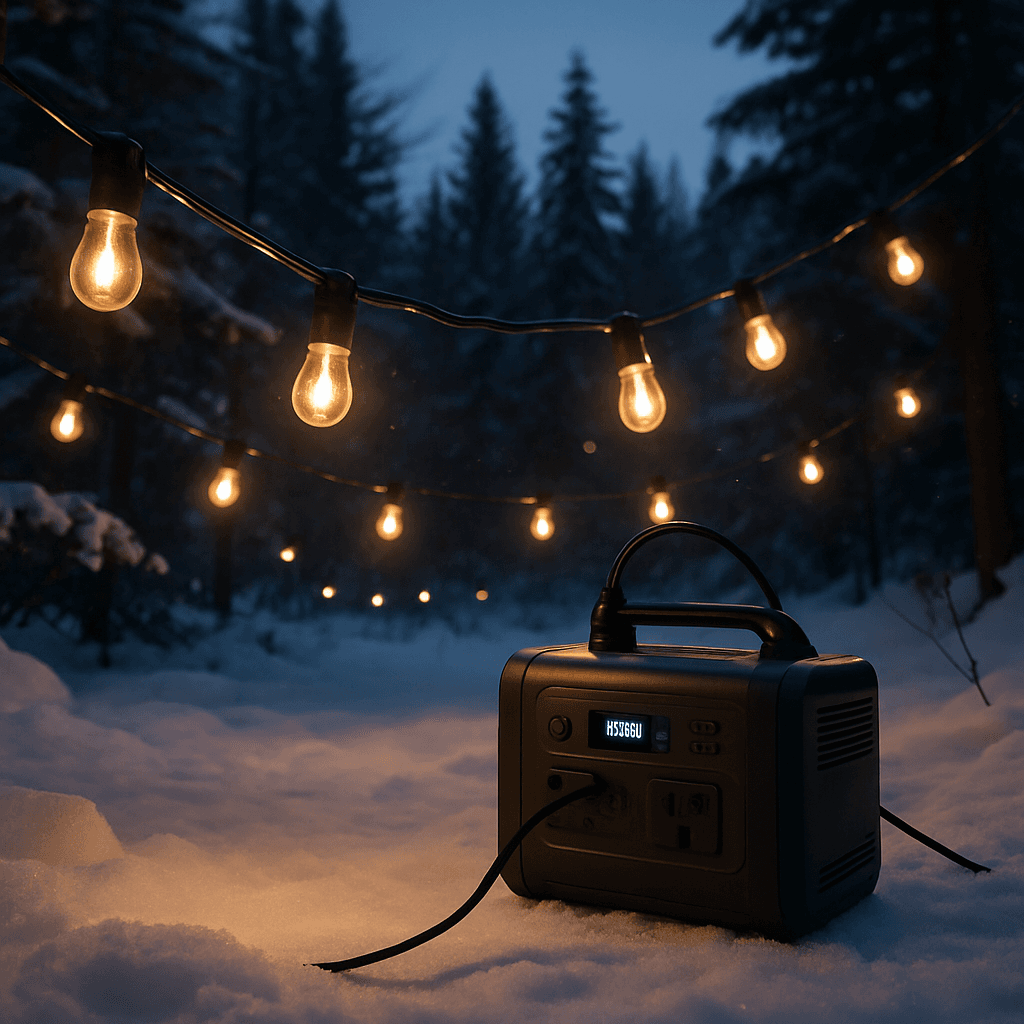
A moderate LED display draws under 200W total, so even an entry-level power station like the EcoFlow River 3 provides multiple nights of holiday lighting per charge — just use LED, not incandescent, since incandescent draws 5–10x more power. Whether it's a remote part of your property without an easy outdoor outlet, a rental where you don't want to run cords through windows, or a truly off-grid cabin you still want decorated for the holidays, a power station makes off-grid Christmas lights genuinely practical.
LED vs. Incandescent: This Choice Matters a Lot
Always use LED string lights for battery-powered displays — incandescent lights draw roughly 5-10x more power for the same visual coverage, making them impractical for anything beyond the smallest battery-powered display.
| Light Type | Typical Draw (100-ft string) |
|---|---|
| LED string lights | 15-25W |
| Incandescent string lights | 150-300W |
Calculating Your Display's Load
Add up your total LED string footage and any additional decorations (inflatables with fans, spotlights, animated displays), then multiply by your typical nightly run time (often 5-6 hours for evening display). A moderate LED display (a few hundred feet of lights plus some accent pieces) typically runs under 200W total, making it an easy load for nearly any power station.
Recommended Sizing
For a modest LED display running 5-6 hours nightly, an entry-level unit like the EcoFlow River 3 provides multiple nights per charge. For larger displays with inflatables, spotlights, or animated elements, a Bluetti AC70 or Jackery Explorer 1000 v2 gives more headroom and multi-night runtime without daily recharging.
Using a Timer to Maximize Runtime
Pair your power station with an outdoor-rated timer so lights automatically turn on at dusk and off at a set time (rather than running all night), which meaningfully extends how many nights you get per charge without any effort on your part.
Cold Weather Considerations
Battery performance drops somewhat in cold weather, which matters for a holiday display running through winter — see our cold weather battery performance guide and budget a bit of extra capacity buffer if your display will run through genuinely cold nights.
Frequently Asked Questions
Can solar power alone keep a Christmas light display running through the season?
It's possible with a well-sized panel and power station combination, especially since most displays only run in the evening (when solar isn't actively charging), so you're relying on daytime charging to cover nightly use — size your solar input to comfortably exceed your nightly Wh use.
Is it safe to leave a power station outside in cold weather all season?
Most power stations are rated for a specific operating temperature range — check your unit's cold-weather rating, and consider bringing it inside between uses if overnight temperatures drop below its rated range, to protect both performance and long-term battery health.
Related Articles
 Use Cases
Can a Power Station Work as a UPS for Your Computer or Router?
Many power stations offer a UPS or EPS mode that switches to battery power during an outage. Here's how it actually works, and where it falls short of a dedicated UPS.
 Use Cases
Portable Power Stations for Van Life: Complete Setup Guide
Everything you need to know to build a reliable power system for van life or full-time RV living, from sizing to solar to daily habits that make it last.
 Use Cases
Using a Power Station to Charge an Electric Bike
E-bike charging away from home outlets is easier than you'd think with the right power station. Here's how to size one for your specific e-bike battery.