Portable Power Stations for Van Life: Complete Setup Guide
Van life runs on power — your fridge, laptop, lights, water pump, and phone all depend on a system that has to work every single day, not just during the occasional outage. Here's how to build a setup that actually holds up to full-time use.
Step 1: Calculate Your Daily Energy Use
Add up the watt-hours you'll use in a typical day. A common van life daily load looks like this:
| Device | Watts | Hours/Day | Daily Wh |
|---|---|---|---|
| 12V compressor fridge | 50W avg | 24h (cycling) | ~600Wh |
| Laptop (remote work) | 65W | 6h | 390Wh |
| LED lighting | 20W | 4h | 80Wh |
| Water pump | 60W | 0.5h | 30Wh |
| Phone/device charging | 15W | 3h | 45Wh |
| Total | ~1,145Wh/day |
This is why most full-time van lifers land on a 1,000–2,000Wh power station paired with solar — it covers a realistic daily load with a buffer for cloudy days. See our full wattage sizing guide to customize this for your own setup. Many 12V van appliances list their draw in amps rather than watts — our watts to amps calculator converts them for this table.
Step 2: Choose the Right Power Station
For van life specifically, prioritize: LiFePO4 chemistry (handles daily deep cycling far better than older lithium-ion), a high solar input ceiling (400W+ ideally), and a form factor that fits your storage space and weight budget. The Jackery Explorer 1000 v2 is a strong lightweight pick; the EcoFlow Delta 2 Max suits vans with more storage space that want higher capacity and faster charging. If you split time between a van and a stationary setup, our tiny house power guide and RV living guide cover the overlapping considerations.
Step 3: Add Solar for Sustainable Charging
Shore power and driving alternator charging both work, but solar is what makes van life genuinely sustainable long-term without constantly hunting for outlets. Match your solar panel wattage as closely as possible to your power station's max solar input rating — undersizing means slow recharges, oversizing wastes money on unused capacity.
Step 4: Mount and Wire It Properly
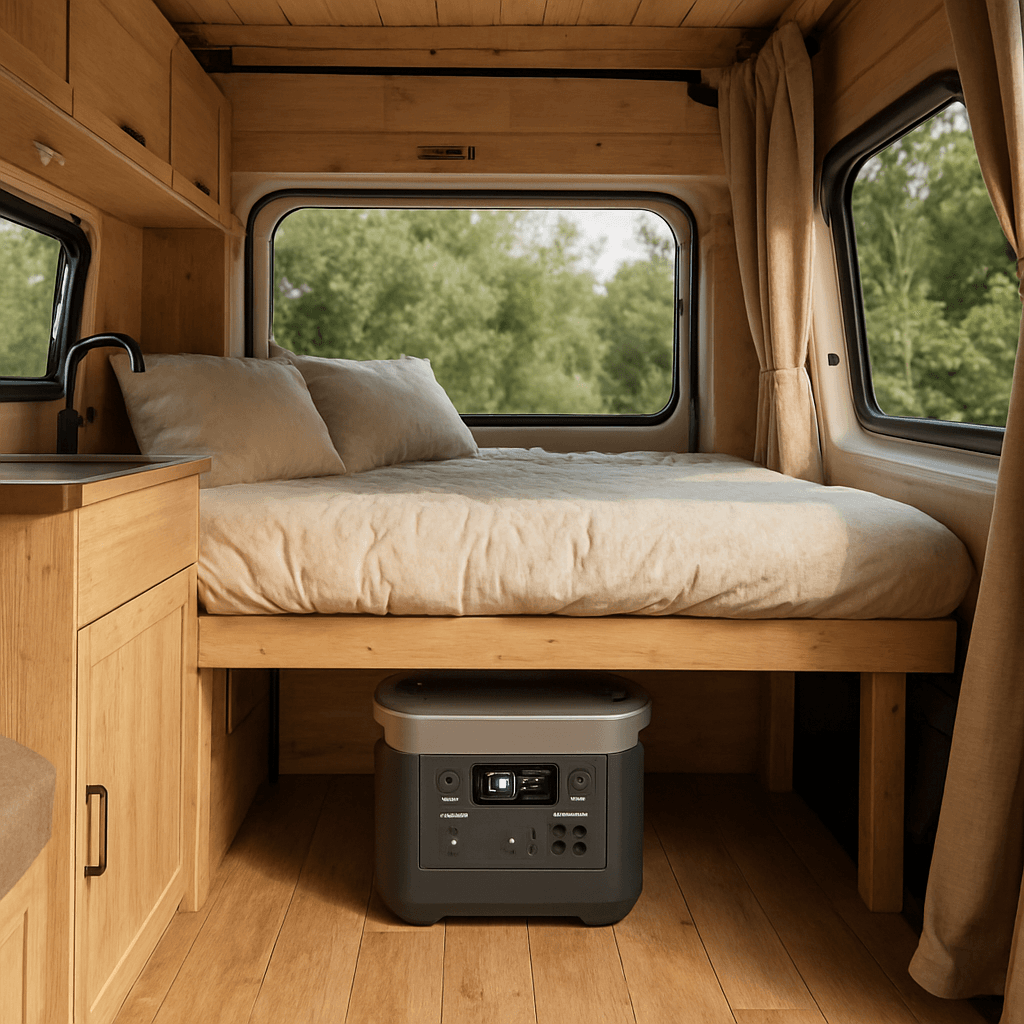
- Secure the power station so it can't shift or tip while driving — a strap or dedicated cubby works well.
- Keep it ventilated; avoid sealing it into an airtight cabinet, especially in hot climates.
- Run solar panel cables through a proper cable gland, not just a cracked window or door gap.
- Keep the unit somewhere accessible — you'll be checking charge level and plugging things in daily.
Daily Habits That Make Your System Last
- Charge opportunistically, not just when empty. Top off during sunny stretches rather than waiting for a low-battery warning.
- Position for sun, not just parking convenience, when solar charging is your main input.
- Monitor via the app so you always know your realistic runway before you need to find shore power.
- Avoid running the fridge and other loads simultaneously with a fast AC recharge unless your unit explicitly supports pass-through charging at full rate.
- Charging an e-bike alongside your other daily loads? See our guide on using a power station to charge an electric bike for the extra capacity to budget.
What About Backup for Bad Weather Stretches?
Multi-day cloudy or rainy stretches are the real stress test for a solar-dependent setup. Build in enough battery buffer (aim for 1.5–2 days of runway at your calculated daily use) so a few overcast days don't leave you scrambling for an RV park hookup.
Frequently Asked Questions
Can I run a van life setup on solar alone, with no shore power?
Yes, for most typical daily loads (1,000–1,500Wh/day), a properly sized power station with 300–400W of solar can stay charged indefinitely in most US climates outside of extended cloudy stretches or deep winter at northern latitudes.
How big a solar panel do I actually need for van life?
As a rule of thumb, match your panel wattage to roughly your daily Wh need divided by 4–5 peak sun hours. For a 1,145Wh/day load, that's roughly 230–290W of solar as a minimum — many van lifers round up to 300–400W to cover cloudy days.
Can I fly with my van life power station if I need to travel?
Almost certainly not — most power stations exceed the FAA's 160Wh airline limit by a wide margin. See our flying with a power station guide for the exact rules, and plan to buy or rent locally instead if you need power at your destination.
Related Articles
 Use Cases
Can a Power Station Work as a UPS for Your Computer or Router?
Many power stations offer a UPS or EPS mode that switches to battery power during an outage. Here's how it actually works, and where it falls short of a dedicated UPS.
 Use Cases
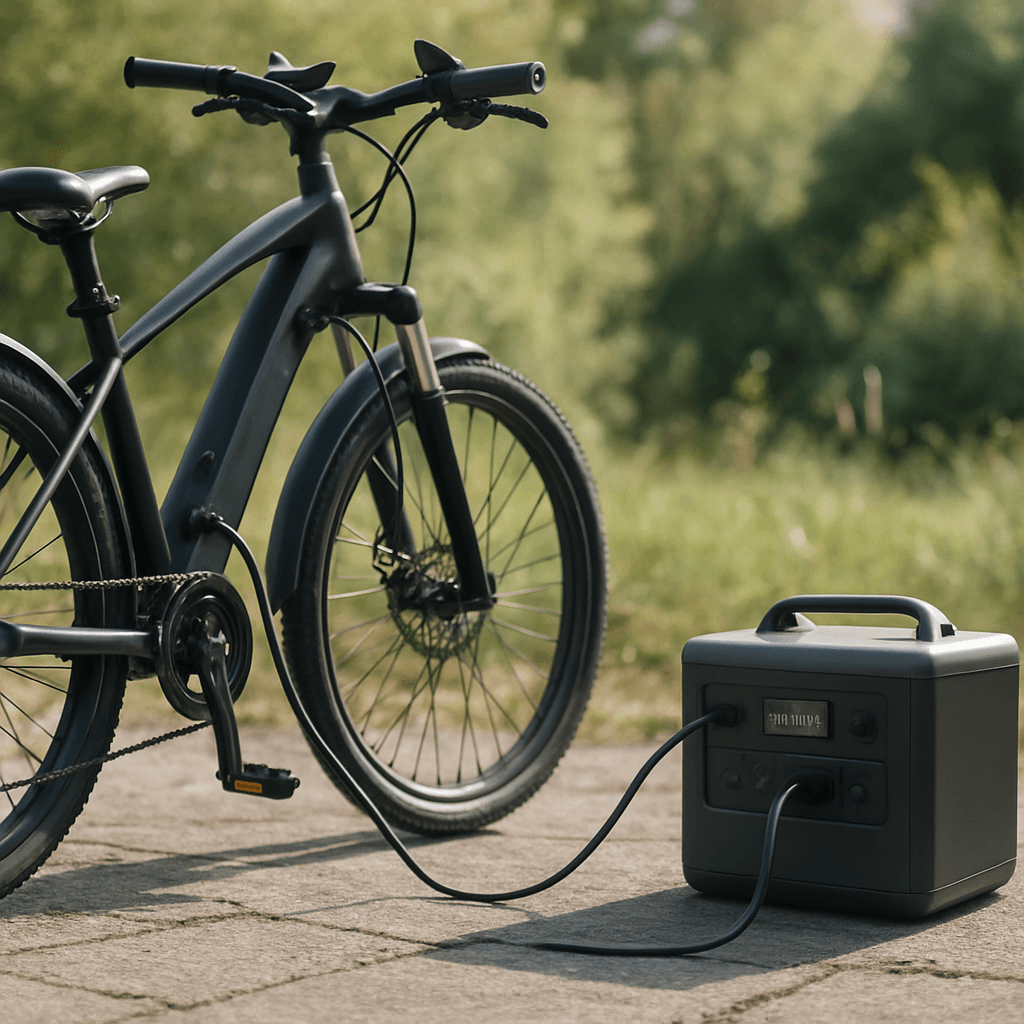
Using a Power Station to Charge an Electric Bike
E-bike charging away from home outlets is easier than you'd think with the right power station. Here's how to size one for your specific e-bike battery.
 Use Cases
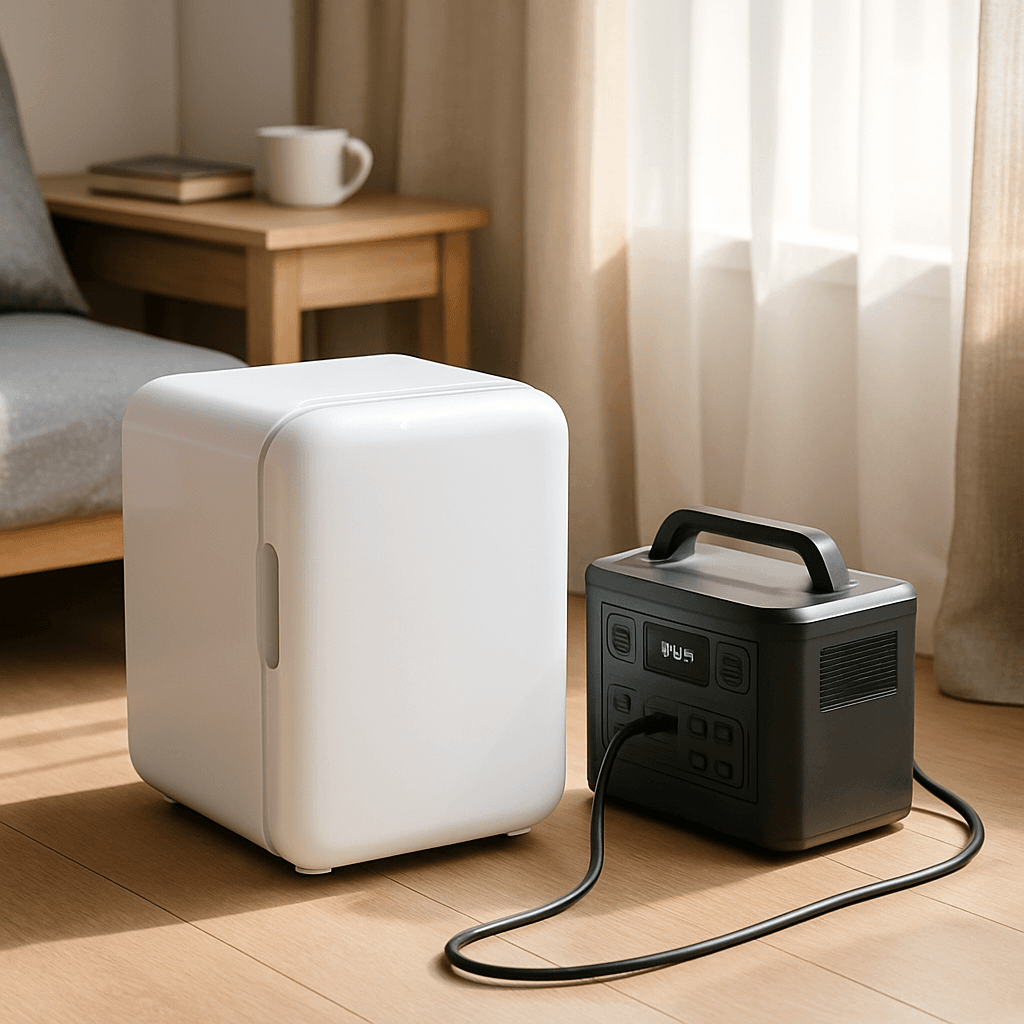
Running a Mini Fridge on a Portable Power Station: What You Need
Mini fridges cycle on and off rather than drawing power continuously. Here's how to correctly calculate runtime and pick the right power station size.