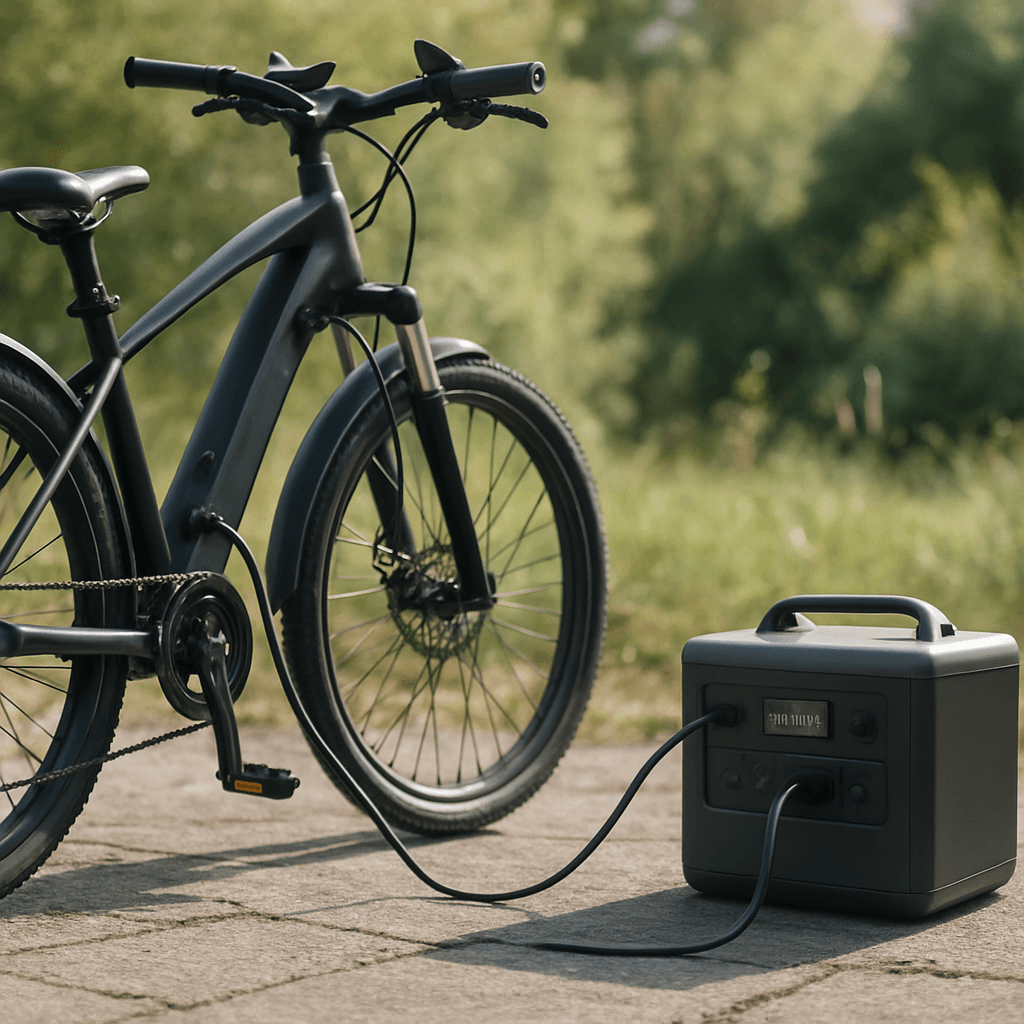
Whether you're touring by e-bike, commuting from a location without easy outlet access, or just want backup charging capability, a portable power station handles e-bike charging well — as long as you understand the actual energy numbers involved.
E-Bike Battery Capacity and Charge Time
| E-Bike Battery Size | Approx. Capacity | Full Charge Energy Needed |
|---|---|---|
| Small (36V, 10Ah) | ~360Wh | ~400-450Wh (accounting for charging losses) |
| Mid-size (48V, 14Ah) | ~672Wh | ~750-800Wh |
| Large (52V, 20Ah) | ~1,040Wh | ~1,150-1,250Wh |
Charging efficiency isn't perfect — budget roughly 10-15% more energy than the battery's rated capacity to account for losses in the charging process.
How Many Charges Can You Get?
A Jackery Explorer 1000 v2 (1,070Wh) can fully charge a small-to-mid-size e-bike battery roughly once, or partially top off a larger battery. For touring or multi-day trips needing multiple full charges, a larger unit like the EcoFlow Delta 2 Max (2,048Wh) gives you two or more full charges per power station charge, depending on your e-bike's battery size.
Charging Speed Considerations
E-bike chargers typically draw 2-4A at their rated voltage — a modest, manageable load for nearly any power station's continuous output rating, so charging speed is limited by your e-bike's own charger, not by the power station itself.
Fast Chargers Draw More — Check Before You Assume
Standard e-bike chargers draw a modest 2-4A, but some newer e-bikes support optional fast chargers that draw significantly more (sometimes 6-8A or higher) to cut charge time. If your e-bike has a fast-charging option, check its actual rated draw against your power station's continuous output before assuming it behaves like a standard charger — this matters more if you're also running other loads simultaneously.
Charging More Than One E-Bike
For couples or families charging two e-bikes at once, add both chargers' draw together for your continuous output requirement, and add both batteries' capacity together for your total energy need. A 2,048Wh unit like the EcoFlow Delta 2 Max comfortably handles two mid-size e-bike batteries charging simultaneously, though it will take proportionally longer to recharge the power station itself afterward.
Good Use Cases for This Setup
- Bikepacking/touring where you're camping away from outlets for multiple days
- E-bike commuters without garage/outlet access, using a power station charged at home or via solar as a portable charging solution
- Backup charging for e-bike-dependent delivery or commuting work during a power outage at home
Solar Charging While You Ride
For extended bikepacking trips, pairing your power station with a foldable solar panel lets you recharge during riding breaks or overnight camp stops, extending your range without needing to find an outlet — see our solar panel bundle guide for good portable combinations.
Frequently Asked Questions
Will using a power station to charge my e-bike void its warranty?
Generally no, as long as you're using the e-bike's own factory charger plugged into the power station's standard AC outlet — this is functionally the same as plugging into any wall outlet. Check your e-bike manufacturer's specific warranty terms if you're unsure.
How many times can I charge my e-bike from one power station charge?
It depends on both your e-bike's battery size and your power station's capacity — divide your power station's Wh rating by your e-bike battery's Wh rating (plus ~10-15% for charging losses) to estimate how many full charges you'll get.
Is it safe to leave an e-bike charging on a power station overnight or unattended?
The same general charging safety practices apply as charging at home — use the e-bike's original factory charger, avoid charging on flammable surfaces, and don't leave any lithium battery charging completely unmonitored for extended periods as a general precaution, regardless of whether it's plugged into a wall outlet or a power station.
Related Articles
 Use Cases
Can a Power Station Work as a UPS for Your Computer or Router?
Many power stations offer a UPS or EPS mode that switches to battery power during an outage. Here's how it actually works, and where it falls short of a dedicated UPS.
 Use Cases
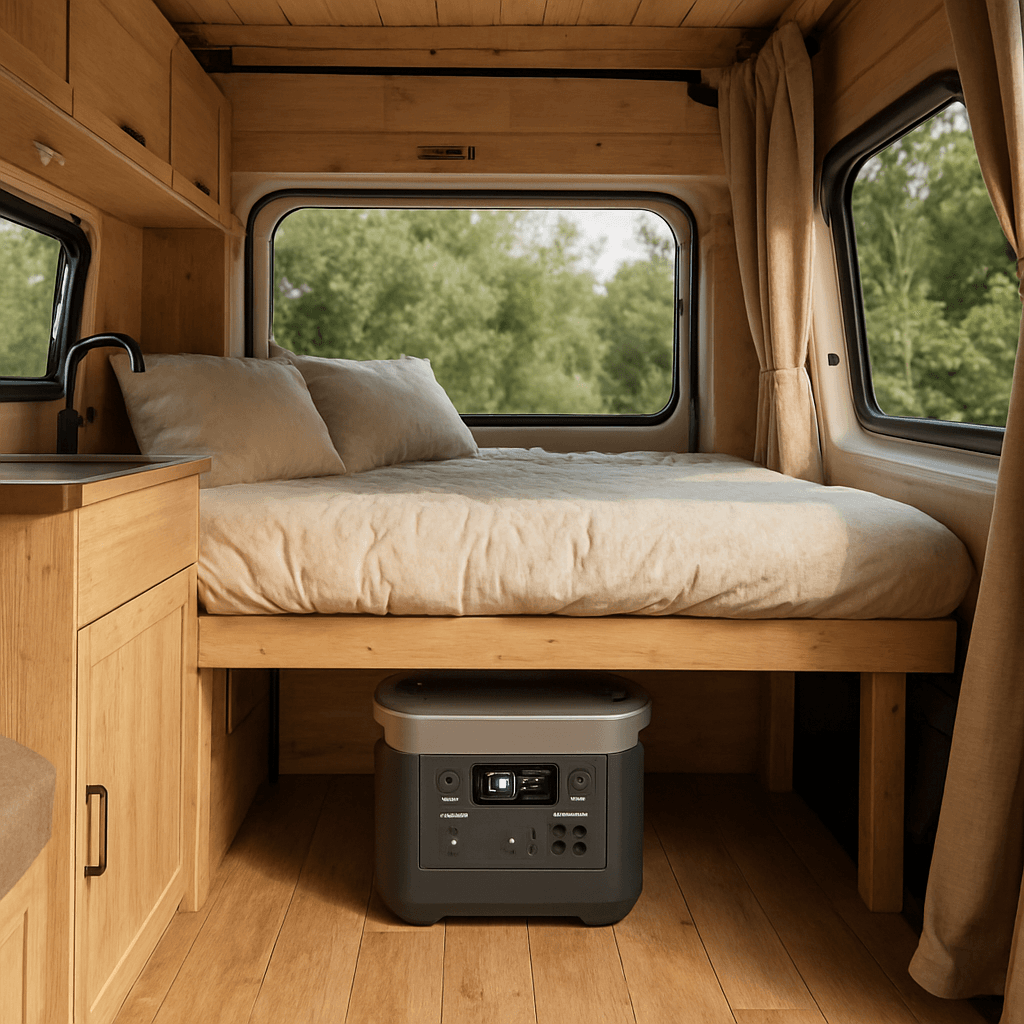
Portable Power Stations for Van Life: Complete Setup Guide
Everything you need to know to build a reliable power system for van life or full-time RV living, from sizing to solar to daily habits that make it last.
 Use Cases
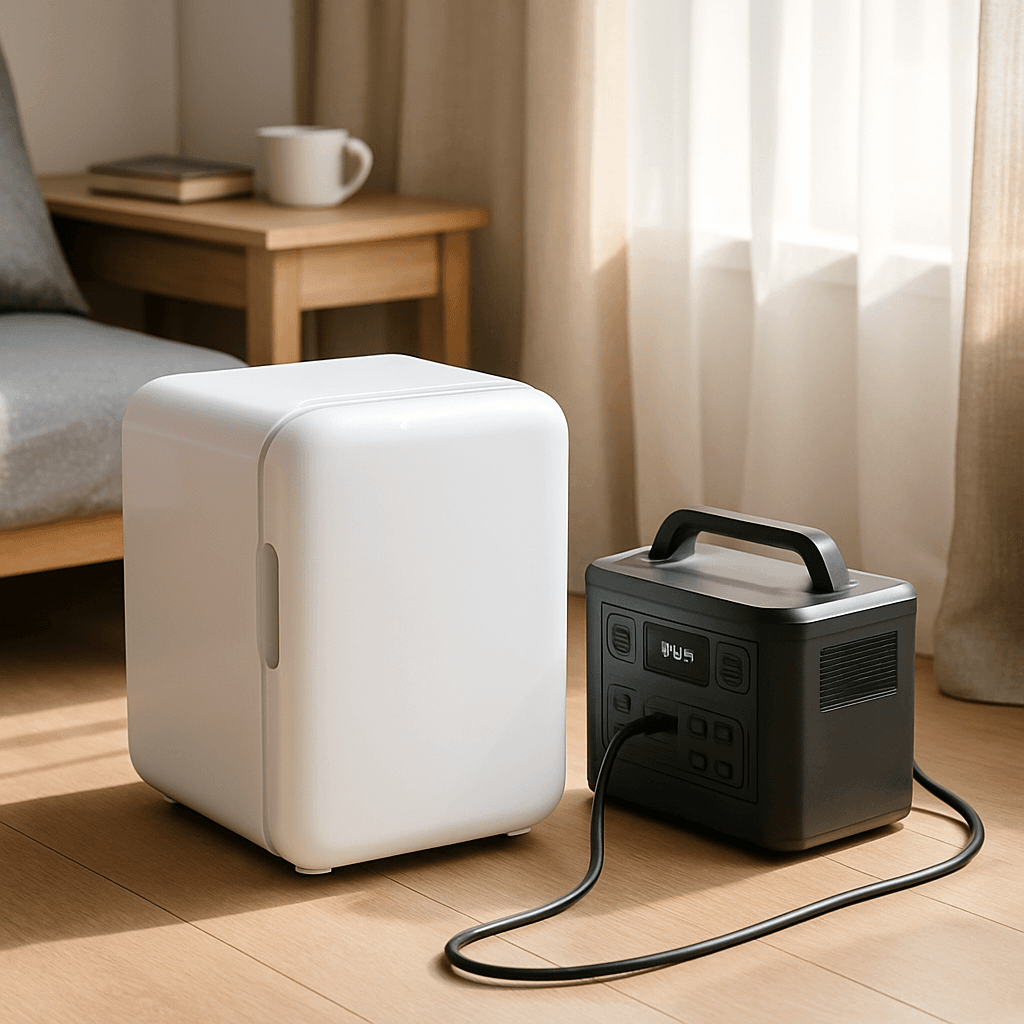
Running a Mini Fridge on a Portable Power Station: What You Need
Mini fridges cycle on and off rather than drawing power continuously. Here's how to correctly calculate runtime and pick the right power station size.