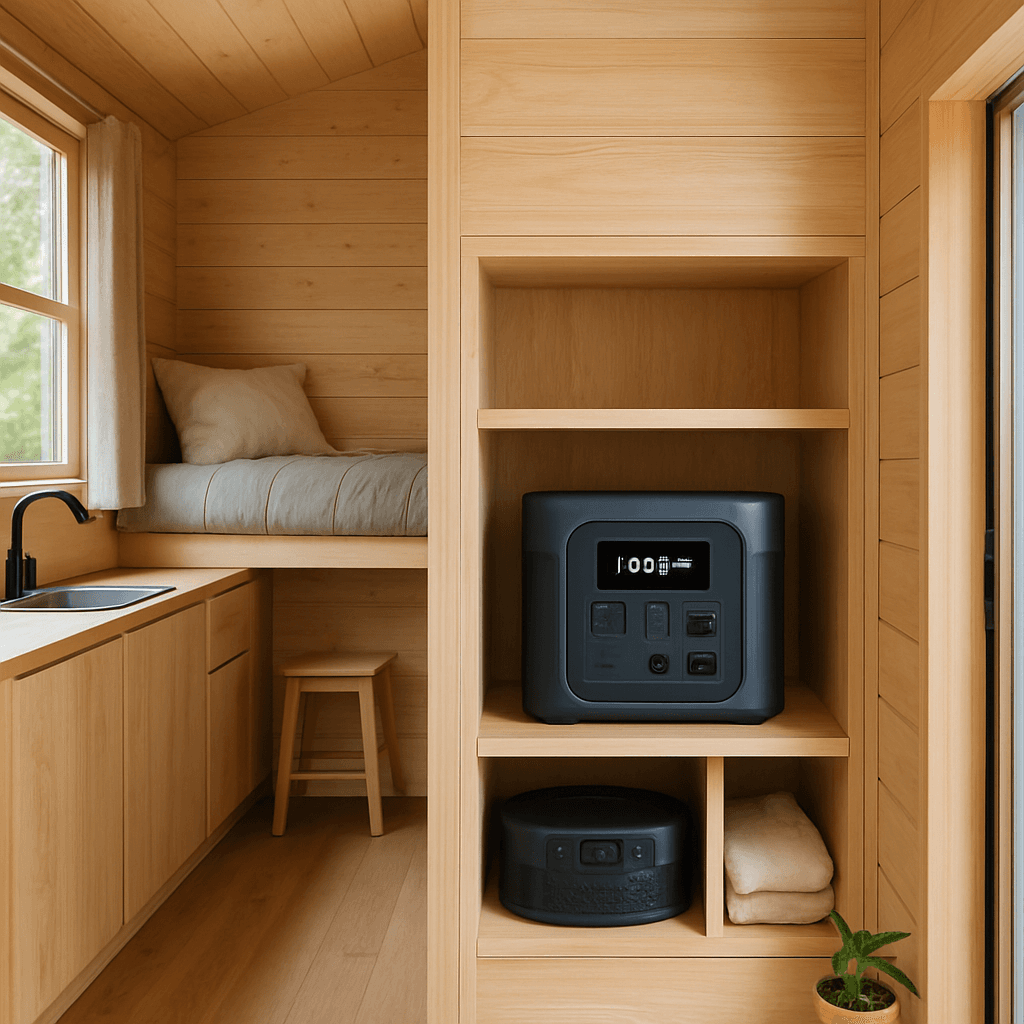
Tiny houses occupy a unique space between van life and full home backup — the fixed footprint allows for more permanent solar integration than a moving vehicle, but the compact scale means most tiny house owners genuinely can run most or all of their needs on a well-sized power station system.
Typical Tiny House Daily Load
| Category | Typical Daily Wh |
|---|---|
| Refrigeration (efficient compact fridge) | 500-800Wh |
| Lighting (LED throughout) | 100-200Wh |
| Device charging (laptop, phone, etc.) | 200-400Wh |
| Water pump | 50-100Wh |
| Small appliances (occasional use) | 200-500Wh |
| Total (moderate use) | ~1,000-2,000Wh |
This range excludes heating and cooling, which typically use separate systems (propane, wood, or a dedicated mini-split) in most tiny house builds rather than running off battery power alone, given the sustained high wattage those systems require.
Recommended Setup
For most tiny houses, an expandable system like the EcoFlow Delta 2 Max (2,048Wh, expandable to 6,144Wh) or Jackery Explorer 2000 Plus (expandable to 12kWh) gives you room to start with core needs and expand toward more complete off-grid capability over time.
Solar Integration for Tiny Houses
Unlike a van or RV, a tiny house's fixed (or semi-fixed) position makes rooftop or ground-mounted solar more practical and efficient than portable folding panels. Size your array based on your daily Wh need divided by realistic peak sun hours for your location — see our solar recharge time guide for the full calculation.
Heating and Cooling: Usually a Separate System
Space heating and air conditioning draw far more power than a portable power station system can sustainably support as a primary source — most tiny house builds use propane, wood stoves, or mini-split systems with their own dedicated power planning rather than running climate control off the same battery bank as everything else. If you do want limited backup AC/heat capability, see our mini split AC power outage guide for what's realistic on battery power alone.
Off-Grid vs. Grid-Tied Tiny Houses Change the Calculation
A tiny house with a grid hookup (many are parked on a foundation or lot with utility access) can treat a power station as backup and daily-use convenience, similar to how a homeowner would — recharge from the wall as needed, size for a few days of essentials. A genuinely off-grid tiny house, with no grid connection at all, needs to treat solar input capacity as seriously as battery storage capacity, since there's no fallback AC charging option if a cloudy stretch outlasts your stored capacity. Know which category your setup falls into before finalizing your system size, since the two scenarios call for meaningfully different planning.
Composting Toilets Reduce Water Pump Load
Many tiny houses use a composting or low-flush toilet specifically to reduce plumbing complexity and water use, which has a real side benefit for power planning: less water pump cycling than a full standard bathroom setup would require. If your build includes a composting toilet, your water pump load will likely run toward the lower end of typical estimates — worth confirming against your actual fixtures rather than assuming a standard household water usage pattern.
Seasonal Load Changes Matter More in a Tiny House
Because a tiny house's total system capacity is smaller relative to a full-size home, seasonal load swings are proportionally more noticeable — winter adds heating-adjacent loads (even if primary heat is propane or wood, things like a heat tape on exposed pipes draw continuously) and reduces solar output, while summer adds any cooling load and increases available solar. Budget your system size around your highest realistic seasonal load, not an annual average, since a system that works fine in spring can fall short in the exact months you need it most.
Frequently Asked Questions
Can a tiny house run entirely off a power station and solar?
For lighting, refrigeration, water pump, and device charging, yes with proper sizing. Most tiny house builds still use a separate system (propane, wood, or dedicated mini-split) for heating and cooling due to the much higher power draw those systems require.
How big a solar array does a tiny house need?
It depends on your daily Wh usage and location's peak sun hours, but most tiny houses land in the 400-800W solar array range for a moderate daily load — see our solar recharge time calculation guide for your specific numbers.
Related Articles
 Use Cases
Can a Power Station Work as a UPS for Your Computer or Router?
Many power stations offer a UPS or EPS mode that switches to battery power during an outage. Here's how it actually works, and where it falls short of a dedicated UPS.
 Use Cases
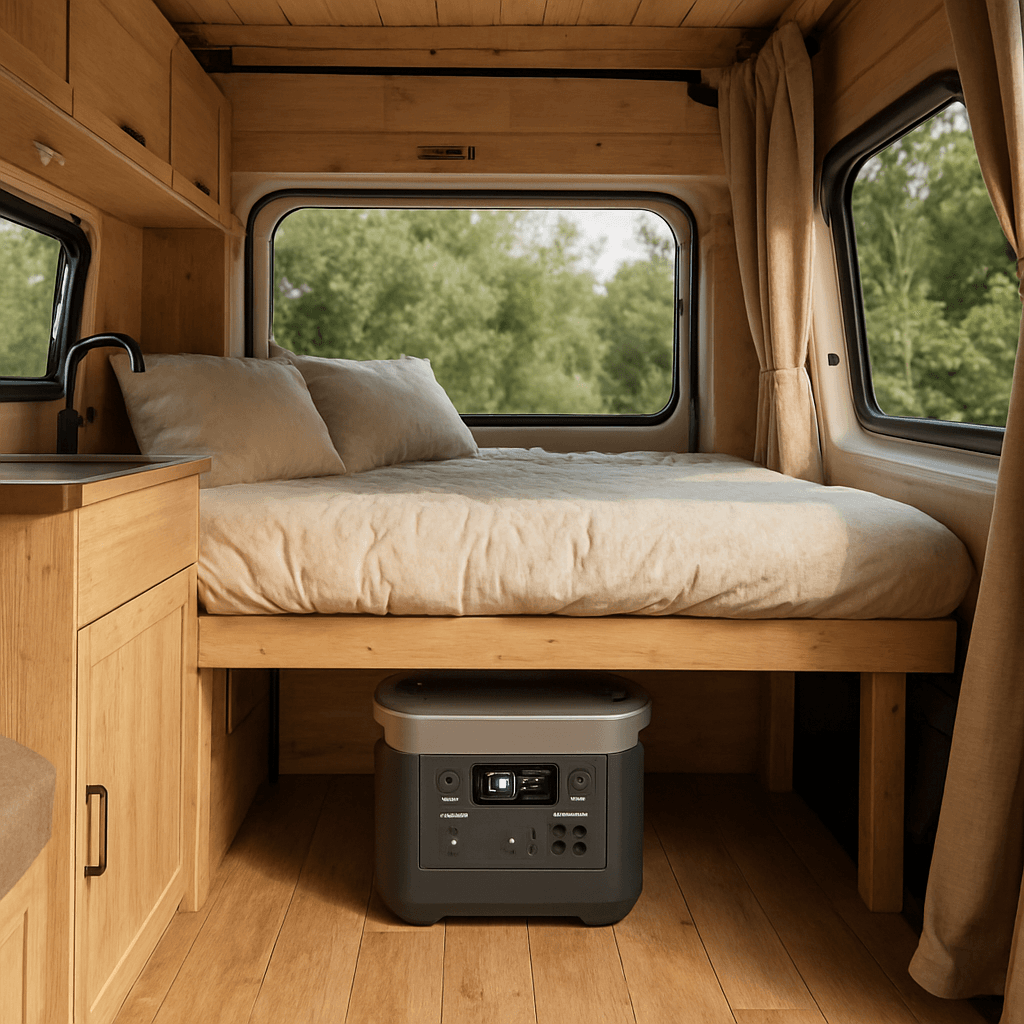
Portable Power Stations for Van Life: Complete Setup Guide
Everything you need to know to build a reliable power system for van life or full-time RV living, from sizing to solar to daily habits that make it last.
 Use Cases
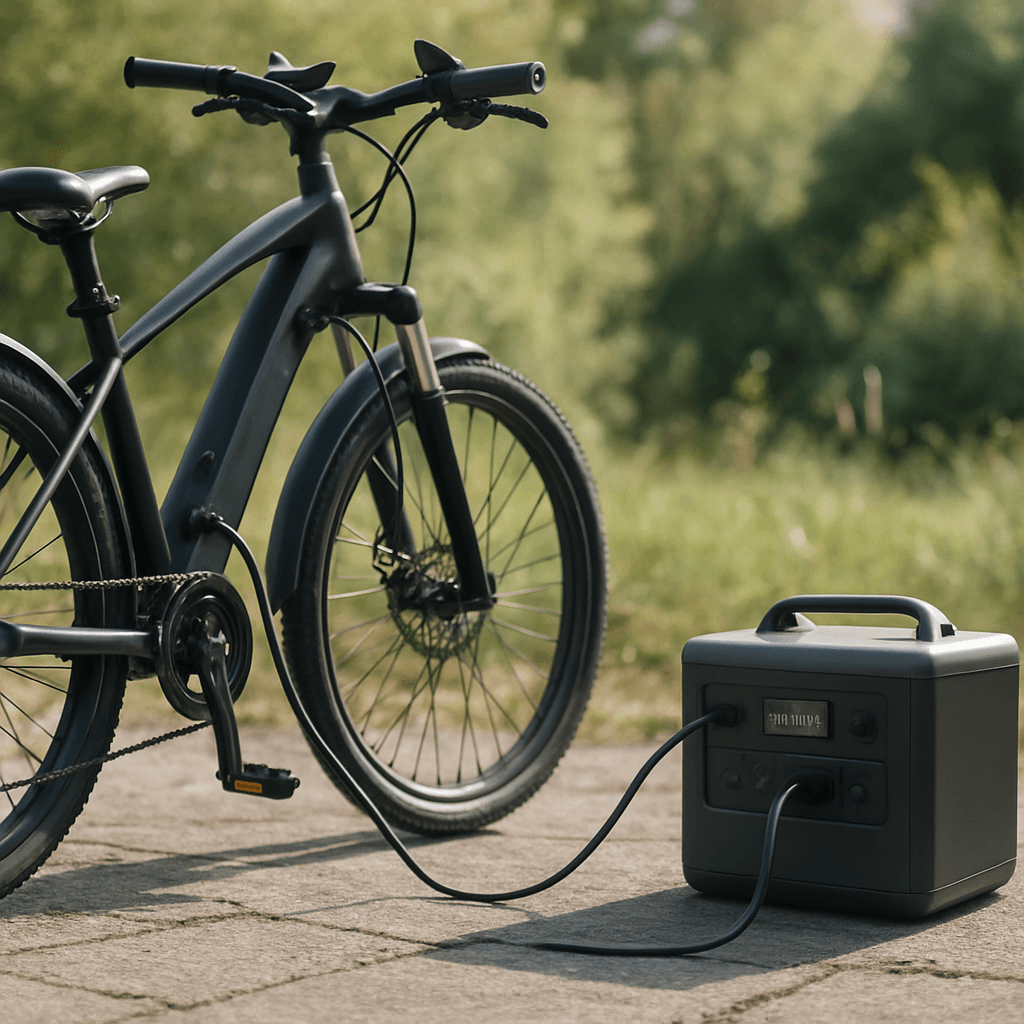
Using a Power Station to Charge an Electric Bike
E-bike charging away from home outlets is easier than you'd think with the right power station. Here's how to size one for your specific e-bike battery.