Power Bank vs. Power Station: What's the Real Difference?
The terms get used loosely, and marketing doesn't help — but "power bank" and "power station" describe two genuinely different categories of device, sized for different jobs.
The Core Comparison
| Power Bank | Power Station | |
|---|---|---|
| Typical capacity | 5,000–30,000mAh (~20–100Wh) | 200Wh–3,000Wh+ |
| Output ports | USB-A / USB-C only | AC outlets, USB, USB-C, DC car port |
| What it powers | Phones, tablets, small electronics | Appliances, medical devices, power tools, laptops, mini fridges |
| Weight | Under 1lb | 5lbs to 60lbs+ |
| Recharge time | 1–3 hours | 1–8+ hours (faster with solar or high-wattage AC input) |
| Typical price | $15–$60 | $200–$3,000+ |
What a Power Bank Actually Is
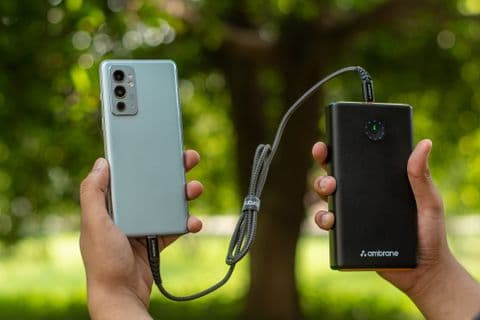
A power bank is a sealed battery pack built specifically for USB-powered devices — phones, earbuds cases, small tablets. It has no AC outlet, so it physically cannot run anything that plugs into a wall. Its entire job is topping off small electronics on the go, and it's genuinely the right tool for that: light, cheap, and pocketable.
What a Power Station Actually Is
A power station is a much larger battery system with a built-in inverter, which is what lets it output real AC power through a standard wall-style outlet — the same as your house wiring. That's the functional difference that matters: a power station can run things a power bank simply cannot, like a CPAP machine, a mini fridge, or a laptop charger, because it delivers real AC voltage rather than just 5V/9V/20V over USB. See our power station ports explained guide for a full breakdown of what each port type actually does.
Which One Do You Actually Need?
- Just charging phones and small devices while out for the day? A power bank covers it, and there's no reason to carry the extra weight of a power station for that alone.
- Need to run anything that plugs into a wall — medical equipment, a fridge, lights, a laptop — during travel, camping, or an outage? You need a power station; no power bank, regardless of capacity, has the AC output to do this.
- Not sure how much capacity you need for your specific situation? Start with our how many watts do you need guide, which walks through sizing based on the actual devices you're running.
They're Not Competing Products
It's worth saying plainly: these aren't two tiers of the same thing, they're different tools. Plenty of people who own a power station for home backup or travel still carry a small power bank separately for daily phone charging — the two solve different problems and there's no real substitute relationship between them.
Frequently Asked Questions
Can a power bank charge a laptop?
Some larger USB-C power banks with high enough wattage (65W+) can charge laptops that support USB-C charging, but this is still fundamentally different from a power station's AC outlet, and won't work with laptops that require a barrel-style AC charger.
Is a power station just a bigger power bank?
Not functionally — the defining difference is the built-in inverter that lets a power station output real AC power. A power bank, no matter how large its battery capacity, only outputs low-voltage DC over USB and cannot run AC-powered devices.
Related Articles
 Comparisons & Buying Guides
Portable Power Station vs. Whole-Home Battery System: Which Do You Actually Need?
A Tesla Powerwall costs $11,500-$16,000+ installed. A portable power station covers most of the same essentials for a fraction of that. Here's how to actually decide.
 Comparisons & Buying Guides
Can You Rent a Portable Power Station Instead of Buying One?
Renting is a real option if you only need backup power for a single trip or event. Here's where to actually rent one, real costs, and when renting beats buying.
 Comparisons & Buying Guides
Portable Power Station vs Gas Generator: Which Is Better?
Power stations and gas generators solve the same problem differently. Here's an honest comparison of cost, runtime, noise, safety, and maintenance.