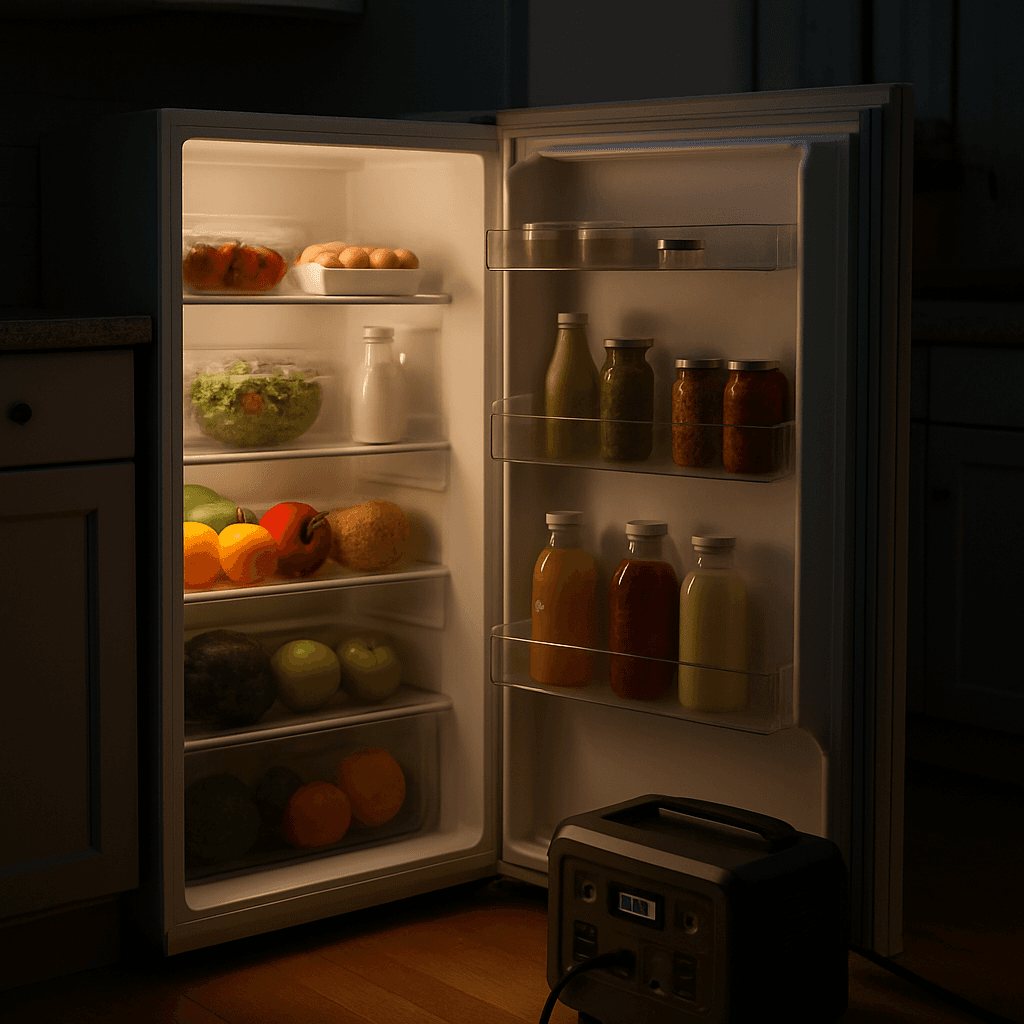
How Long Can a Power Station Run Your Fridge During an Outage?
A 1,070Wh power station runs a mini fridge for roughly 26 hours or a standard fridge for about 7 hours; a 2,048Wh unit roughly doubles both numbers, and running the fridge intermittently rather than continuously stretches that further. Keeping food safe during an outage is one of the top reasons people buy a power station in the first place. Here's exactly how long you can expect a fridge to run, by type and power station capacity.
Fridge Type Matters a Lot
| Fridge Type | Average Draw (with cycling) |
|---|---|
| Mini fridge | 30-50W |
| Standard full-size fridge | 100-200W |
| Large/side-by-side fridge | 150-250W |
| Fridge-freezer combo (older, less efficient) | Up to 300-400W |
Modern Energy Star-rated fridges draw meaningfully less than older models — checking your specific fridge's energy label gives a much more accurate number than a generic estimate.
Runtime by Power Station Capacity
| Power Station | Mini Fridge (~40W avg) | Standard Fridge (~150W avg) |
|---|---|---|
| 1,070Wh | ~26 hours | ~7 hours |
| 2,048Wh | ~51 hours | ~13.5 hours |
| 6,144Wh (expanded) | ~150+ hours | ~40 hours |
These are estimates based on average cycling draw — actual runtime varies with ambient temperature, how often the door opens, and your specific fridge's efficiency.
The Trick: You Don't Need to Run It Continuously
You don't need to power your fridge 24/7 to keep food safe — running it a few hours on, a few hours off (using a simple plug-in timer) can roughly double your effective runtime while still keeping the interior cold enough for food safety, as long as you minimize door openings during the "off" windows.
When to Consolidate Instead
If your outage is extending longer than your power station can realistically support, consider consolidating perishables into a smaller cooler with ice, and running your power station for just that cooler's needs (if it's electric) or your fridge intermittently, rather than trying to run a full-size fridge continuously for days.
Food Safety Basics
Keep the fridge door closed as much as possible — a full fridge stays cold for about 4 hours unopened, a freezer about 24-48 hours if kept full and unopened. This buys you time even before backup power kicks in.
Why Estimates Vary So Much Fridge to Fridge
The wattage ranges in the tables above are wide for a reason — actual draw depends on your fridge's age and efficiency rating, ambient kitchen temperature, how full it is (a fuller fridge holds temperature better and cycles less), and how often the door opens. Two "standard" fridges can draw meaningfully different average wattage in practice. If you want a genuinely accurate number rather than a general estimate, check your specific fridge's Energy Guide label (the yellow sticker with estimated annual kWh) and divide by 365 and 24 to get an average hourly wattage, then compare that against the table ranges above.
Freezer-Only Backup as a Middle Ground
If your power station can't comfortably cover both a fridge and freezer simultaneously for your full expected outage, prioritizing the freezer over the fridge is often the better call — frozen food that stays frozen is safe indefinitely, while fridge food has a much shorter safe window regardless of backup power. A chest freezer in particular holds cold far longer than a fridge when unopened, making it more forgiving of intermittent power than fresh fridge contents.
Frequently Asked Questions
Is it safe to run my fridge intermittently instead of continuously during an outage?
Yes, as long as the interior stays consistently below 40°F (4°C) — using a fridge thermometer to verify, and minimizing door openings, makes intermittent operation a practical way to extend your power station's runtime.
How much capacity do I need to run a fridge for a full week outage?
For a standard fridge (150W average), a full week of continuous runtime would need roughly 25,000Wh — unrealistic for a portable power station alone. Intermittent operation, food consolidation, and a realistic outage-duration expectation (see our hurricane preparedness checklist) make a multi-day plan much more achievable than continuous week-long runtime.
Related Articles
 Emergency Preparedness
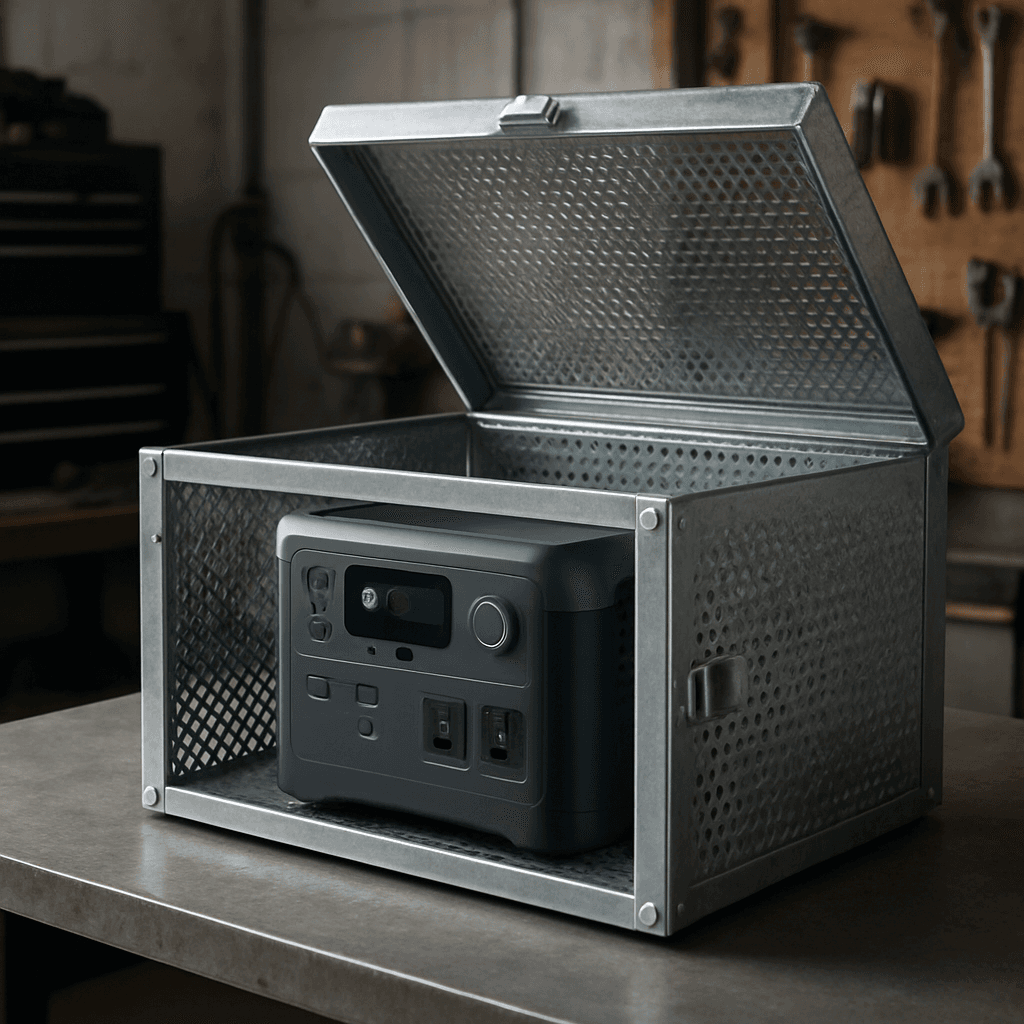
Can an EMP Destroy Your Power Station? What the Science Actually Says
Batteries are more EMP-resistant than most people assume, but the electronics inside a power station aren't. Here's the real science of EMP risk and Faraday cage protection.
 Emergency Preparedness
Winter Storm Power Outage Preparedness Guide (Texas Edition)
The 2021 Texas winter storm exposed how unprepared the grid can be for extreme cold. Here's how to plan backup power for Texas winter weather specifically.
 Emergency Preparedness
What to Do When the Power Goes Out: Step-by-Step Guide
The first 15 minutes after a power outage matter. Here's a clear, step-by-step guide for what to do the moment your power goes out.