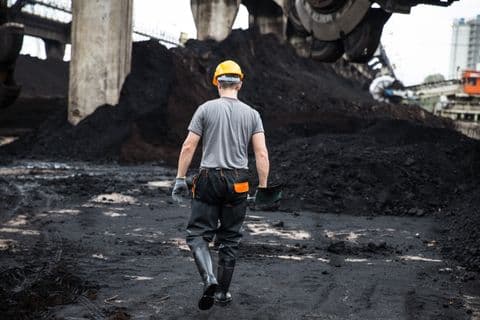
Construction and job sites frequently lack easy grid power access, and running a gas generator isn't always practical or allowed — noise ordinances, indoor work, or simply not wanting to deal with fuel logistics for lighter power tool needs. A power station fills that gap well for the right equipment.
What Job Site Use Requires
- High continuous output to handle power tools, which often draw more than typical household devices
- Ruggedness — job sites are dustier and rougher on equipment than home or camping use
- Fast recharge to top off overnight or during breaks between work sessions
- Enough capacity for a full work day of intermittent tool use plus lighting
Typical Job Site Tool Power Draw
| Tool | Typical Running Watts | Startup Surge |
|---|---|---|
| Circular saw | 1,200-1,800W | Higher momentarily |
| Drill | 500-750W | Moderate |
| Shop vac | 1,000-1,400W | Moderate-high |
| Work lights (LED) | 20-100W | Minimal |
Power tools are used intermittently, not continuously, so total daily energy use is often lower than the running wattage would suggest — but your power station's continuous/surge output rating needs to comfortably cover whichever single tool draws the most at any moment.
Recommended Units
For lighter job site needs (drills, work lights, device charging), a Jackery Explorer 1000 v2 covers a solid work day. For sites running power-hungry tools like circular saws regularly, a EcoFlow Delta 2 Max or Jackery Explorer 2000 Plus provides the output headroom needed.
Battery vs. Generator for Job Sites
Battery power stations shine for indoor work (zero emissions), noise-restricted areas, and lighter tool use throughout the day. For sustained heavy equipment use or all-day power tool-intensive work, a generator's unlimited runtime remains more practical — many contractors use both, matching the tool to the job. See our power station vs. gas generator comparison for the fuller tradeoff breakdown.
Protecting the Unit From Job Site Conditions
Construction sites are harder on equipment than camping or home use — expect more dust, more temperature swings, and more chance of an accidental bump or drop. A few practical habits reduce risk: keep the unit in a closed case or dedicated tote when not actively in use rather than leaving it exposed on a workbench, wipe down vents periodically if the site is dusty (blocked vents affect thermal management during heavy use), and designate one crew member's responsibility for it if multiple people are sharing the tool — a power station that's "everyone's" tends to get left out in the weather or forgotten at the end of the day.
Charging Strategy Between Shifts
For daily job site use, build recharging into your routine rather than treating it as an afterthought: top off overnight via AC power at the shop or a crew member's home, and confirm it's actually charged before loading it into the truck each morning — a "dead" power station discovered on-site costs real work time. If the site has any grid access at all (even a temporary construction meter), an AC-charging break during a lunch stop can meaningfully extend a single unit's coverage for a demanding day, similar to how fast-charging models reduce downtime in other high-use scenarios.
Noise Ordinances and Indoor Work Restrictions
Some municipalities and job sites — particularly residential renovation work, work near occupied buildings, or sites with posted quiet hours — restrict generator use specifically because of noise, independent of any emissions concern. A power station sidesteps this entirely, which matters for early-morning or after-hours work where a generator simply isn't an option regardless of how the rest of the job is powered.
Frequently Asked Questions
Can a power station run a circular saw or similar heavy power tool?
Many mainstream power stations with 1,500W+ continuous output can run a circular saw, but always check the specific tool's running and surge wattage against your unit's rating before relying on it for regular use.
Is a power station durable enough for daily job site use?
Mainstream units from established brands are reasonably durable for regular job site use, but they're not built to the same ruggedized standard as dedicated construction equipment — handle with reasonable care and avoid unnecessary drops or dust exposure where possible.
Related Articles
 Use Cases
Can a Power Station Work as a UPS for Your Computer or Router?
Many power stations offer a UPS or EPS mode that switches to battery power during an outage. Here's how it actually works, and where it falls short of a dedicated UPS.
 Use Cases
Portable Power Stations for Van Life: Complete Setup Guide
Everything you need to know to build a reliable power system for van life or full-time RV living, from sizing to solar to daily habits that make it last.
 Use Cases
Using a Power Station to Charge an Electric Bike
E-bike charging away from home outlets is easier than you'd think with the right power station. Here's how to size one for your specific e-bike battery.