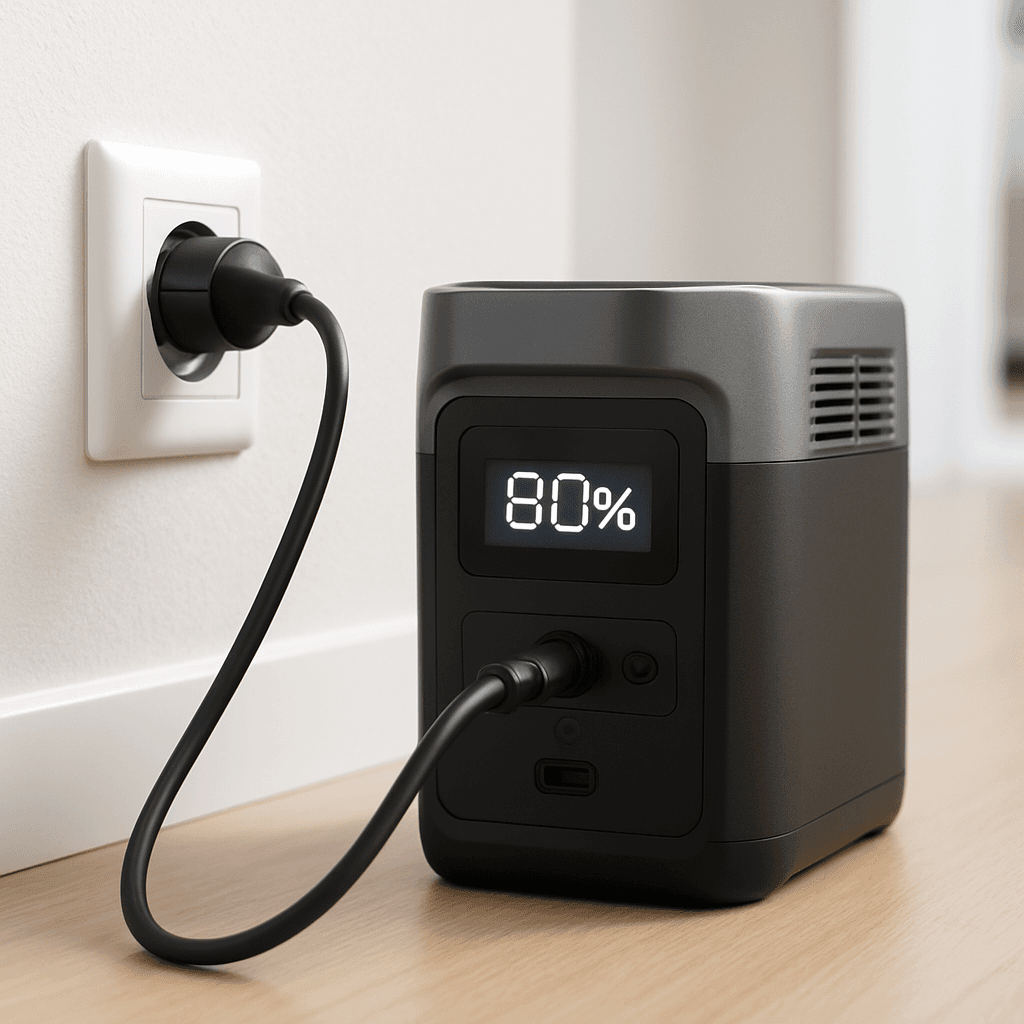
Fastest-Charging Power Stations (2026): Measured AC Recharge Times
The short answer: only a few stations fill to 100% in about an hour on a wall outlet. The EcoFlow River 3 (245Wh) did it in about 60 minutes, and the Anker SOLIX C1000 Gen 2 (1,024Wh) took 56 minutes in OutdoorGearLab's test. Larger stations are fast to 80% but slower to full: the Bluetti AC200L reached 80% in 45 to 48 minutes, and the EcoFlow DELTA Pro 3 needed 3.2 hours for a full charge in testing despite a claimed 50 minutes to 80%. Some Jackery models only reach "about an hour" in an app-controlled emergency mode. We did not run these tests ourselves; every figure below is a manufacturer claim or an independent lab's result, labeled as such.
AC Recharge Times Compared
| Power station | Capacity | AC recharge | Source |
|---|---|---|---|
| EcoFlow River 3 | 245Wh | 0-100% in about 60 minutes | Confirmed independently; it drew about 322W from the wall |
| Anker SOLIX C1000 Gen 2 | 1,024Wh | 56 minutes to full (49 in ultra-fast mode) | OutdoorGearLab, as reported in our C1000 review |
| Bluetti AC200L | 2,048Wh | 80% in 45-48 minutes; full in 75-90 minutes | Bluetti and Outdoor Tech Lab |
| Bluetti Elite 200 V2 | 2,074Wh | 80% in about 1 hour; full in about 1.4 hours | StorageReview and Bluetti |
| EcoFlow DELTA 2 Max | 2,048Wh | 80% in about 1.1 hours | StorageReview |
| Jackery Explorer 2000 Plus | 2,042Wh | 95 minutes to full | Measured, 1,290Wh per hour |
| EcoFlow DELTA Pro 3 | 4,096Wh | 80% in about 50 minutes (EcoFlow); 3.2 hours to full | EcoFlow and OutdoorGearLab |
| Jackery Explorer 1000 v2 | 1,070Wh | Almost 2 hours standard; 1-hour emergency mode advertised | OutdoorGearLab and Jackery |
| Jackery Explorer 2000 v2 | 2,042Wh | 2.5 hours standard; 1.3-hour emergency mode listed | OutdoorGearLab and Jackery |
Two caveats apply. First, a time "to 80%" and a time "to 100%" are different things, because stations slow down as they approach full. Second, we found no published AC charge time for the Anker SOLIX F2000 in the sources we checked, so it is not in the table; Anker's own page lists a HyperFlash fast-charge feature without a time.
Why Some Stations Charge Faster
Charging speed is limited by the station's maximum AC input power, the battery's ability to accept it and how the station manages heat. A rough floor on the time is capacity divided by input power, and real charging takes longer because of losses.
- Example (our arithmetic): a station that takes in 2,400W could add at most about 2,400Wh in an hour, so 80% of 2,048Wh (about 1,640Wh) would take roughly 41 minutes at best. Bluetti and Outdoor Tech Lab report 45 to 48 minutes for the AC200L, which fits.
- Losses: StorageReview measured about 2,300Wh drawn from the wall to refill an Anker F2000 that delivered 1,870Wh, so plan for roughly a fifth of the energy being lost.
- Special modes: Jackery's "emergency charge" is app-controlled and separate from its standard charging, and Anker lists an "ultra-fast" mode on the C1000 line. The headline time often applies only to these modes, so check which one a figure refers to.
When Charging Speed Matters Most
- A generator or grid window during an outage. If power is only on for a couple of hours a day, a station that reaches 80% in about an hour gives you more usable energy per window. Our outage runtime guides show how long a refill lasts.
- Road trips with limited stops. A fast AC top-up at a hotel or campsite hookup saves time.
- Daily heavy use, such as vendors or job sites, where recharging between shifts is part of the routine.
Compare AC speed with the other ways to charge in our charging times guide, and see the solar recharge time guide for panels.
Does Fast Charging Wear Out the Battery?
Manufacturers publish cycle ratings that already assume their own charging methods, for example 3,000 cycles to 80% capacity for the Anker C1000, and most current stations use LiFePO4 cells. We found no independent test showing how much a faster charge shortens life, so we cannot say it makes no difference. See our battery lifespan guide and check the warranty terms of the model you buy.
Frequently Asked Questions
Which power station charges fastest?
For a full charge, the EcoFlow River 3 (about 60 minutes) and the Anker SOLIX C1000 Gen 2 (56 minutes in OutdoorGearLab's test) were the quickest in the sources we checked. For large capacities, the Bluetti AC200L's 45 to 48 minutes to 80% is the fastest measured result we found.
Can solar charge as fast as the wall outlet?
Usually not. Solar speed depends on panel wattage and sunlight, and even an array with several hundred watts is well below a 2,400W wall input. Solar suits long outages without grid power, and AC suits quick refills.
Is fast charging only available on expensive models?
Not only. The EcoFlow River 3 is among the quickest in the table and is a budget-class unit, while some larger and pricier stations take much longer to reach 100%. Check the measured time and the charging mode, not just the headline claim.
Power Stations We'd Look At for This
Picked from our reviews for this scenario. Prices change often, so check the current price before you buy.
This page contains affiliate links. See our affiliate disclosure.
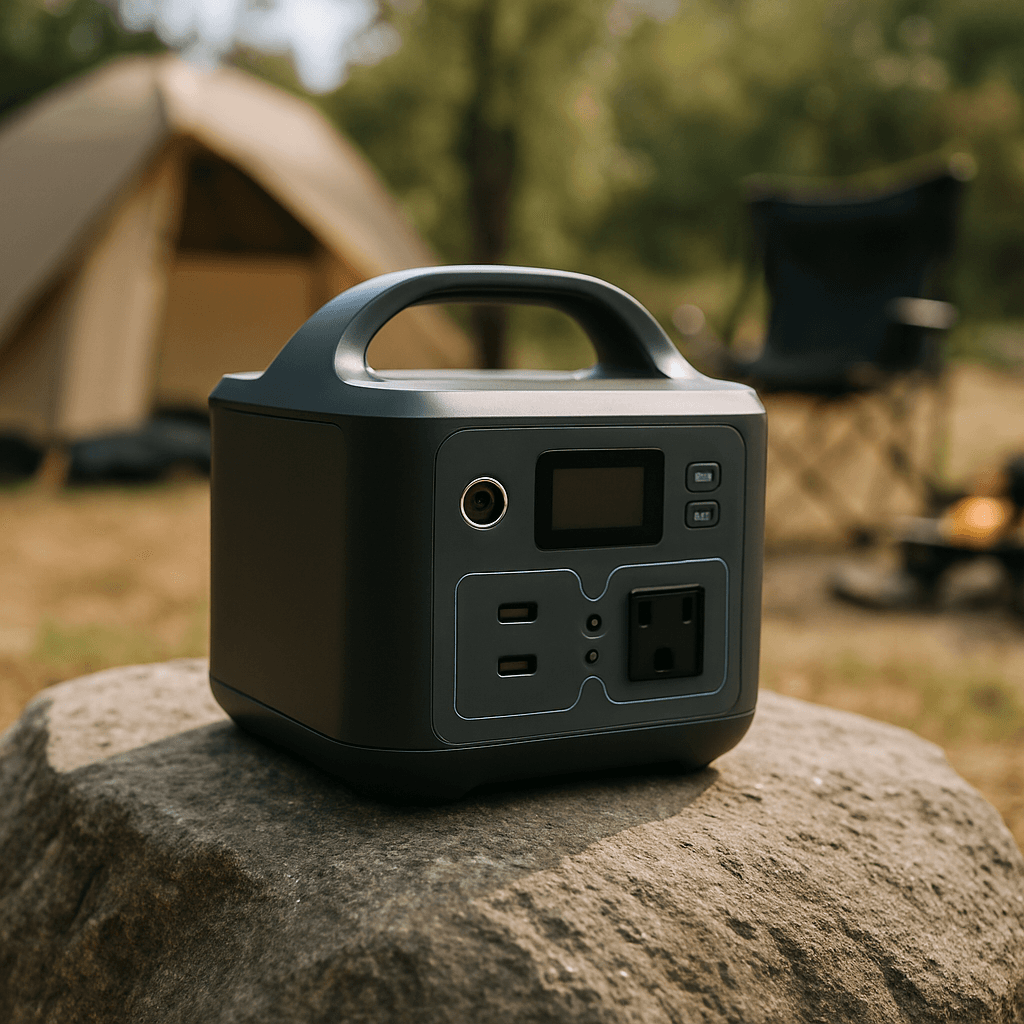
EcoFlow River 3
4.5/5 in our review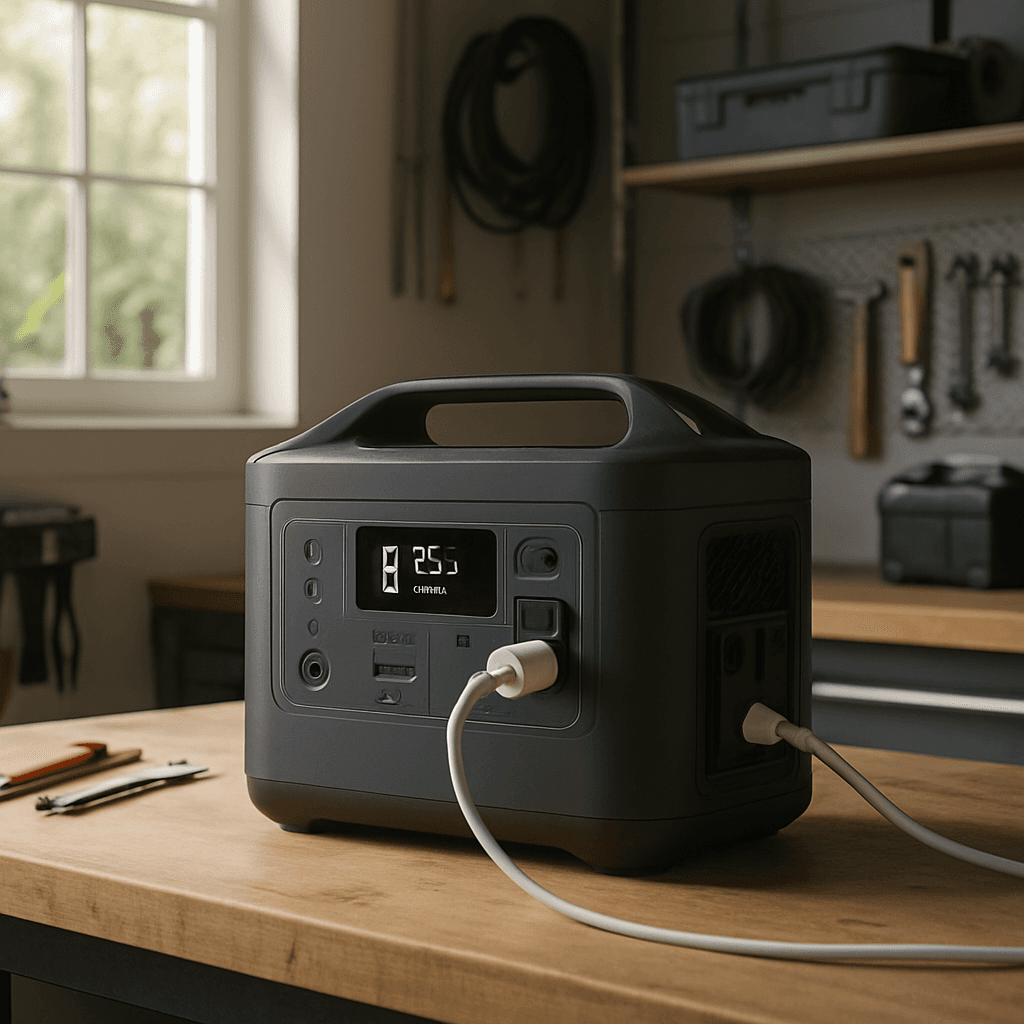
Bluetti Elite 200 V2
4.5/5 in our review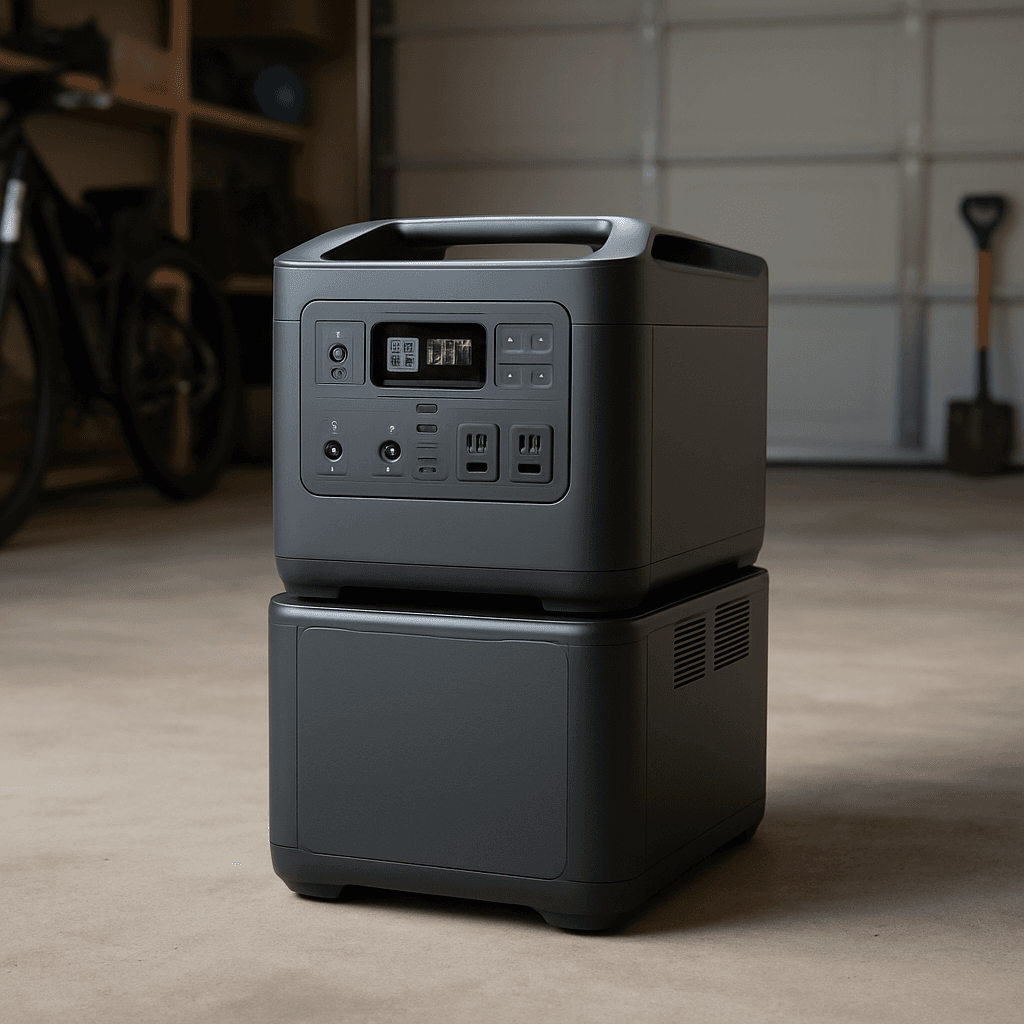
Jackery Explorer 2000 Plus
4.4/5 in our reviewRelated Articles
 Deals & Best Of
Prime Big Deal Days 2026 Recap: Power Station Prices and What to Do Before Black Friday
Prime Big Deal Days ended Oct 7. What power stations actually cost, how prices compared with last Black Friday, which discounts were inflated, and the target prices to beat on Nov 27.
 Deals & Best Of
Power Station and Solar Panel Bundles (2026): What the Panels Really Cost
Bluetti and EcoFlow bundle prices broken down by cost per panel watt, with estimated recharge times, so you can judge if a solar bundle is a good deal.
 Deals & Best Of
Power Station Black Friday 2026: Dates, Prices & What to Buy
Black Friday is Nov 27, 2026, but power station deals start earlier. See last year's real prices, buy-now-or-wait gaps by model, and how to spot a fake discount.