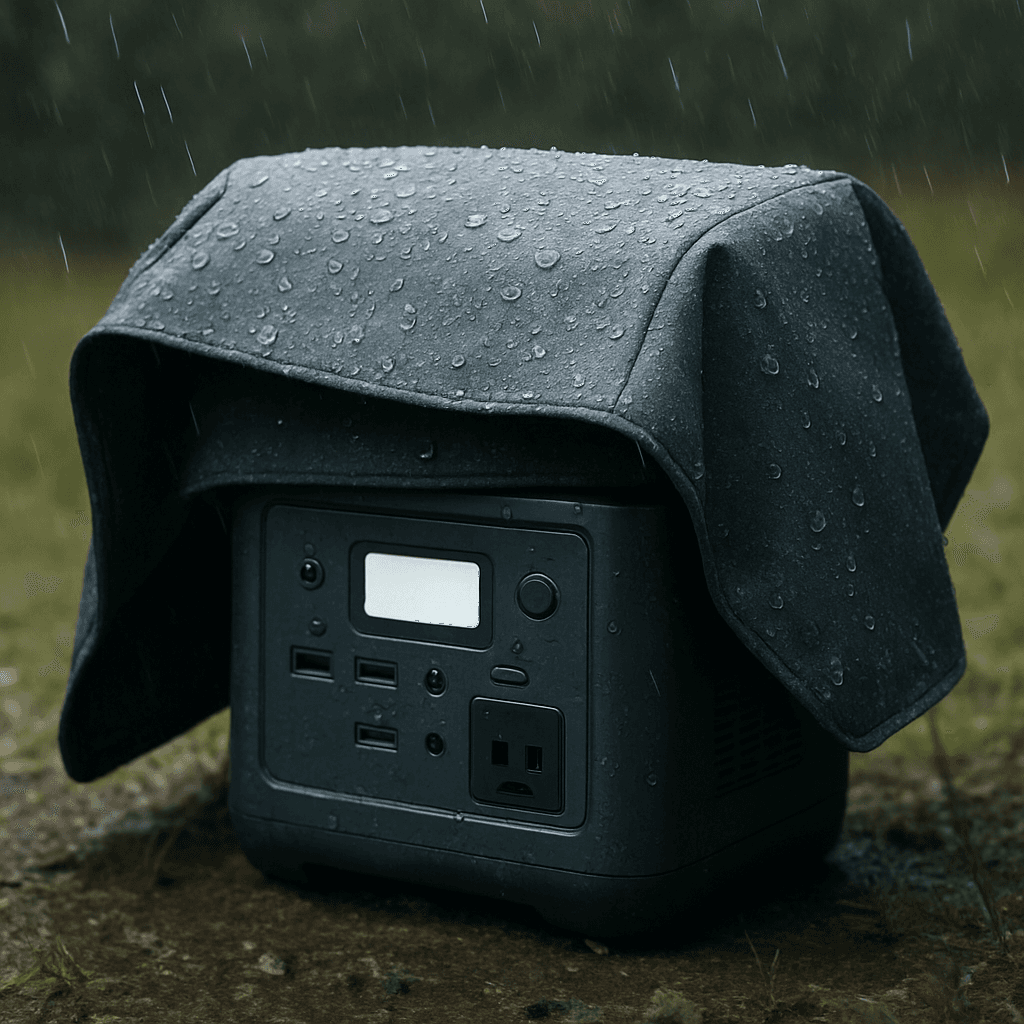
Can You Use a Power Station in the Rain? Weatherproofing Explained
It depends on the IP rating. Most power stations (commonly IP54) tolerate light splash and rain, but none are rated for sustained heavy rain or submersion without a protective cover. Weather resistance is a genuinely important spec for anyone using a power station outdoors — camping, hurricane prep, or boat/marine use — but it's also one of the most misunderstood, since "weatherproof" isn't a single, simple claim.
Understanding IP Ratings
IP (Ingress Protection) ratings use two digits: the first for solid particle protection (dust), the second for liquid protection. For power stations, the second digit matters most for rain/water concerns:
| IP Rating (2nd digit) | Protection Level |
|---|---|
| IPX4 | Splash resistant from any direction |
| IPX5 | Water jets from any direction |
| IPX6 | Powerful water jets |
| IPX7 | Temporary submersion (up to 1m, limited time) |
Most power stations with weather resistance, like the EcoFlow River 3's IP54 rating, protect against splash and light rain exposure, not sustained heavy rain or any submersion.
What Most Power Stations Are NOT Rated For
Even weather-resistant power stations are generally not rated for sustained heavy rain exposure, submersion, or use in active standing water — treat any IP rating below IPX6 as "splash resistant," not "rain-proof for extended outdoor exposure."
Best Practices for Outdoor and Storm Use
- Use a waterproof cover or dry bag for any unit without a high IP rating, especially during sustained rain or storm conditions
- Keep charging ports covered when not actively in use outdoors — connectors are typically the most vulnerable point for water intrusion, even on higher-rated units
- Elevate the unit off wet ground during storms, both for moisture protection and flood risk
- Never charge or use a unit that shows any sign of water intrusion — dry thoroughly and inspect before attempting to use again, or contact the manufacturer if you're unsure
Hurricane and Storm-Specific Guidance
During active severe weather, the safest approach is keeping your power station indoors or under solid, dry shelter rather than relying on any IP rating for direct storm exposure — see our hurricane preparedness checklist for the full outdoor equipment protection guidance, or our general power station safety guide for broader safety practices beyond weather exposure.
DIY Weatherproofing for Outdoor Setups
If you regularly need to run a power station outdoors without a high native IP rating — a semi-permanent camp setup, a job site, an outdoor event — a simple weatherproof enclosure or dry box with cable pass-throughs adds real protection beyond what the unit ships with. Keep the enclosure ventilated (not sealed airtight) so heat generated during charging or heavy load can still dissipate; a fully sealed box solves the water problem but can create a new thermal management problem.
Condensation Is a Separate Risk From Rain
Even when a unit isn't exposed to actual rain, moving it between a cold outdoor environment and a warm indoor space (or vice versa) can cause condensation to form on and inside the unit, similar to a cold drink sweating on a warm day. Let a power station that's been in cold conditions gradually reach room temperature before charging or heavy use if you suspect condensation, rather than assuming "it wasn't rained on" means it's fully dry.
Frequently Asked Questions
Is it safe to use a power station outdoors during light rain?
If your unit has an IP54 rating or higher, brief light rain/splash exposure is generally fine, but check your specific unit's rating and avoid leaving connectors exposed to direct water for extended periods regardless of rating.
What happens if water gets inside my power station?
Stop using it immediately, don't attempt to charge or discharge it, let it dry thoroughly in a safe location away from flammable materials, and contact the manufacturer for guidance before attempting to use it again. Water intrusion can create a genuine safety risk.
Related Articles
 Solar & Technical Guides
How Extreme Heat Affects Your Power Station (And What Desert Climates Need to Know)
Sustained heat above 113°F can cut a power station's usable lifespan roughly in half. Here's the real degradation math and what to actually do about it in hot climates.
 Solar & Technical Guides
Do Portable Power Stations Qualify for Tax Credits or Rebates?
Most portable power stations don't qualify for the federal battery tax credit — here's why, which setups actually might, and where state and utility rebates can still help.
 Solar & Technical Guides
How Much Does It Actually Cost to Run a Power Station vs. Grid Electricity?
A power station doesn't generate cheaper electricity — it stores grid or solar power for later. Here's the honest math on what that actually costs you per kWh.