
Boats and marine environments put extra stress on electronics — humidity, splash exposure, vibration, and temperature swings all matter more on the water than on land. Here's what to prioritize when choosing a power station for marine use.
What Marine Use Requires
- Weather resistance — look for an IP-rated unit (like the EcoFlow River 3's IP54 rating on its battery pack) for meaningful protection against splash and moisture; see our weatherproofing guide for what IP ratings actually mean.
- Compact, securable form factor — boat storage space is limited, and the unit needs to be secured against rocking and waves.
- Solar compatibility if you're spending extended time away from shore power.
- Enough output for marine electronics — fish finders, navigation equipment, bilge pumps, and cabin lighting.
Typical Marine Electronics Load
| Equipment | Typical Watts |
|---|---|
| Fish finder/GPS | 10-30W |
| VHF radio | 5-25W |
| Bilge pump | 300-1,100W (startup surge higher) |
| Cabin lighting | 10-40W |
| Phone/device charging | 10-20W each |
Bilge pumps, similar to sump pumps, have a significant startup surge — verify your power station's surge output rating comfortably exceeds your bilge pump's requirement, similar to the calculation in our sump pump power guide.
Recommended Units
For day trips and moderate electronics use, a Bluetti AC70 (768Wh) offers a good balance of capacity and portability. For longer trips or boats running more demanding equipment, a Jackery Explorer 1000 v2 provides more headroom while remaining reasonably portable for stowing aboard.
Securing Your Power Station Aboard
Always secure the unit against a fixed mount or padded storage compartment — an unsecured power station sliding around during rough water is both a damage risk to the unit and a safety hazard aboard.
Saltwater Corrosion Considerations
Even weather-resistant units aren't fully saltwater-proof — rinse and dry any exposed ports after saltwater exposure, and consider additional protective covers for connection points if you're frequently in spray-heavy conditions.
AC Power Station vs. a Boat's Native 12V System
Most boats already run a 12V DC electrical system off the boat's own battery bank, which raises a fair question: why add a separate power station at all? The answer is redundancy and flexibility — a portable power station isn't wired into the boat's system, so a dead or damaged boat battery doesn't take down your navigation electronics or bilge pump backup with it, and you can pull it off the boat entirely for use elsewhere (camping, home backup) when you're not on the water. For boats without a robust existing 12V setup, or smaller boats that never had one, a power station can serve as the primary electronics power source rather than just backup.
Storage Between Trips
Boats often sit unused for stretches between outings, which matters for battery health — don't leave a power station stored at 100% or fully depleted aboard a boat in a marina slip for weeks at a time, since temperature swings in an enclosed cabin or storage locker can be more extreme than typical household storage. See our maintenance guide for the general storage-charge guidance, and check on the unit periodically between trips rather than assuming it'll be ready whenever you next need it.
Frequently Asked Questions
Is any power station fully waterproof for marine use?
No — even IP-rated units typically protect against splash and light rain, not submersion. Store your power station in a dry, protected location aboard rather than relying on its weather resistance rating for full water exposure.
Can I charge a power station using my boat's engine or alternator?
Some power stations support DC/car-style charging compatible with a boat's 12V system, but check your specific unit's input compatibility and your boat's electrical setup before assuming this will work directly.
Related Articles
 Use Cases
Can a Power Station Work as a UPS for Your Computer or Router?
Many power stations offer a UPS or EPS mode that switches to battery power during an outage. Here's how it actually works, and where it falls short of a dedicated UPS.
 Use Cases
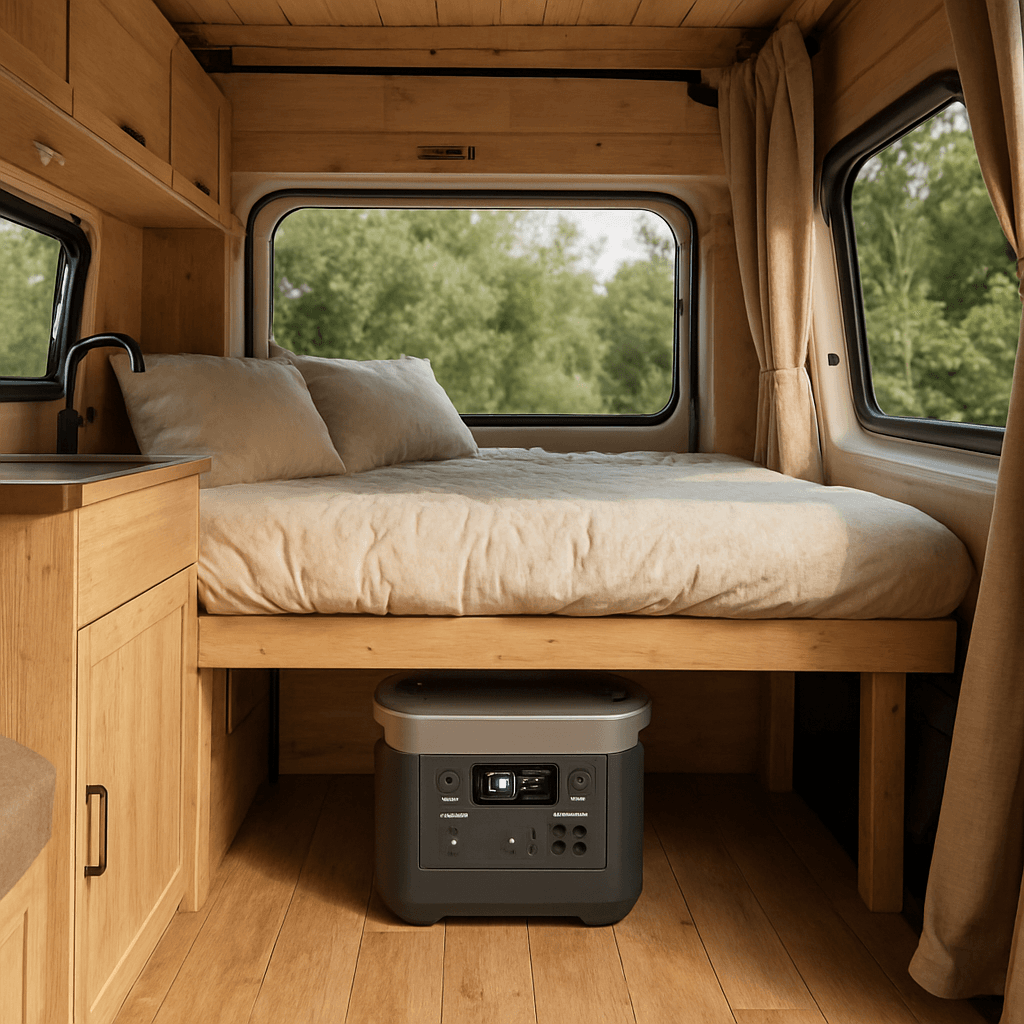
Portable Power Stations for Van Life: Complete Setup Guide
Everything you need to know to build a reliable power system for van life or full-time RV living, from sizing to solar to daily habits that make it last.
 Use Cases
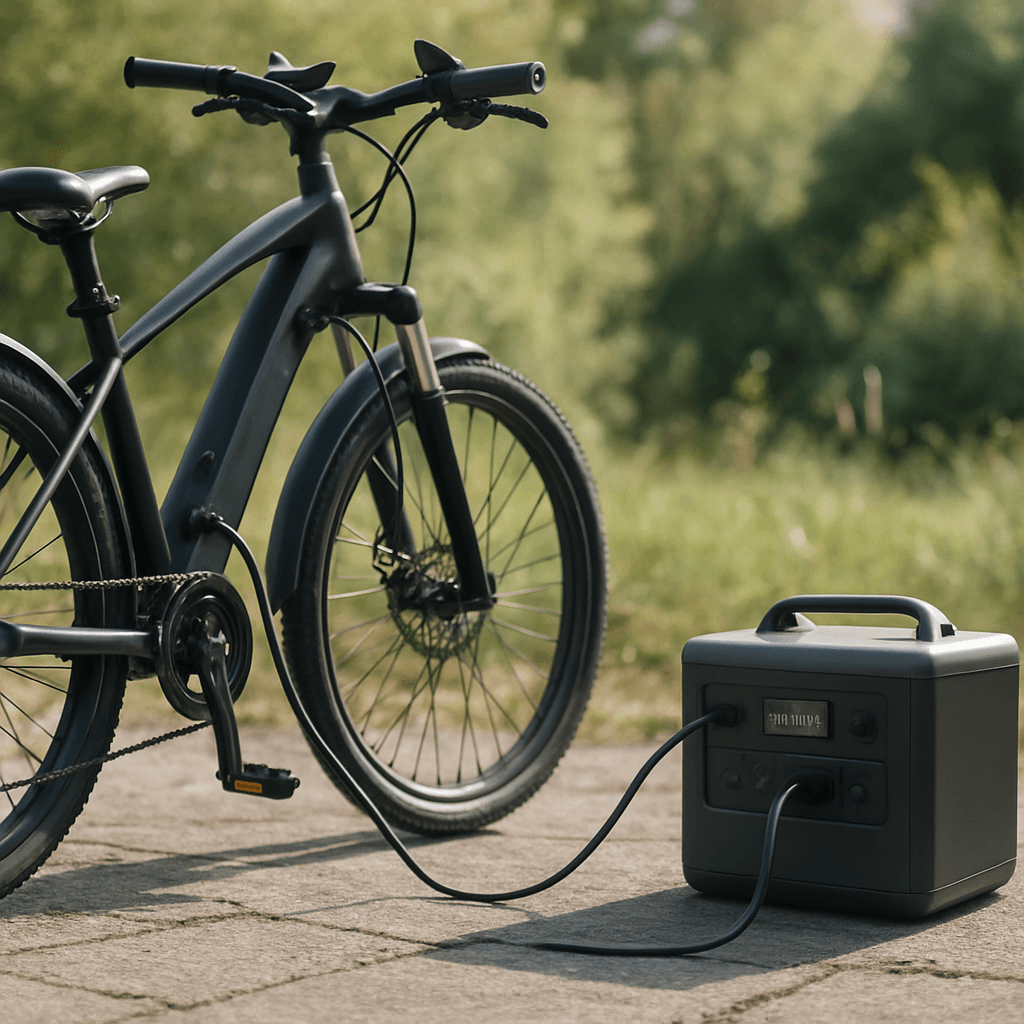
Using a Power Station to Charge an Electric Bike
E-bike charging away from home outlets is easier than you'd think with the right power station. Here's how to size one for your specific e-bike battery.