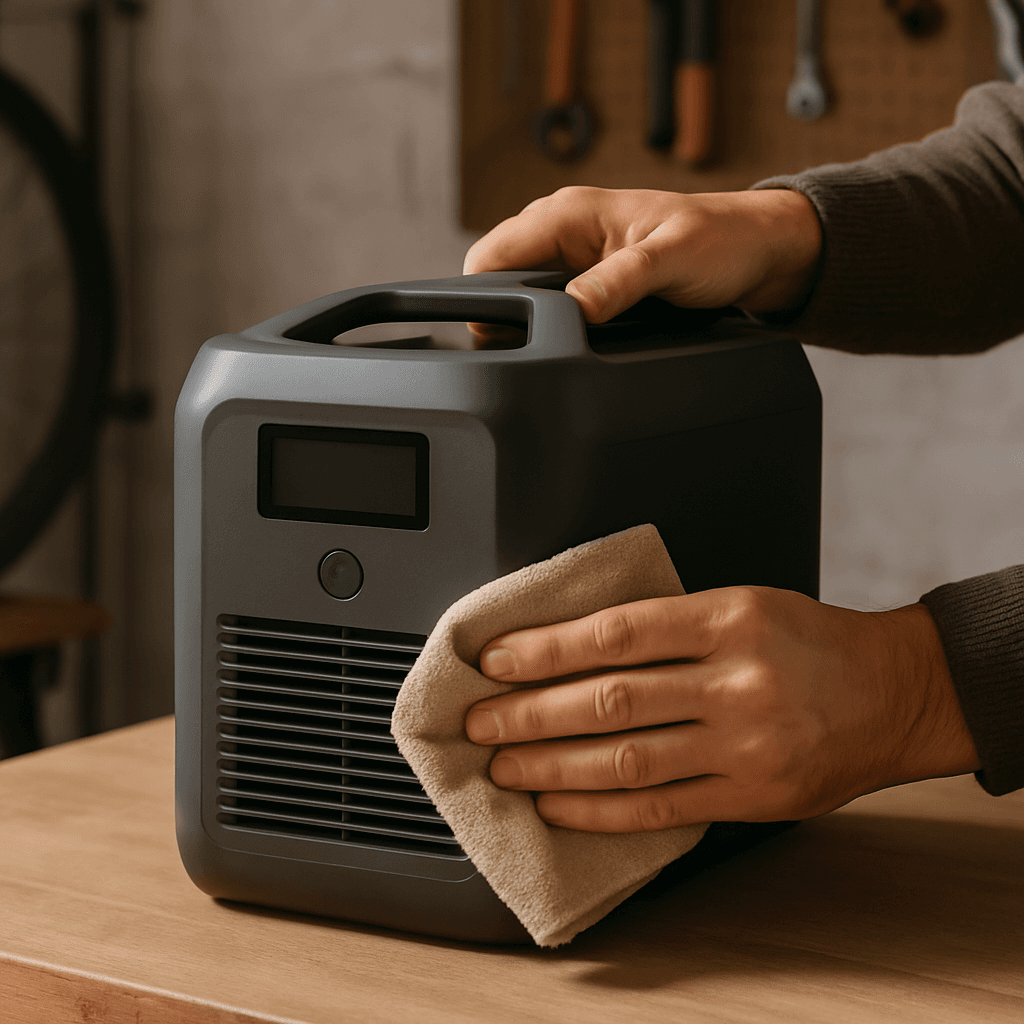
How to Maintain Your Power Station for Maximum Lifespan
The single biggest factor is storage charge level — keep it around 50–60% for long-term storage rather than fully charged or fully depleted, and pair that with avoiding temperature extremes and using the manufacturer's own charging equipment. A power station is a meaningful investment, and a few simple maintenance habits can noticeably extend its real-world lifespan beyond just its rated cycle count. Here's the complete checklist — see our power station safety guide for the safety side of ownership, separate from longevity.
Storage Charge Level
For long-term storage between uses, most manufacturers recommend keeping the battery around 50-60% charge, not fully charged or fully depleted — both extremes accelerate long-term battery aging compared to a mid-range storage charge.
Recharge Periodically During Storage
Even in storage, LiFePO4 batteries slowly self-discharge over time. Check and top off your unit every few months if it's not in regular use, rather than letting it sit for a year or more without any attention — a battery left fully depleted for an extended period can suffer permanent capacity loss.
Temperature Matters More Than People Expect
Avoid storing your power station in extreme heat (a hot car trunk or attic in summer) or extreme cold (an unheated garage in winter) for extended periods — both accelerate battery aging. A climate-controlled interior space is ideal for long-term storage. See our cold weather performance guide for operating (not just storage) temperature considerations, or our extreme heat guide if you live somewhere summers routinely exceed 100°F.
Use the Manufacturer's Charging Equipment
Third-party chargers not designed for your specific unit can charge inconsistently or pose a safety risk, and may not integrate properly with your unit's battery management system. Stick with the manufacturer's cable and adapter, or verified compatible accessories.
Keep Vents Clear
Power stations generate some heat during charging and heavy discharge — keep the unit's vents unobstructed and avoid covering it with fabric or storing it in a tightly enclosed space during active use, to support proper thermal management.
Avoid Extreme Fast-Charging as Your Only Charging Method (If You Have a Choice)
Fast charging is engineered to be safe on modern LiFePO4 units, but if you have the flexibility, occasionally using a standard-speed charge rather than always fast-charging can be a reasonable extra precaution for long-term battery health, though this matters less than the storage and temperature factors above.
Update Firmware If Your Unit Supports It
Some modern power stations receive firmware updates via a companion app that can improve battery management efficiency over time — check if your unit supports this and keep it updated if so.
Frequently Asked Questions
Should I fully charge my power station before storing it long-term?
No — most manufacturers recommend storing at roughly 50-60% charge rather than 100%, since both full charge and full depletion accelerate long-term battery aging compared to a mid-range storage level.
How often should I use my power station to keep it healthy?
There's no strict requirement, but checking and topping off charge every few months during storage periods, along with occasional actual use, helps maintain long-term battery health better than years of complete neglect.
My power station has finally reached the end of its life — what do I do with it?
Never put it in household trash or curbside recycling — lithium batteries are a real fire risk in waste systems. See our battery recycling and disposal guide for how to dispose of it safely.
Related Articles
 Solar & Technical Guides
How Extreme Heat Affects Your Power Station (And What Desert Climates Need to Know)
Sustained heat above 113°F can cut a power station's usable lifespan roughly in half. Here's the real degradation math and what to actually do about it in hot climates.
 Solar & Technical Guides
Do Portable Power Stations Qualify for Tax Credits or Rebates?
Most portable power stations don't qualify for the federal battery tax credit — here's why, which setups actually might, and where state and utility rebates can still help.
 Solar & Technical Guides
How Much Does It Actually Cost to Run a Power Station vs. Grid Electricity?
A power station doesn't generate cheaper electricity — it stores grid or solar power for later. Here's the honest math on what that actually costs you per kWh.