How Extreme Heat Affects Your Power Station (And What Desert Climates Need to Know)
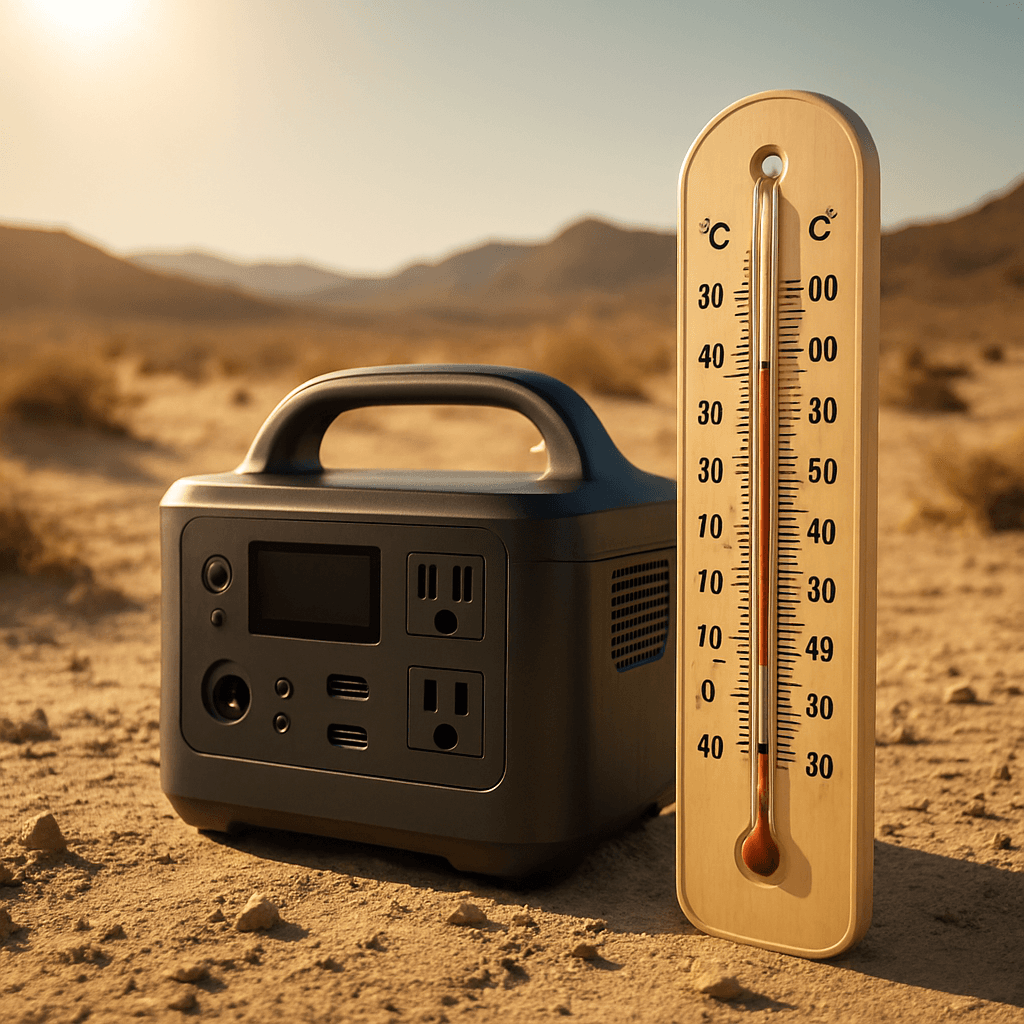
Yes, meaningfully. For roughly every 18°F (10°C) a battery runs above its ideal range, its usable cycle life can be cut roughly in half. Households in Arizona, Nevada, inland California, and similar hot climates are dealing with a real, measurable effect — not just a theoretical concern — and the fix is more specific than "keep it out of the sun."
The Ideal Range vs. What Desert Summers Actually Deliver
LiFePO4 batteries — standard in nearly all current power stations — perform best between roughly 68-95°F (20-35°C). Manufacturers typically rate safe storage up to around 122°F (50°C), but "safe" and "ideal" are very different numbers. A closed vehicle, an uninsulated garage, or direct outdoor exposure in a desert summer routinely exceeds 113°F (45°C) — well outside the ideal window and approaching the upper safety limit simultaneously.
The Actual Degradation Math
| Storage Condition | Capacity Loss (90 days) |
|---|---|
| 77°F (25°C) — near ideal | ~3% |
| 131°F (55°C) — sustained extreme heat | ~12% |
That's roughly 4x the capacity loss over the same 90-day period just from sustained extreme heat exposure. The general rule of thumb — cycle life roughly halving for every 18°F (10°C) above ideal — compounds this over a unit's full lifespan, not just a single storage season.
What This Means Over Years, Not Just Days
| Climate | Estimated Lifespan (with active cooling) |
|---|---|
| Temperate climate | 12-15 years |
| Sustained 113°F (45°C) average desert climate | 7-9 years |
That's a genuinely significant real-world difference — potentially losing a third or more of a power station's useful life purely to climate, before any other usage factor is considered. This is separate from (and compounds with) normal cycle-count aging covered in our battery lifespan guide.
Why Heat Damages Batteries Faster Than Cold
Cold weather (covered in our cold weather performance guide) mainly causes a temporary performance dip that reverses once temperatures moderate. Heat is different — sustained high temperatures accelerate the actual chemical breakdown of the battery's internal electrolyte and materials, which is permanent degradation, not a temporary dip. This is why hot-climate battery care deserves its own specific attention rather than treating "extreme temperature" as one generic problem.
Practical Mitigation for Hot Climates
- Never store a power station in a closed vehicle during summer. Interior vehicle temperatures in direct sun routinely exceed both the ideal range and the safety threshold within an hour, even with outside temperatures well below the vehicle interior's peak.
- Keep it out of direct, prolonged sunlight even when stored outdoors or on a patio — shade alone can meaningfully reduce the unit's actual operating temperature compared to direct sun exposure.
- Prioritize airflow over sealing it away. A power station stored in a sealed, uninsulated shed or closet without airflow can trap heat rather than dissipate it; airflow (a vented space, not necessarily active cooling) helps meaningfully.
- Charge during cooler parts of the day when possible. Charging generates some internal heat on top of ambient temperature, so charging during the cooler morning or evening rather than peak afternoon heat reduces total thermal stress.
- Consider active cooling for a unit that lives permanently in extreme heat — even a basic fan providing airflow across the unit's vents measurably helps compared to still, trapped hot air, which is the difference behind the 7-9 vs. 12-15 year lifespan estimates above.
Does This Affect Warranty Coverage?
Extreme heat damage from clearly improper storage (like routinely leaving a unit in a closed hot vehicle) can fall under normal-wear or improper-use exclusions in some manufacturer warranties — see our warranty comparison guide for what's typically covered, and don't assume heat-related capacity loss is automatically a covered defect.
Frequently Asked Questions
Is it safe to use a power station outdoors in 100°F+ heat?
Generally yes for active use — the safety concern is primarily about prolonged storage at extreme temperatures, not brief use. Still, avoid direct sun exposure during use when possible, and don't leave it running unattended in full sun for extended periods if shade is available.
Does heat damage affect the warranty the same way as a manufacturing defect?
No — most warranties distinguish between manufacturing defects (covered) and damage from clearly improper storage or use, like routine extreme heat exposure in a closed vehicle (often excluded). Check your specific manufacturer's warranty terms for exact language.
Can I reverse capacity loss from heat exposure once it's happened?
No — heat-accelerated capacity loss is permanent chemical degradation, not a temporary state that recovers when temperatures cool down. Prevention through proper storage and use is the only real lever, not recovery after the fact.
Related Articles
 Solar & Technical Guides
Do Portable Power Stations Qualify for Tax Credits or Rebates?
Most portable power stations don't qualify for the federal battery tax credit — here's why, which setups actually might, and where state and utility rebates can still help.
 Solar & Technical Guides
How Much Does It Actually Cost to Run a Power Station vs. Grid Electricity?
A power station doesn't generate cheaper electricity — it stores grid or solar power for later. Here's the honest math on what that actually costs you per kWh.
 Solar & Technical Guides
How to Safely Recycle or Dispose of a Power Station Battery
Never throw a power station in the trash or curbside recycling — lithium batteries are a real fire risk in waste systems. Here's how to actually dispose of one safely.