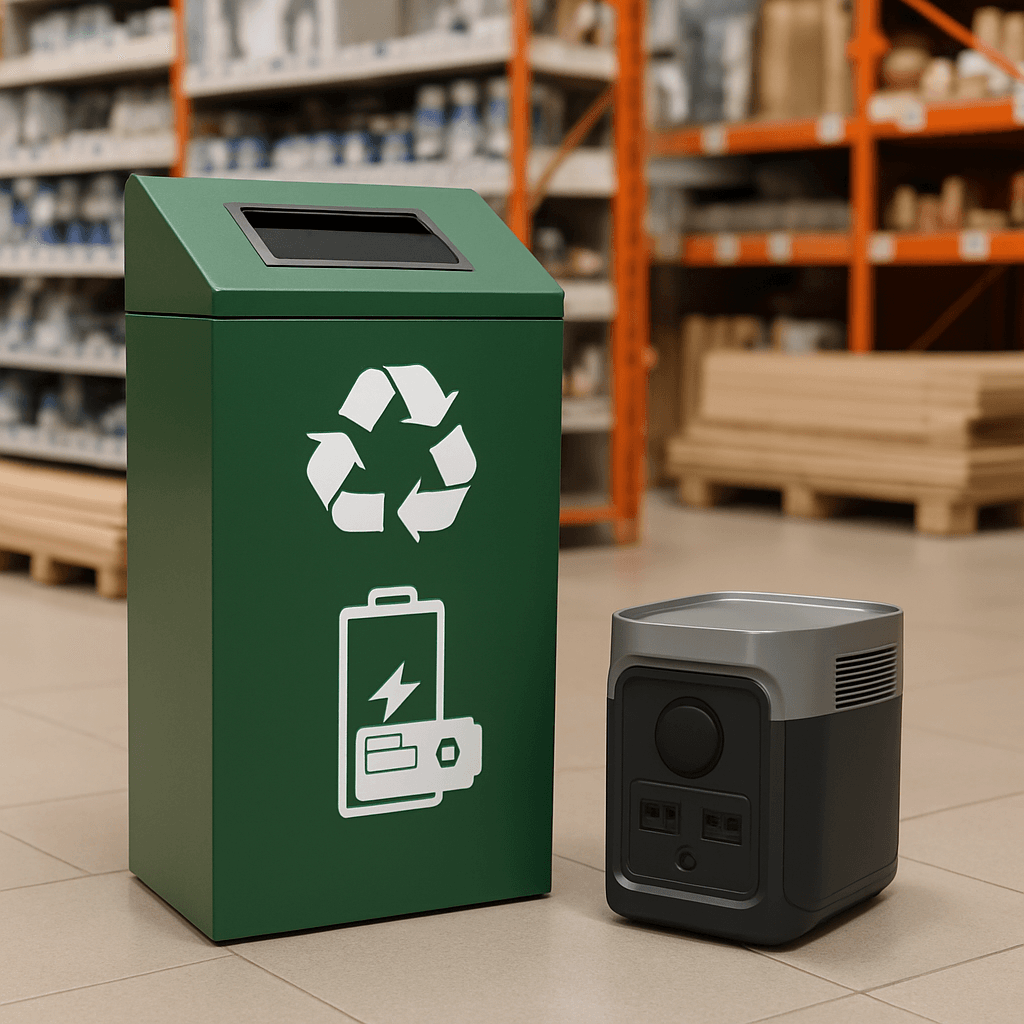
How to Safely Recycle or Dispose of a Power Station Battery
Never put a power station or its battery in household trash or curbside recycling. Lithium batteries can spark fires in garbage trucks, recycling facilities, and landfills when crushed or damaged — a power station needs to go through a dedicated battery recycling channel, not your regular bins.
Why This Actually Matters
A damaged or punctured lithium battery can ignite, and these fires are a real, documented problem at waste management facilities — compactor trucks and sorting centers have caused serious fires traced back to improperly discarded lithium batteries. This isn't a minor environmental nicety; it's a genuine safety issue for the waste workers handling your trash.
Where to Actually Take It
- Manufacturer take-back programs. Many power station brands (check your specific manufacturer's site) offer a program to send back an old or dead unit for proper recycling, sometimes with a shipping label provided.
- Call2Recycle drop-off locations. Call2Recycle operates a nationwide network of battery recycling drop-off points, searchable by zip code — this is one of the most accessible options for most people.
- Electronics retailers. Stores like Best Buy accept lithium battery devices for recycling, often at no cost, at in-store drop-off points.
- Household Hazardous Waste (HHW) facilities. Most counties and municipalities operate an HHW facility or periodic collection event specifically for batteries, electronics, and other items that can't go in regular trash — check your local government's waste management page.
Before You Recycle It
- Check your local regulations first. Some jurisdictions have specific rules for how batteries need to be bagged, taped, or labeled before drop-off — a quick check of your city or county's waste management site avoids a wasted trip.
- Don't attempt to disassemble it yourself. Opening a lithium battery pack to "recycle the parts" individually is a real safety risk — let a certified recycling facility handle it as a complete unit.
- Tape over exposed terminals if the unit is damaged or the casing is compromised, to reduce short-circuit risk during transport, but don't otherwise open or modify it.
What About a Unit That's Still Working, Just Old?
If your power station still holds a reasonable charge and just isn't your primary unit anymore, consider keeping it as a genuine backup, donating it, or selling it, rather than recycling it — recycling is for end-of-life units, not units you've simply upgraded away from. A still-functional older unit is more useful sitting in a closet as redundancy than broken down for materials. See our maintenance guide if you're trying to extend a unit's usable life instead.
Signs a Unit Needs Immediate, Careful Handling
If your power station shows swelling, an unusual smell, excessive heat when not in use, or visible casing damage, treat it as a priority safety issue — move it away from flammable materials, don't attempt to charge or use it, and contact the manufacturer or your local fire department's non-emergency line for disposal guidance specific to a potentially damaged battery, rather than transporting it yourself to a standard drop-off point.
Frequently Asked Households Actually Ask
Can I just throw a small, dead power bank in the trash if it's not a full-size power station?
No — the same rule applies to any lithium battery device regardless of size, including small power banks. Use the same recycling channels (Call2Recycle, electronics retailers, HHW facilities) for any lithium battery product.
Does the manufacturer's warranty cover recycling costs?
Not typically — warranty covers defects and performance issues, not end-of-life disposal. Some manufacturers do offer free take-back/recycling programs, but check that separately from your warranty terms.
Is it safe to ship a power station battery by mail for recycling?
Only through a program specifically designed for it — many manufacturer take-back and Call2Recycle programs provide proper shipping materials and labels rated for lithium battery transport. Never ship a lithium battery through standard mail without following the specific program's packaging instructions, since improperly packaged lithium batteries are a shipping hazard.
Related Articles
 Solar & Technical Guides
How Extreme Heat Affects Your Power Station (And What Desert Climates Need to Know)
Sustained heat above 113°F can cut a power station's usable lifespan roughly in half. Here's the real degradation math and what to actually do about it in hot climates.
 Solar & Technical Guides
Do Portable Power Stations Qualify for Tax Credits or Rebates?
Most portable power stations don't qualify for the federal battery tax credit — here's why, which setups actually might, and where state and utility rebates can still help.
 Solar & Technical Guides
How Much Does It Actually Cost to Run a Power Station vs. Grid Electricity?
A power station doesn't generate cheaper electricity — it stores grid or solar power for later. Here's the honest math on what that actually costs you per kWh.