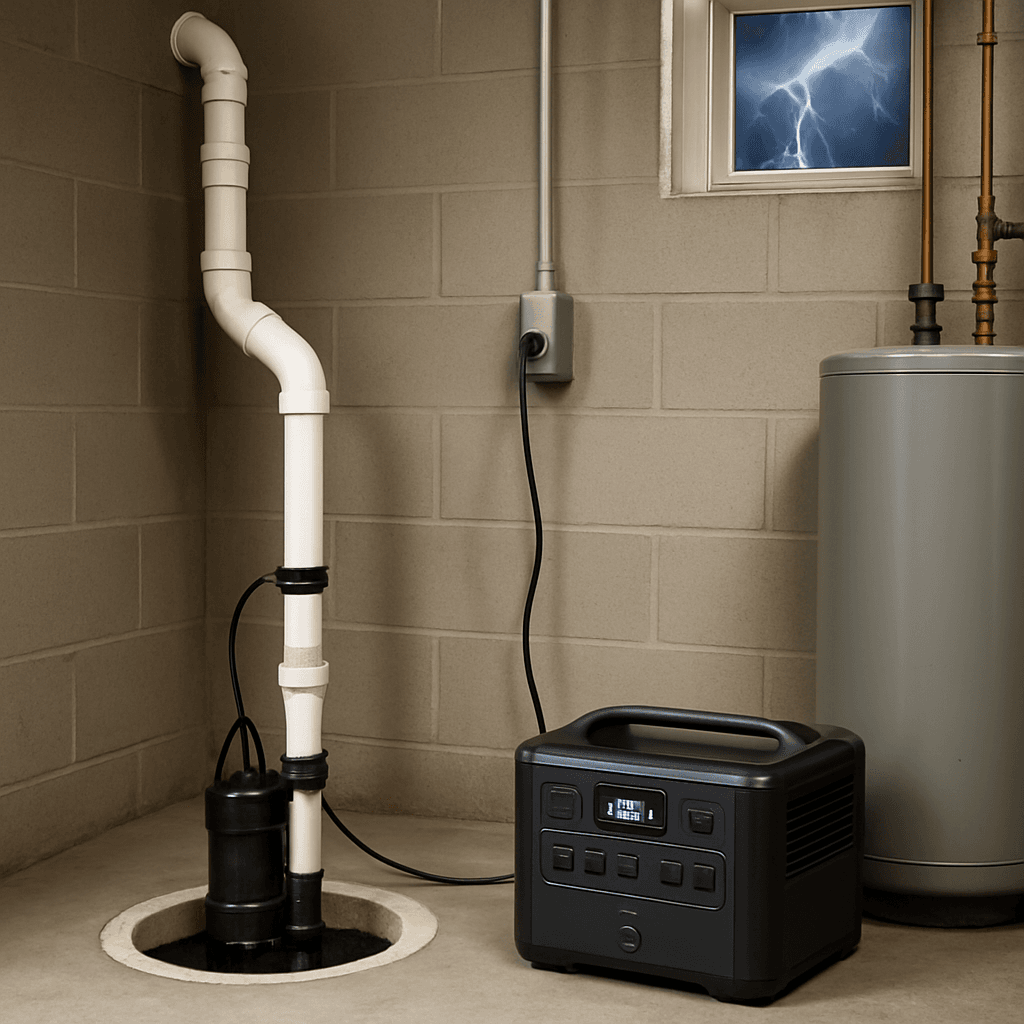
How to Keep Your Sump Pump Running During a Power Outage
A standard sump pump needs at least 1,500–2,000W of surge/peak output from a power station — the startup surge, not the running wattage, is what actually determines whether the pump can start at all. Power outages and heavy storms often go hand in hand — which is exactly when your sump pump matters most. A pump that stops running during a storm is one of the most common causes of basement flooding, making backup power for this specific device a high-priority item.
Sump Pump Power Requirements
| Pump Type | Running Watts | Startup Surge |
|---|---|---|
| Small/standard sump pump (1/3 HP) | 800-1,050W | Up to 2,000W+ momentarily |
| Larger sump pump (1/2 HP) | 1,000-1,300W | Up to 2,500W+ momentarily |
The startup surge is the critical number — sump pumps draw a large momentary spike when the motor starts, often 2-3x their running wattage. Your power station's surge/peak output rating (not just continuous) needs to comfortably exceed this, or the pump may fail to start even though the power station has plenty of capacity. See our running watts vs surge watts guide for the full breakdown of why this distinction matters.
How Long Does a Sump Pump Actually Run?
Sump pumps cycle on and off based on water level, not continuously — during an active storm, cumulative run time might be 10-30 minutes per hour depending on rainfall intensity, meaning actual energy use is much lower than the running wattage would suggest if calculated as continuous.
Recommended Sizing
For a standard 1/3 HP sump pump, look for a power station with at least 1,500-2,000W continuous/surge output — units like the EcoFlow Delta 2 Max (2,400W output) or Jackery Explorer 2000 Plus (3,000W output) provide comfortable headroom for the startup surge plus any other essential loads running simultaneously.
Don't Rely on This as Your Only Line of Defense
A power station is a strong backup layer, but consider it part of a broader flood-prevention plan — a battery-backup sump pump system (a separate, dedicated backup pump with its own battery) is purpose-built for this exact scenario and worth considering alongside general power station backup, especially in flood-prone areas.
Test Before You Need It
Don't wait for an actual storm to discover your power station can't handle your sump pump's startup surge — test the combination during a calm period so you know it works, and keep the power station charged and ready ahead of storm season. See our hurricane preparedness checklist for a full seasonal prep timeline.
Battery Backup Sump Pumps vs. a General Power Station
A dedicated battery backup sump pump system is purpose-built and wires directly into your existing sump pump setup, automatically switching to battery power the instant grid power drops — no manual connection needed, which matters if a storm hits while you're away or asleep. A general-purpose power station requires you to physically plug the pump in during an outage, but it does double duty for your fridge, medical equipment, and everything else, where a dedicated sump backup only runs the pump. Many flood-prone households use both: a dedicated battery backup for guaranteed automatic pump protection, plus a general power station for everything else.
Basement Water Damage Adds Up Fast
Even a single sump pump failure during a heavy storm can mean thousands of dollars in water damage, mold remediation, and lost belongings — costs that dwarf the price of a mid-size power station many times over. Framing the purchase against that realistic downside, rather than just against the unit's price tag alone, makes the sizing decision (getting genuinely adequate surge output, not the cheapest option that technically claims to work) much easier to justify.
Signs Your Current Backup Plan Isn't Enough
If you've never actually tested your power station against your specific sump pump's startup surge, or if your pump has failed to start on a marginal power source before, treat that as a warning sign rather than something to hope doesn't happen again. A pump that "usually" starts isn't the same as one you can rely on during the exact high-rainfall event when it matters most.
Frequently Asked Questions
What happens if my power station's output isn't enough for the sump pump's startup surge?
The pump may fail to start, trip the power station's overload protection, or the power station may shut down entirely — always check that your unit's surge/peak output rating comfortably exceeds your pump's startup wattage before relying on it.
Should I get a dedicated battery backup sump pump instead of using a general power station?
Dedicated battery backup sump pump systems are purpose-built for this exact failure mode and are worth considering for flood-prone homes, potentially alongside a general power station for other essential loads during the same outage.
Related Articles
 Use Cases
Can a Power Station Work as a UPS for Your Computer or Router?
Many power stations offer a UPS or EPS mode that switches to battery power during an outage. Here's how it actually works, and where it falls short of a dedicated UPS.
 Use Cases
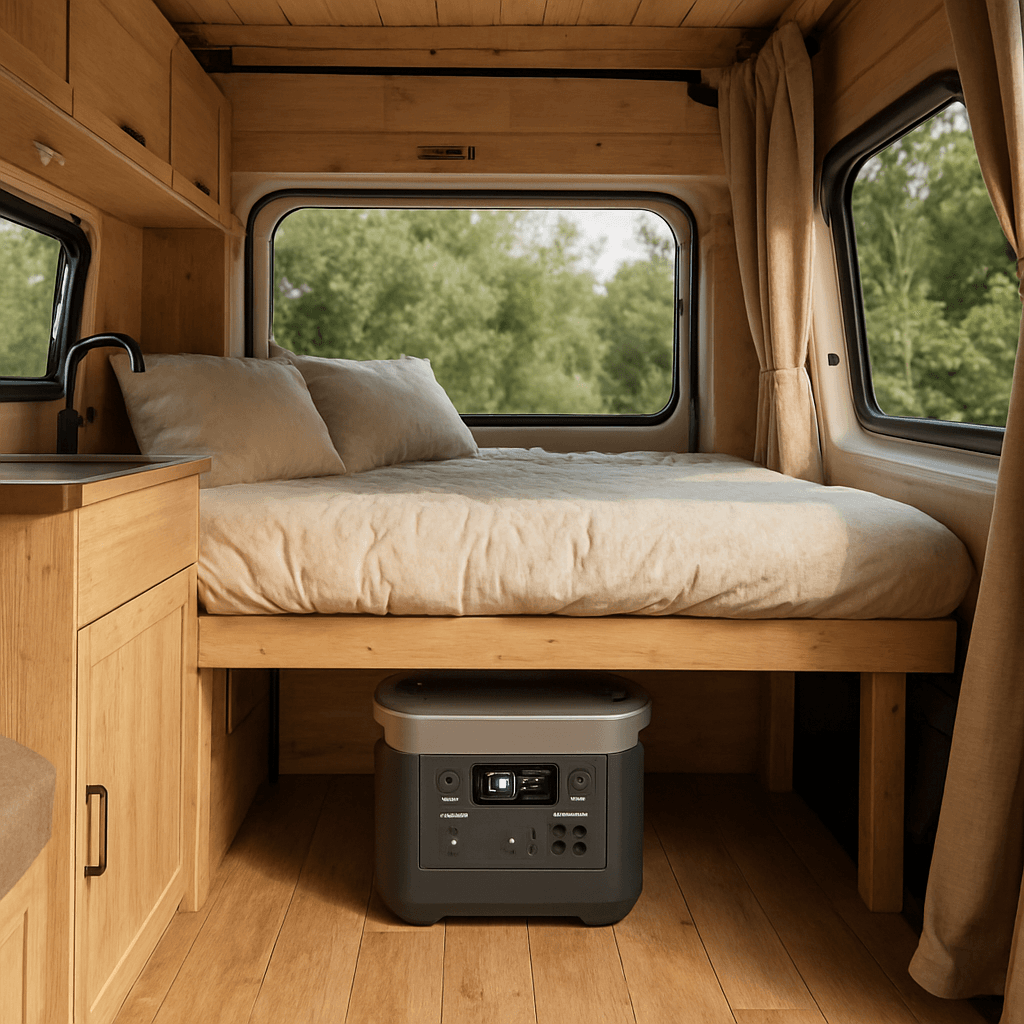
Portable Power Stations for Van Life: Complete Setup Guide
Everything you need to know to build a reliable power system for van life or full-time RV living, from sizing to solar to daily habits that make it last.
 Use Cases
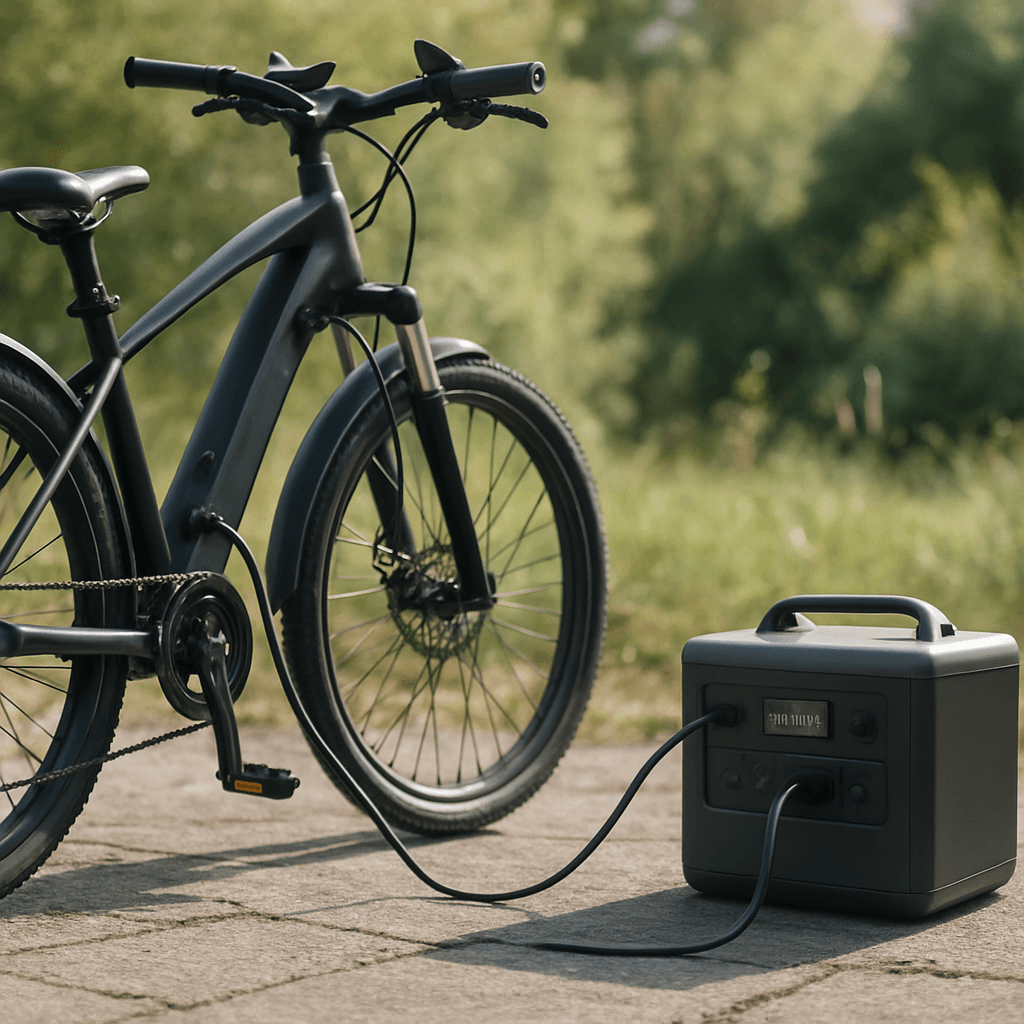
Using a Power Station to Charge an Electric Bike
E-bike charging away from home outlets is easier than you'd think with the right power station. Here's how to size one for your specific e-bike battery.