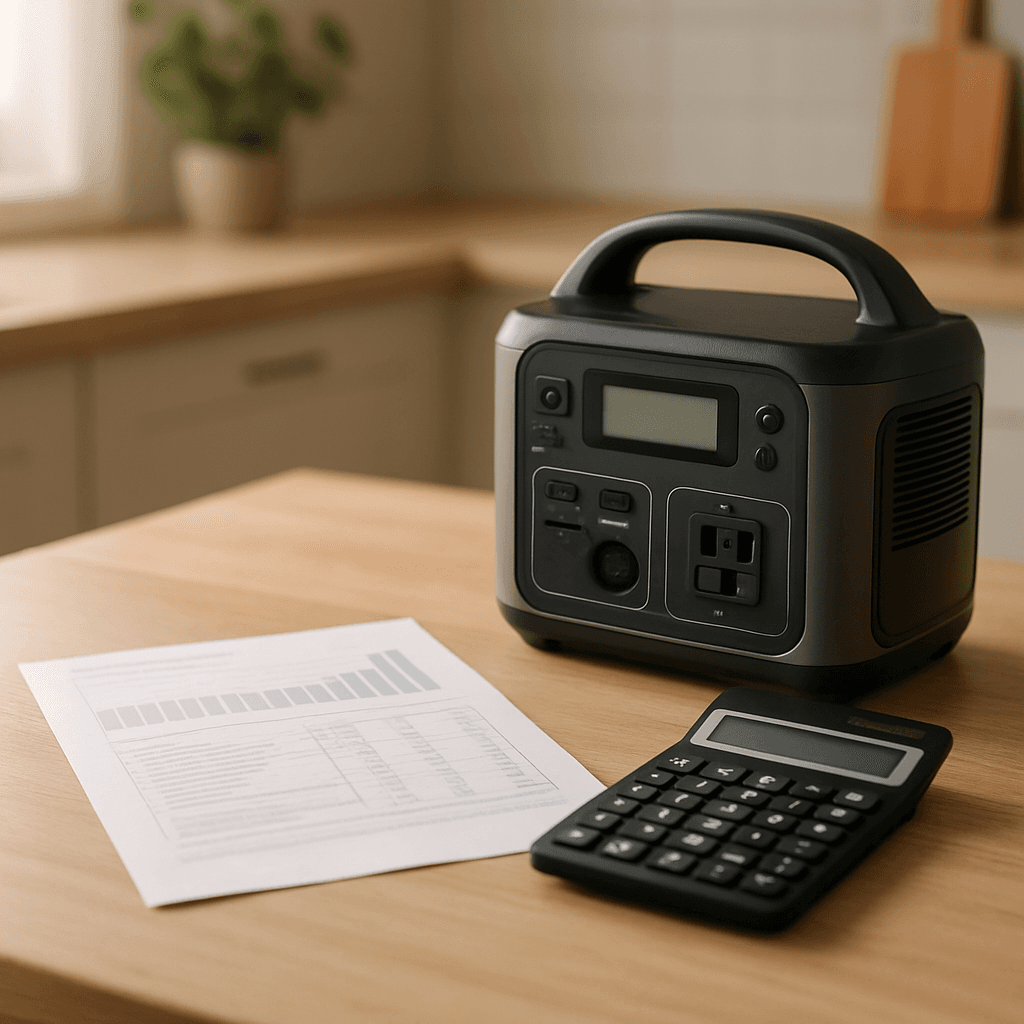
How Much Does It Actually Cost to Run a Power Station vs. Grid Electricity?
A power station doesn't save you money on electricity — it costs you more per kWh than your regular grid rate, because you're paying for the hardware, inverter conversion losses, and (if you're recharging from the wall) the same grid electricity to begin with. It's a backup and portability tool, not a cost-saving device.
What Grid Electricity Actually Costs
U.S. residential electricity averages roughly $0.14–$0.29 per kWh depending on your region, with New England and the West Coast typically at the higher end and the central U.S. generally cheaper. Check your own utility bill for your actual rate — regional averages are a starting point, not your specific number.
What Charging a Power Station From the Wall Actually Costs
When you recharge a power station from a standard outlet, you're paying your normal grid rate for the electricity going in, plus you lose some of it to inverter conversion — typically 10–15% efficiency loss between what goes in and what you can actually use out. Practically, that means refilling a 2,000Wh power station from empty costs roughly $0.32–$0.67 at typical residential rates, before accounting for that loss — a small amount, but it's not "free" electricity, and using it doesn't reduce what you owe your utility for whatever you drew to charge it in the first place.
Where the Real Cost Is: The Hardware, Not the Electricity
The actual cost of owning a power station is almost entirely the upfront purchase price, not the electricity to charge it. A $600 power station used a few times a year for camping or occasional outages costs you that $600 (plus negligible charging electricity) — there's no ongoing "fuel cost" the way there is with a gas generator. This is the opposite of a gas generator, where fuel cost is a real ongoing expense on top of the hardware.
Solar Charging Changes the Math — But Only If You Already Have Panels
If you're charging via solar panels you already own, the electricity itself is effectively free (beyond the panels' own upfront cost). This is the one scenario where a power station can plausibly reduce your ongoing electricity costs — but only meaningfully if you're using it regularly enough, and even then, you're really evaluating the solar panels' payback period, not the power station's. See our solar recharge time guide if this is your setup.
Comparing to a Gas Generator's Real Running Cost
| Power Source | Approx. Cost Per kWh |
|---|---|
| Grid electricity (national residential average) | $0.14–$0.29 |
| Power station (charged from grid, including inverter loss) | Grid rate + ~10–15% |
| Gas generator (fuel cost alone) | $0.15–$0.40+, fuel-price dependent |
| Power station charged from owned solar panels | Near $0 marginal cost per charge |
A power station charged from the wall costs slightly more per kWh than plain grid electricity due to conversion losses — but a gas generator often costs comparably or more once you factor in fuel, and adds noise, fumes, and maintenance a power station doesn't.
The Honest Takeaway
Don't buy a power station expecting it to lower your electricity bill — it won't, and comparing it to grid rates on a pure cost-per-kWh basis will always make it look worse, because that's not the problem it's solving. The value is in portability, silence, indoor safety, and backup when the grid itself is down — none of which a cost-per-kWh comparison captures. If your actual goal is reducing your monthly electricity bill, look at solar panels with net metering or a time-of-use rate plan instead; a power station is the wrong tool for that specific goal.
Frequently Asked Questions
Does using a power station instead of grid power ever save me money?
Only in narrow cases — mainly if you're charging it from solar panels you already own and using it to avoid a specific cost (like fuel for a generator, or peak time-of-use grid rates if your utility charges those). For most households, it's a backup and convenience tool, not a savings tool.
Is it cheaper to run a small appliance off a power station or plug it directly into the wall?
Plugging directly into the wall is always cheaper, since a power station adds inverter conversion losses on top of the same grid electricity. Use a power station when you need portability or backup during an outage, not as a way to run devices more cheaply during normal grid operation.
How much does inverter loss actually cost me over a year of typical use?
For most households using a power station occasionally (camping trips, a handful of outages a year), the total electricity cost — including inverter losses — amounts to a few dollars annually at most. It's not a meaningful expense compared to the hardware's upfront price.
Related Articles
 Solar & Technical Guides
How Extreme Heat Affects Your Power Station (And What Desert Climates Need to Know)
Sustained heat above 113°F can cut a power station's usable lifespan roughly in half. Here's the real degradation math and what to actually do about it in hot climates.
 Solar & Technical Guides
Do Portable Power Stations Qualify for Tax Credits or Rebates?
Most portable power stations don't qualify for the federal battery tax credit — here's why, which setups actually might, and where state and utility rebates can still help.
 Solar & Technical Guides
How to Safely Recycle or Dispose of a Power Station Battery
Never throw a power station in the trash or curbside recycling — lithium batteries are a real fire risk in waste systems. Here's how to actually dispose of one safely.