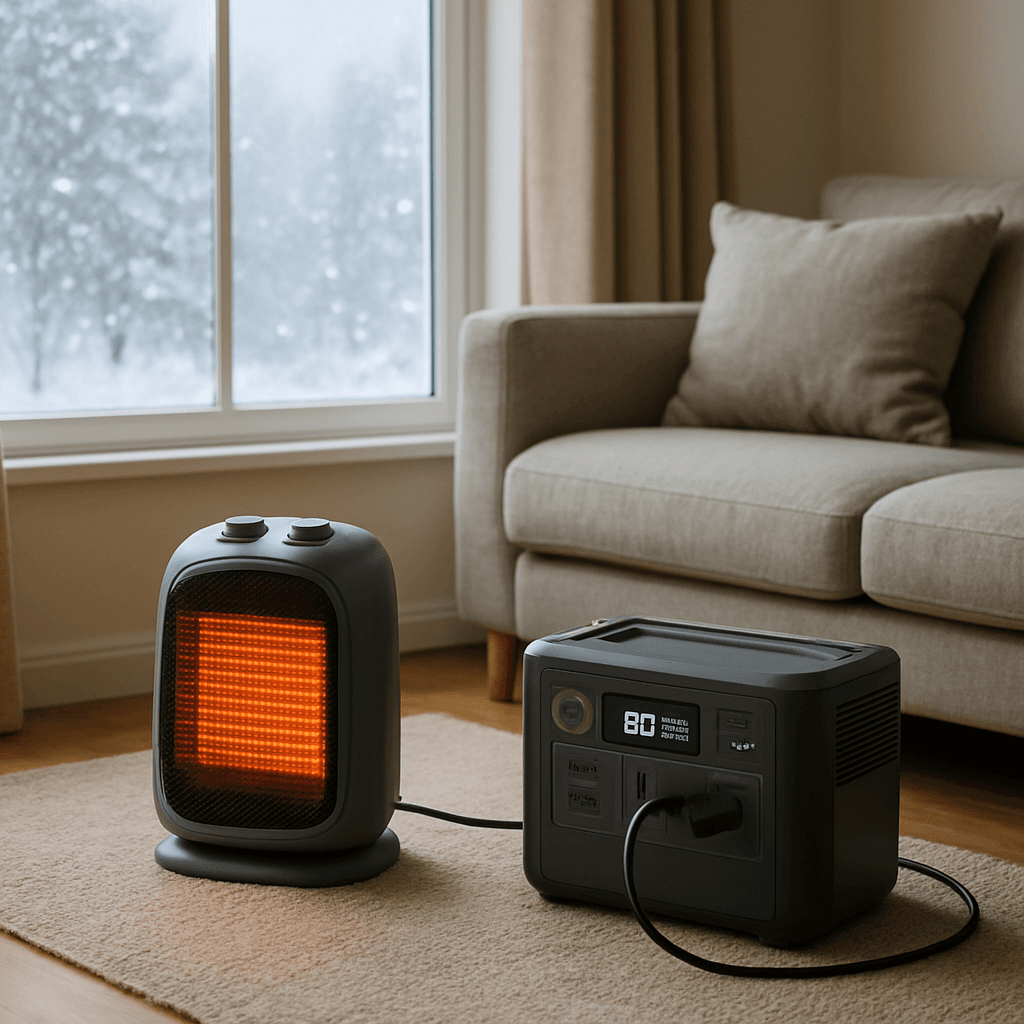
Not for long. A typical 1,500W space heater drains even a large 2,048Wh power station in about 1.3 hours, so intermittent use, a lower wattage setting, and a non-electric backup heat source are the realistic strategy rather than continuous overnight heating. Space heaters are among the most power-hungry common household devices, and winter power outages are exactly when you need heat most. Here's the honest math on what's realistic with a portable power station.
Space Heater Power Draw
Most electric space heaters draw 1,200-1,500W on their high setting — this is a large, continuous load that will drain even a substantial power station relatively quickly.
| Power Station Capacity | Space Heater (1,500W) Runtime |
|---|---|
| 1,070Wh | ~40 minutes |
| 2,048Wh | ~1.3 hours |
| 6,144Wh (expanded) | ~4 hours |
This is why space heaters are the single hardest common device to support on battery power for any meaningful duration — even a large expanded system only provides a few hours at full heater output.
Strategies to Make It Work
- Use the heater's lower wattage setting (often 600-900W) rather than max — this roughly doubles your runtime compared to the high setting.
- Run it intermittently, not continuously — heat a room to a comfortable temperature, then switch off and let it hold before running again, rather than continuous operation.
- Focus heat on one small space rather than trying to heat your whole home — close doors and heat a single occupied room.
- Size toward an expandable system if space heater backup is a genuine priority — see our expandable capacity power stations guide for options that can scale toward multi-hour heater runtime.
Alternatives Worth Considering
Given how much capacity a space heater consumes, many households pair a power station (for lights, medical equipment, device charging, and short heater bursts) with non-electric backup heat sources — a properly ventilated propane heater rated for indoor use, or simply cold-weather layering and insulated sleeping arrangements for the coldest hours. See our winter storm preparedness guide for the fuller picture.
Safety First
Never use an outdoor-rated propane or fuel-burning heater indoors — always use equipment specifically rated and ventilated for indoor use to avoid carbon monoxide risk, regardless of your power source.
Electric Blankets Are a Far More Efficient Alternative
If your actual goal is keeping people warm rather than heating a room, an electric blanket draws a fraction of a space heater's wattage (typically 50-200W vs. 1,200-1,500W) for a comparable felt-warmth benefit to the person using it. A 2,048Wh power station that gives you barely over an hour of space heater runtime can run an electric blanket for 10+ hours — a meaningfully better tradeoff for overnight warmth specifically, even though it doesn't heat the room itself the way a space heater does.
Targeted Heating Beats Whole-Room Heating
Beyond electric blankets, heated clothing, hand/foot warmers, and simply layering up reduce how much you need to rely on space heating at all — the energy required to keep a person comfortable is far less than the energy required to heat the air around them. During a genuinely capacity-constrained outage, treat whole-room heating as a limited-duration comfort measure (a burst before bed, for example) rather than the primary strategy, and lean on lower-power, person-focused warmth for the bulk of a cold night.
Frequently Asked Questions
Can any power station run a space heater all night?
Realistically, no — even large expandable systems (6,000Wh+) only provide a few hours of continuous full-power space heater runtime. Intermittent use, a lower wattage setting, or supplementing with non-electric heat sources is the practical approach for overnight winter outages.
Is a smaller, lower-wattage space heater a better choice for battery backup?
Yes — some space heaters offer a lower-wattage mode (600-900W) specifically, which meaningfully extends runtime compared to standard 1,200-1,500W units, at the cost of slower heating. Worth prioritizing if outage-heating is a planned use case.
Related Articles
 Use Cases
Can a Power Station Work as a UPS for Your Computer or Router?
Many power stations offer a UPS or EPS mode that switches to battery power during an outage. Here's how it actually works, and where it falls short of a dedicated UPS.
 Use Cases
Portable Power Stations for Van Life: Complete Setup Guide
Everything you need to know to build a reliable power system for van life or full-time RV living, from sizing to solar to daily habits that make it last.
 Use Cases
Using a Power Station to Charge an Electric Bike
E-bike charging away from home outlets is easier than you'd think with the right power station. Here's how to size one for your specific e-bike battery.