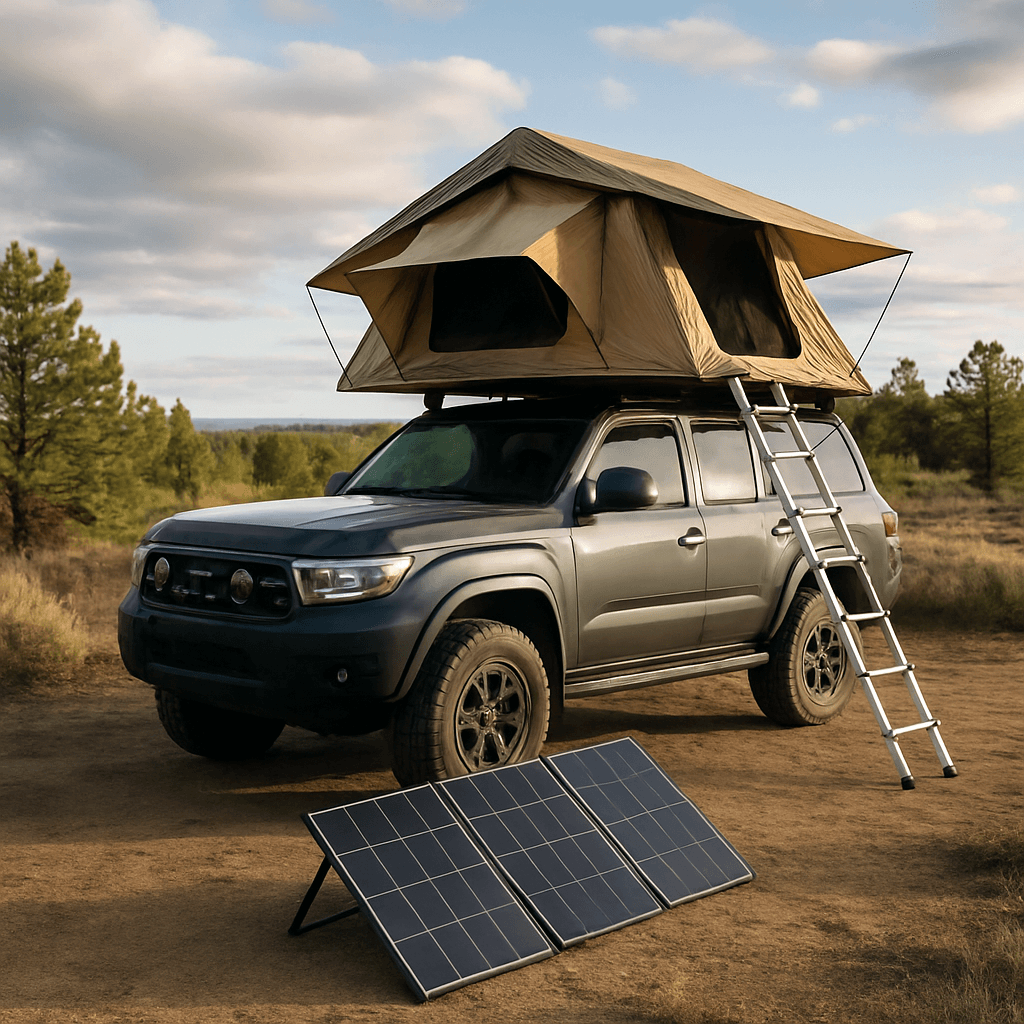
Overlanding — extended, self-sufficient vehicle-based travel through remote terrain — demands a power setup that's more rugged and self-reliant than typical car camping, since you may go days without access to grid power or even cell service.
What Overlanding Power Setups Need
- Ruggedness — the unit needs to handle vibration, dust, and temperature swings across varied terrain
- Vehicle charging compatibility — recharging from your vehicle's alternator while driving between camps is often your most reliable power source
- Solar as backup, not primary — solar helps extend range, but overlanding routes don't guarantee reliable sun exposure
- Enough capacity for multi-day stretches without resupply
- E-bike or e-scooter charging, if that's part of your setup — see our charging an electric bike guide for the extra capacity to budget
Recommended Capacity Range
Most overlanding setups land in the 1,000-2,000Wh range, balancing weight/space constraints against genuine multi-day self-sufficiency. A Jackery Explorer 1000 v2 suits lighter, shorter-duration trips; a Bluetti AC200L with its dual AC+solar charging and built-in 30A outlet suits longer, more demanding expeditions.
Vehicle Charging: Your Most Reliable Recharge Source
Unlike van life or RV setups that often have access to shore power periodically, overlanding relies heavily on car charging while driving between camps. Check your power station's DC/car charging input rating — most mainstream units support this, but charging speed varies significantly, so don't assume a full recharge from a single day's drive.
Solar as a Supplement
Foldable panels mounted or carried alongside your vehicle add meaningful recharge capacity during camp stops, especially useful for multi-day stretches without driving. See our power station and solar panel bundle guide for compatible combinations.
If you're also running camera or drone equipment for content creation on the road, see our power stations for photographers and videographers guide for load-specific numbers. And if your overlanding trips are shorter weekend runs rather than multi-day expeditions, our weekend camping power guide covers a lighter-duty sizing approach.
Mounting and Protection
Secure your power station against a rugged mount or padded storage compartment — overlanding terrain involves more vibration and jostling than typical road travel, and an unsecured unit risks damage or becoming a hazard during rough sections. Keep it accessible but protected from dust and moisture where possible.
Frequently Asked Questions
Is solar or car charging more reliable for overlanding?
Car charging while driving is generally more predictable, since it doesn't depend on weather or camp positioning — but solar is valuable as a supplement for extended stops or multi-day stretches without driving. Most serious overlanding setups use both.
How much capacity do I need for a week-long overlanding trip?
It depends heavily on your equipment (fridge, lighting, device charging, any powered recovery gear) and how often you're driving (and thus recharging via the vehicle). A 1,000-2,000Wh unit with supplemental car and solar charging comfortably covers most week-long trips — use our wattage sizing guide to calculate your specific load.
Related Articles
 Use Cases
Can a Power Station Work as a UPS for Your Computer or Router?
Many power stations offer a UPS or EPS mode that switches to battery power during an outage. Here's how it actually works, and where it falls short of a dedicated UPS.
 Use Cases
Portable Power Stations for Van Life: Complete Setup Guide
Everything you need to know to build a reliable power system for van life or full-time RV living, from sizing to solar to daily habits that make it last.
 Use Cases
Using a Power Station to Charge an Electric Bike
E-bike charging away from home outlets is easier than you'd think with the right power station. Here's how to size one for your specific e-bike battery.