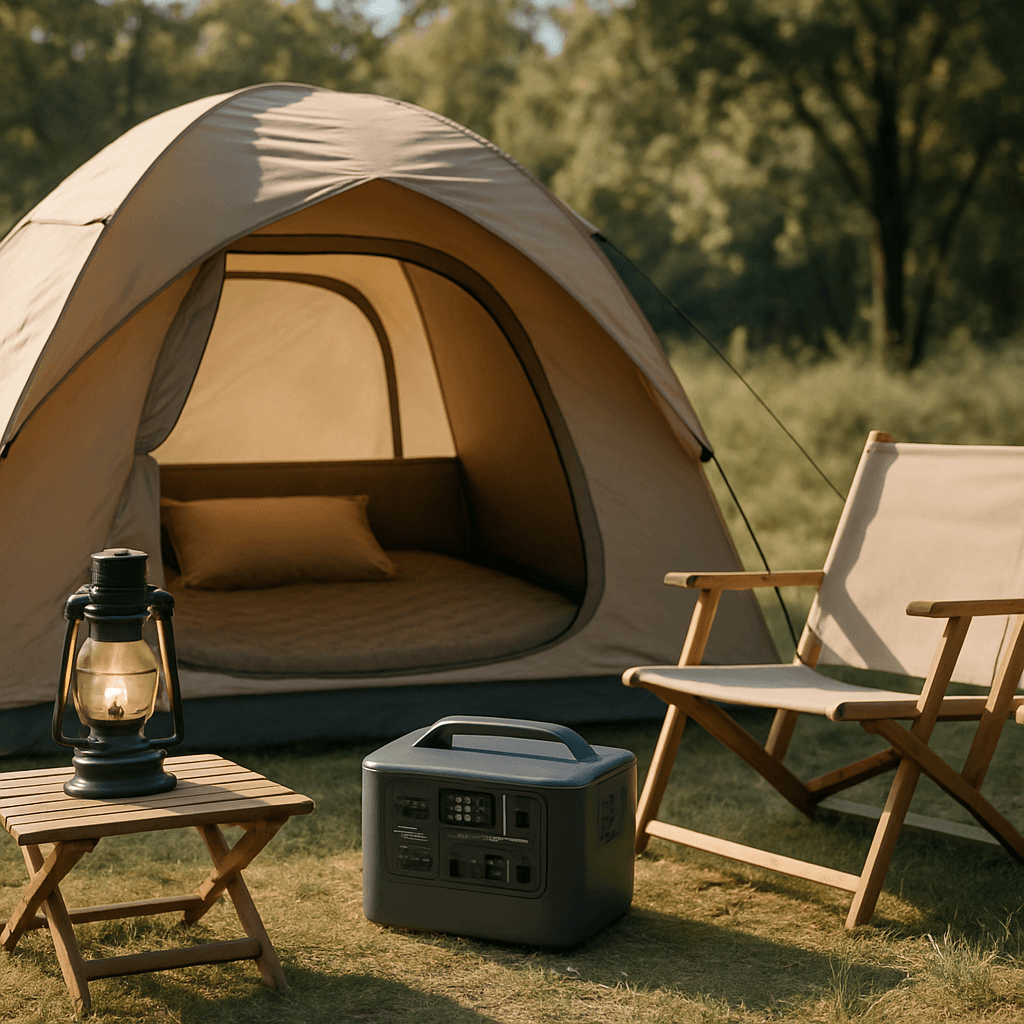
Most weekend camping trips need only 200–500Wh total — phone charging, lighting, and small electronics, no fridge — well within reach of an entry-level unit like the EcoFlow River 3 (245Wh). Weekend camping is one of the easiest use cases to size for — the loads are predictable, the duration is short, and you almost never need the largest capacity units on the market.
Typical Weekend Camping Load
| Device | Watts | Hours (2 days) | Total Wh |
|---|---|---|---|
| Phone charging (2 people) | 15W each | 4h total | 60Wh |
| LED lantern/string lights | 10W | 6h | 60Wh |
| Portable speaker | 15W | 4h | 60Wh |
| Camp fan | 20W | 6h | 120Wh |
| Camera battery charging | 20W | 2h | 40Wh |
| Total | ~340Wh |
This is a light, realistic weekend load — most solo or couple camping trips land in the 200-500Wh range total, well within reach of a single charge from an entry-level unit.
What This Means for Sizing
A 245-300Wh unit like the EcoFlow River 3 comfortably covers a typical weekend without needing a recharge. If you're bringing a cooler or mini fridge, a slightly larger unit like the Bluetti AC70 (768Wh) gives you meaningful headroom.
Adding a Cooler or Mini Fridge Changes the Math
A 12V cooler or mini fridge typically draws 40-80W and cycles on and off rather than running continuously, but budgeting for roughly 8-12 hours of cumulative runtime per day is a safe estimate. See our running a mini fridge guide for exact numbers, since this single item often doubles or triples your total weekend power budget.
Camping at a Festival Instead?
Multi-day music festivals have a different, heavier load profile than typical weekend camping — see our power stations for music festivals guide if that's closer to your actual trip.
Group Camping Trips
If you're camping with a larger group sharing one power station, multiply your per-person device charging estimate by the group size, and add any shared equipment (a group cooler, shared lighting, a portable speaker system). Group trips often justify a mid-capacity unit like the Jackery Explorer 1000 v2 even without a fridge, simply due to the number of devices charging.
Don't Forget Solar for Longer Trips
For trips longer than a weekend, or if you want to avoid carrying a fully-charged unit as your only power source, pairing with a small foldable solar panel extends your trip indefinitely without adding much weight — see our solar panel bundle guide for good starter combinations.
Frequently Asked Questions
Is 245Wh really enough for a whole camping weekend?
For phone/device charging, lighting, and small electronics without a fridge, yes — 245Wh comfortably covers a typical 2-day trip with room to spare. Add a fridge or cooler and you'll want to size up significantly.
Should I bring a bigger power station than I calculate I need?
A little buffer (20-30% above your calculated need) is reasonable to account for colder weather reducing battery efficiency or an unplanned extra device, but there's rarely a reason to bring a 2,000Wh+ unit for a standard weekend trip — see our full sizing guide for the general framework.
Related Articles
 Use Cases
Can a Power Station Work as a UPS for Your Computer or Router?
Many power stations offer a UPS or EPS mode that switches to battery power during an outage. Here's how it actually works, and where it falls short of a dedicated UPS.
 Use Cases
Portable Power Stations for Van Life: Complete Setup Guide
Everything you need to know to build a reliable power system for van life or full-time RV living, from sizing to solar to daily habits that make it last.
 Use Cases
Using a Power Station to Charge an Electric Bike
E-bike charging away from home outlets is easier than you'd think with the right power station. Here's how to size one for your specific e-bike battery.