
A full remote workday — laptop, monitor, router, and phone charging — runs close to 900Wh, well within a 1,000Wh-class power station's capacity for a single day. For remote workers, a power outage isn't just an inconvenience — it can mean missed meetings, lost income, or scrambling to find a coffee shop with outlets. Here's how to build a home office backup plan that actually works.
Typical Home Office Load
| Device | Watts | Hours (workday) | Total Wh |
|---|---|---|---|
| Laptop | 65W | 8h | 520Wh |
| Monitor | 30W | 8h | 240Wh |
| Wi-Fi router | 10W | 8h | 80Wh |
| Desk lamp | 10W | 4h | 40Wh |
| Phone charging | 10W | 2h | 20Wh |
| Total | ~900Wh |
A full remote workday, including a monitor and router, runs close to 900Wh — meaningfully more than most people assume, largely because it's an all-day continuous load rather than intermittent device charging.
The Internet Problem
Your laptop battery already provides some buffer, but your internet connection is often the real bottleneck during a blackout — your router and modem need power too, and if your ISP's infrastructure loses power upstream, no amount of backup power at home solves that. Consider a cellular hotspot as backup connectivity alongside your power plan, since router power alone doesn't guarantee connectivity during a wider-area outage.
Recommended Sizing
For a single remote workday, a 1,000Wh-class unit like the Jackery Explorer 1000 v2 comfortably covers laptop, monitor, and router with room for phone charging too. If outages in your area tend to run multiple days, or you're supporting more than one home office setup, size up to a EcoFlow Delta 2 Max or similar.
Prioritize Continuous Output, Not Just Capacity
Running a laptop, monitor, and router simultaneously is a low-wattage but continuous load — nearly any mainstream power station's continuous output rating comfortably exceeds this combined draw, so capacity (how long it lasts) is the more important spec to focus on for this use case, not output.
Don't Forget UPS-Style Protection
If your home office equipment is sensitive to power fluctuations, look for a power station with pass-through/UPS mode, which keeps equipment running on wall power normally and switches to battery automatically and near-instantly the moment grid power drops — avoiding any interruption to an active video call or unsaved work. See our power station as a UPS guide for exactly how this works and where it falls short of a dedicated UPS.
Frequently Asked Questions
How long can a power station realistically keep my home office running?
A 1,000Wh unit covers roughly one full 8-hour remote workday with a laptop, monitor, and router; scale capacity up proportionally for multi-day outages. Use our wattage sizing guide to calculate your exact setup.
Does my internet still work if the power is out but my router has battery backup?
Only if your ISP's infrastructure (the equipment serving your neighborhood) also has power — a battery-backed router alone doesn't guarantee connectivity during a widespread outage. A cellular hotspot is a more reliable backup for internet access specifically.
Related Articles
 Use Cases
Can a Power Station Work as a UPS for Your Computer or Router?
Many power stations offer a UPS or EPS mode that switches to battery power during an outage. Here's how it actually works, and where it falls short of a dedicated UPS.
 Use Cases
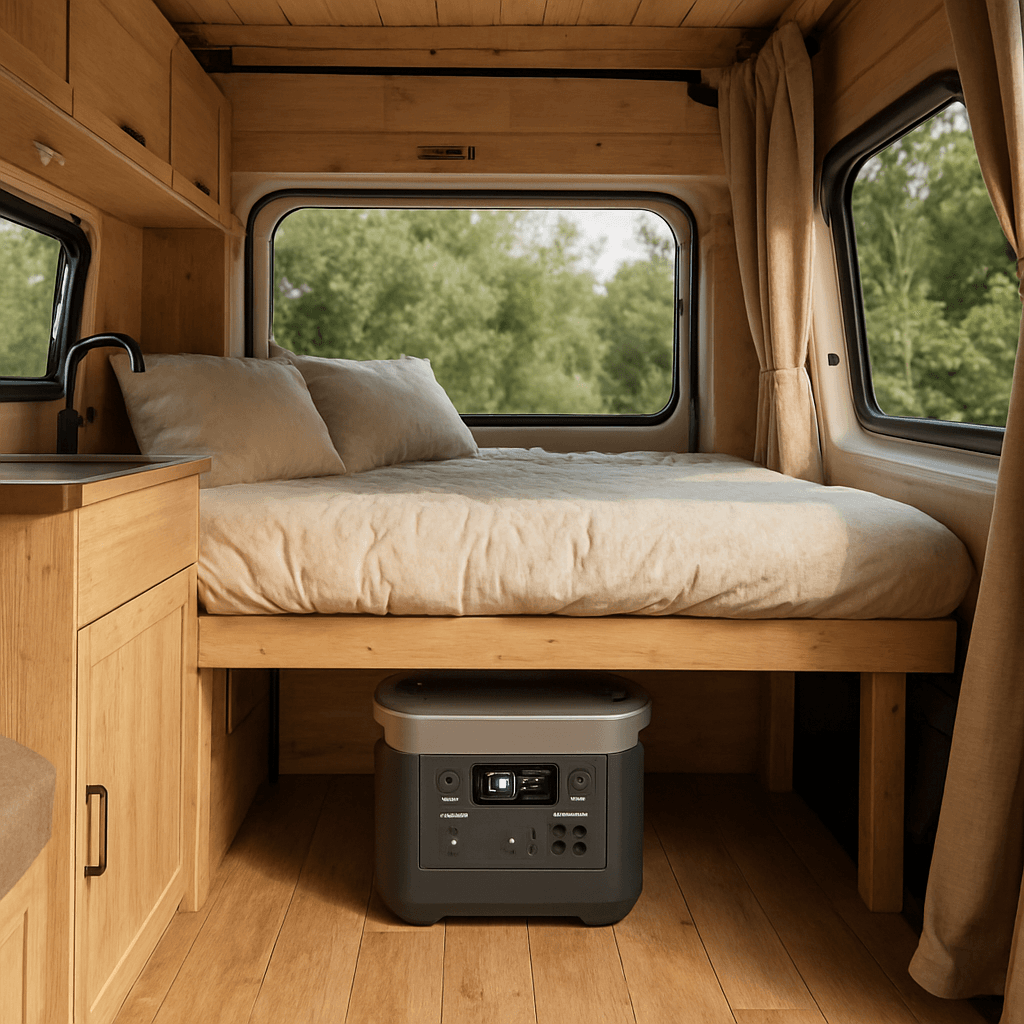
Portable Power Stations for Van Life: Complete Setup Guide
Everything you need to know to build a reliable power system for van life or full-time RV living, from sizing to solar to daily habits that make it last.
 Use Cases
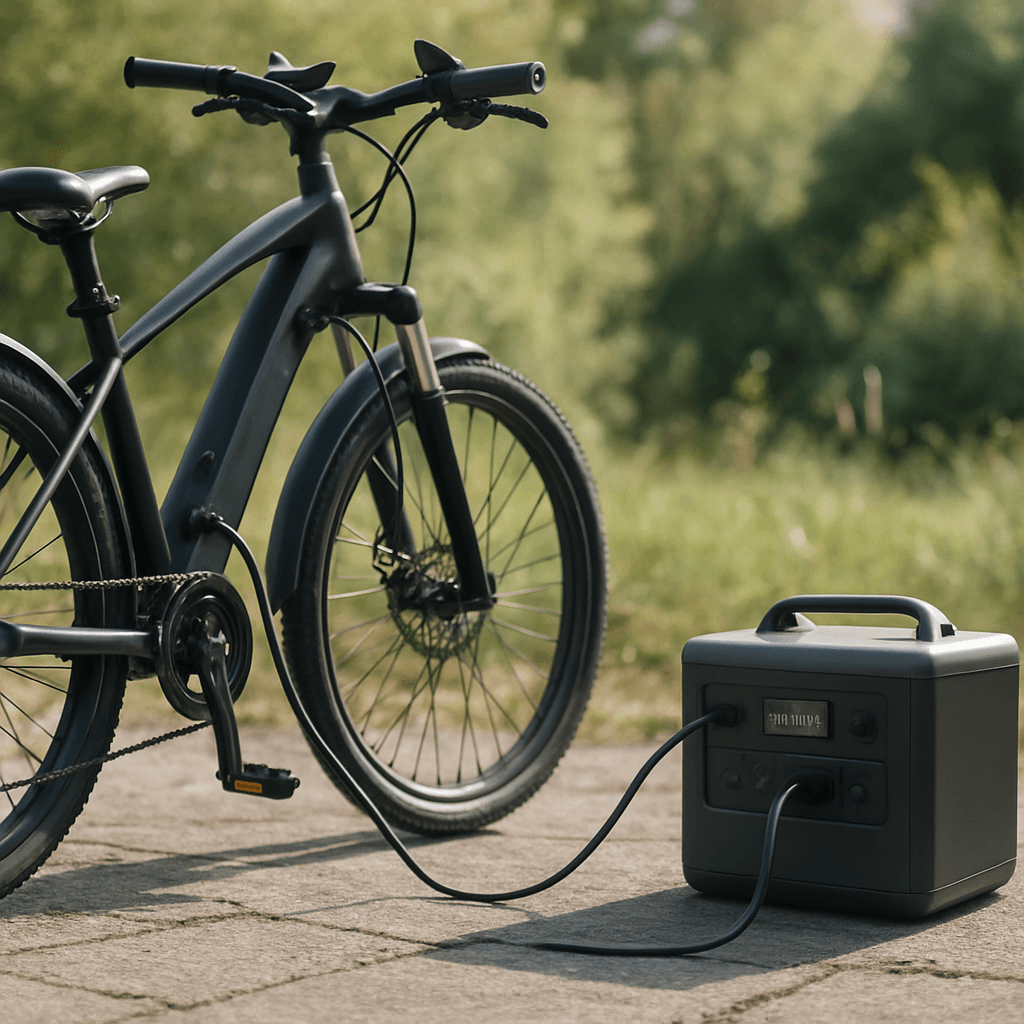
Using a Power Station to Charge an Electric Bike
E-bike charging away from home outlets is easier than you'd think with the right power station. Here's how to size one for your specific e-bike battery.