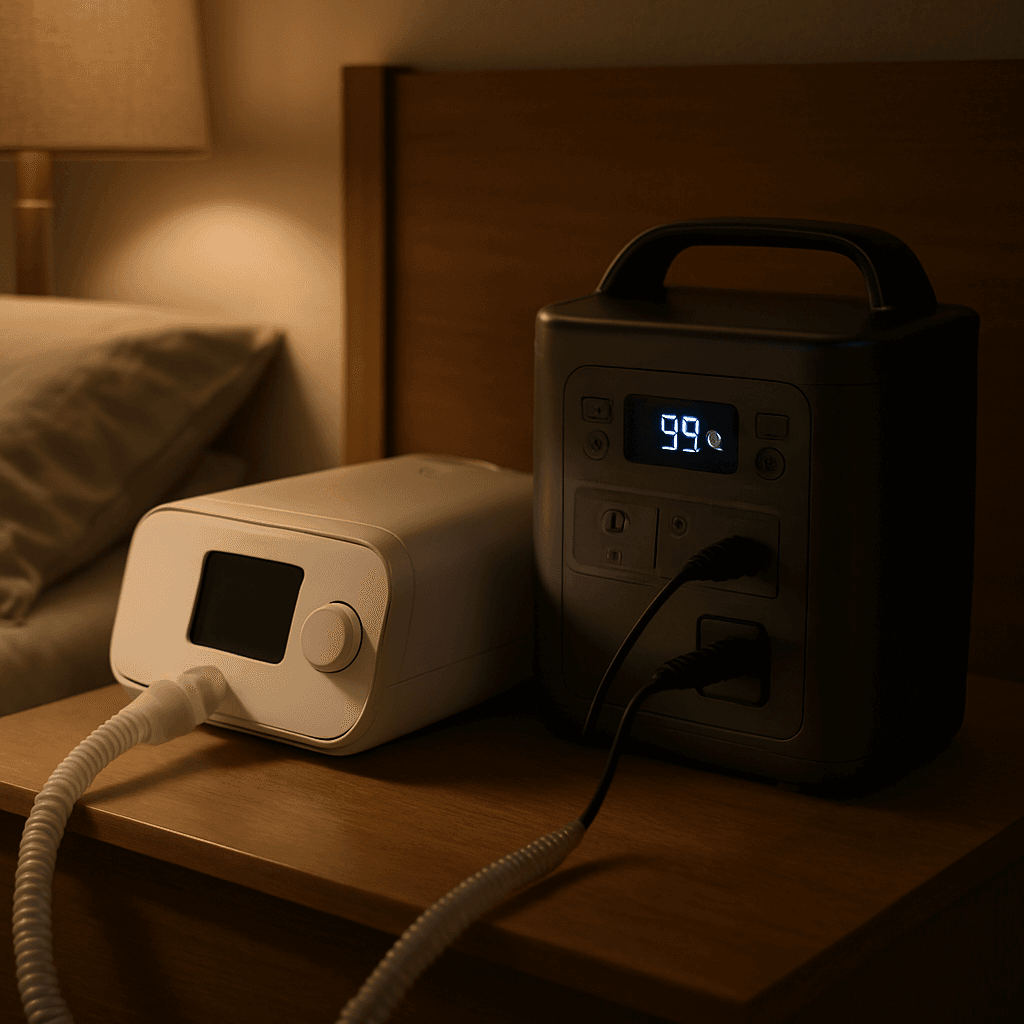
Best Power Station for CPAP Machines
For CPAP users, a power outage isn't just an inconvenience — it can mean a night without treatment. Here's how to choose the right power station specifically for CPAP backup, without overpaying for capacity you don't need.
What CPAP Machines Actually Draw
Most CPAP machines draw 30-60W without a humidifier, or 60-90W with the heated humidifier running. Over an 8-hour night, that works out to roughly 240-480Wh without humidifier, or 480-720Wh with it — see our full CPAP power outage guide for exact calculations by machine type.
Sizing Recommendation by Nights of Backup
| Nights of Backup Needed | Recommended Capacity |
|---|---|
| 1-2 nights, no humidifier | 300-500Wh |
| 1-2 nights, with humidifier | 500-800Wh |
| 5+ nights, no humidifier | 1,000Wh+ |
| 5+ nights, with humidifier, or CPAP plus other essentials | 1,500-2,000Wh+ |
Our Top Picks for CPAP Users
Bluetti AC70 — 768Wh, quiet, compact. Covers roughly 16-17 nights of no-humidifier CPAP use per charge, with headroom for phone charging too.
Jackery Explorer 1000 v2 — 1,070Wh. The best pick if you want CPAP backup plus enough capacity to also cover a mini fridge or other essentials during a longer outage.
EcoFlow River 3 — 245Wh, the most compact and affordable option if you only need a few nights of no-humidifier backup and want minimal bulk on your nightstand.
What Else to Consider for CPAP Specifically
- Pure sine wave output — nearly all mainstream LiFePO4 power stations provide this, which is important for sensitive medical equipment; verify this spec if considering a lesser-known brand.
- Quiet operation — you'll be sleeping near it, so check for any fan noise at low loads (most CPAP-range draws are well within silent operation for LiFePO4 units).
- A pass-through/UPS mode if you want it plugged in and charging normally, only kicking in automatically the moment grid power drops — useful for CPAP users who don't want to manually switch over mid-sleep.
Power Station vs. a Dedicated CPAP Travel Battery
A power station and a CPAP-specific travel battery solve different problems — here's how to pick between them:
| Power Station | Dedicated CPAP Travel Battery | |
|---|---|---|
| Capacity | 245Wh–2,000Wh+ | Typically 40–100Wh |
| Nights of backup | Several to dozens | Usually 1–3 nights |
| Can power other devices | Yes (fridge, lights, phones) | No, CPAP only |
| Portability | Heavier, bulkier | Very compact, travel-friendly |
| Air travel | Almost never flies (exceeds FAA limits) | Often flies (check exact Wh rating) |
| Typical price | $200–$2,000+ | $100–$250 |
For home outage backup, a power station wins on flexibility and capacity. For air travel specifically, a small dedicated CPAP battery is usually the only option that's actually allowed on a plane — see our flying with a power station guide for the exact FAA rules.
Talk to Your Doctor or DME Provider
This guide covers general power sizing, not medical advice — if your CPAP pressure settings or humidifier use are unusual, or you rely on additional medical equipment overnight, confirm your specific power needs with your durable medical equipment (DME) provider or physician.
Frequently Asked Questions
Will a power station damage my CPAP machine?
No — a properly functioning LiFePO4 power station with pure sine wave output is safe for CPAP machines and won't damage the device, as long as the power station's continuous output rating exceeds your machine's power draw.
How many nights should I plan for when buying?
Plan for at least the length of a typical outage in your region, plus a buffer — for hurricane-prone areas, that often means 5-7 nights; see our hurricane preparedness checklist for regional guidance.
Related Articles
 Comparisons & Buying Guides
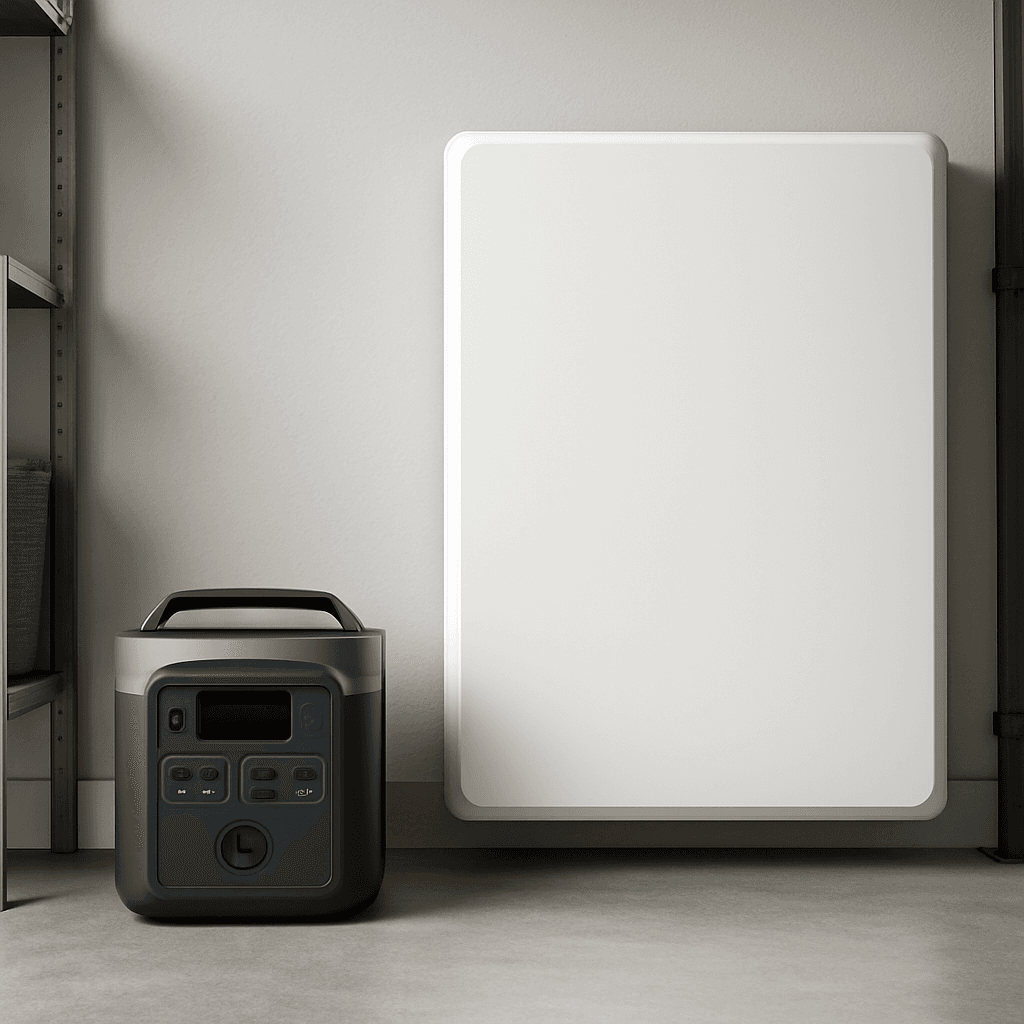
Portable Power Station vs. Whole-Home Battery System: Which Do You Actually Need?
A Tesla Powerwall costs $11,500-$16,000+ installed. A portable power station covers most of the same essentials for a fraction of that. Here's how to actually decide.
 Comparisons & Buying Guides
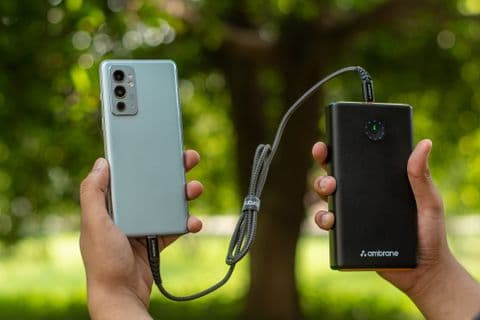
Power Bank vs. Power Station: What's the Real Difference?
They both store and dispense electricity, but a power bank and a power station aren't interchangeable. Here's what actually separates them and which one you need.
 Comparisons & Buying Guides
Can You Rent a Portable Power Station Instead of Buying One?
Renting is a real option if you only need backup power for a single trip or event. Here's where to actually rent one, real costs, and when renting beats buying.