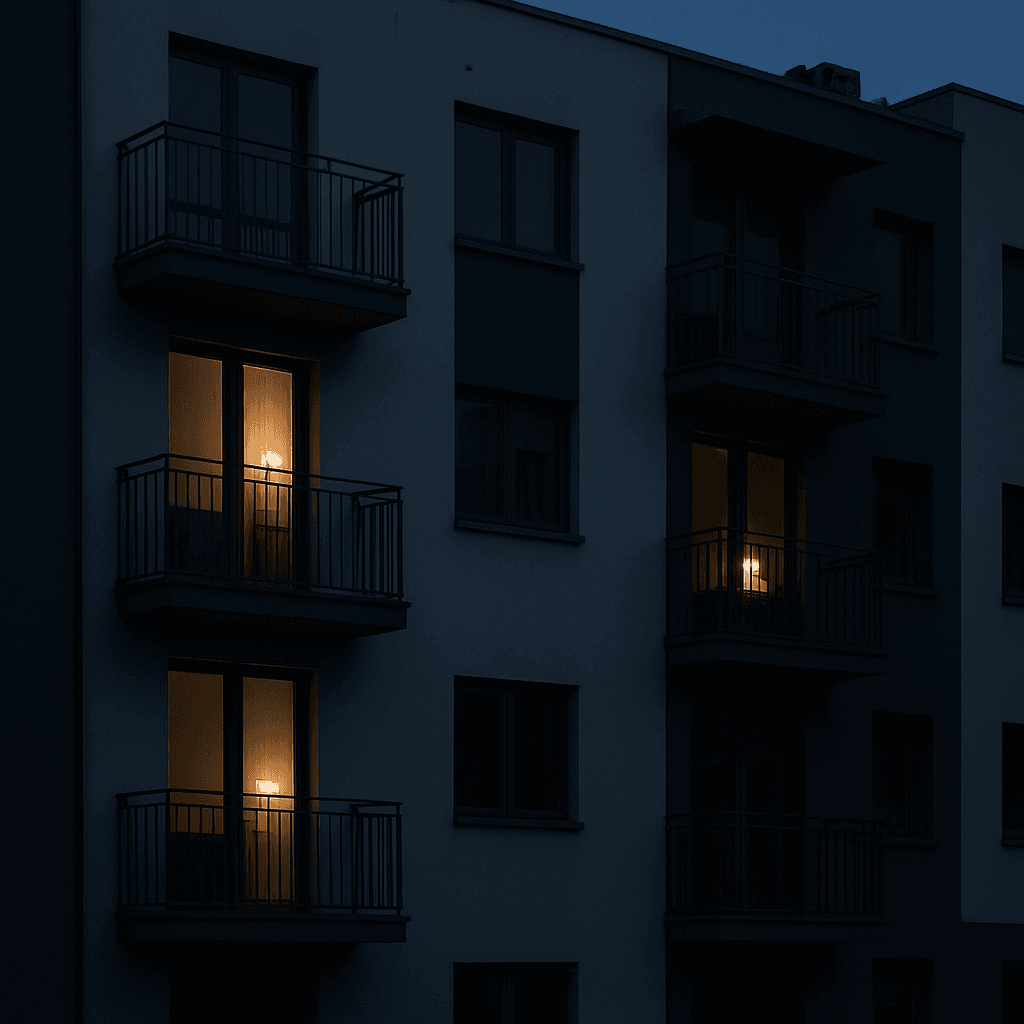
Emergency Power Solutions for Apartment Dwellers
Apartment living creates real constraints that homeowner-focused emergency prep advice often ignores: limited storage space, no outdoor area for a generator (which wouldn't be safe indoors anyway), and often stricter lease terms about what you can install or modify.
Why Power Stations Are Especially Well-Suited to Apartments
Unlike a gas generator, which requires outdoor space and can't safely run indoors, a portable power station is genuinely apartment-friendly — silent, zero emissions, and safe to use inside a unit of any size. This makes it the practical default backup power solution for apartment dwellers, not just one option among several.
Space-Conscious Sizing
Apartment storage is limited, so balance capacity needs against physical footprint — a compact unit like the Jackery Explorer 1000 v2 (23.8 lbs, easy to store in a closet) covers most apartment essentials (fridge, medical equipment, device charging) without requiring dedicated storage space the way a larger expandable system would.
Charging Without Outdoor Solar Access
Many apartment dwellers don't have practical access to outdoor solar charging (no yard, restricted balcony use, or simply no south-facing exposure). Plan around AC charging as your primary recharge method, and treat solar as a bonus if your specific unit has balcony or window access rather than a core part of your plan.
Check Your Lease for Any Restrictions
Most leases don't restrict portable power station ownership or use, since it involves no permanent installation or modification — but if you're considering anything beyond a portable unit (like a balcony solar panel), check your lease terms first.
Does Your Building Already Have Backup Power?
Many apartment complexes do have some backup generator capacity — but it's usually reserved for life-safety systems required by local building code, not individual units. That typically means emergency lighting in hallways and stairwells, fire alarm and sprinkler systems, and sometimes one elevator, not power to your actual apartment. Some newer or higher-end buildings do provide limited backup power to units (check your lease or ask your property manager directly), but you should never assume your unit is covered without confirming it in writing — plan your own backup power as if the building's generator, if it has one, won't reach your outlets.
Building Your Apartment Emergency Kit
Space constraints mean prioritizing multi-purpose, compact items — see our 72-hour emergency power kit guide and adapt the storage approach to fit a closet or under-bed space rather than a garage or basement.
Building Community Resilience
Apartment buildings often have shared spaces or neighbors in the same situation — consider coordinating with neighbors on backup power resources, especially for anyone with higher medical equipment needs, since a shared plan can be more resilient than everyone preparing entirely independently.
Frequently Asked Questions
Is it safe to run a power station in a small apartment?
Yes — power stations produce zero emissions and are safe to use in any size indoor space, unlike a gas generator which should never be run indoors under any circumstances due to carbon monoxide risk.
Can I charge a power station using my apartment balcony for solar?
If your balcony gets meaningful direct sunlight and your lease doesn't restrict it, yes — a compact foldable panel can work on many balconies, though output will typically be lower than a full ground-mounted array due to space and angle constraints.
Related Articles
 Emergency Preparedness
Can an EMP Destroy Your Power Station? What the Science Actually Says
Batteries are more EMP-resistant than most people assume, but the electronics inside a power station aren't. Here's the real science of EMP risk and Faraday cage protection.
 Emergency Preparedness
Winter Storm Power Outage Preparedness Guide (Texas Edition)
The 2021 Texas winter storm exposed how unprepared the grid can be for extreme cold. Here's how to plan backup power for Texas winter weather specifically.
 Emergency Preparedness
What to Do When the Power Goes Out: Step-by-Step Guide
The first 15 minutes after a power outage matter. Here's a clear, step-by-step guide for what to do the moment your power goes out.