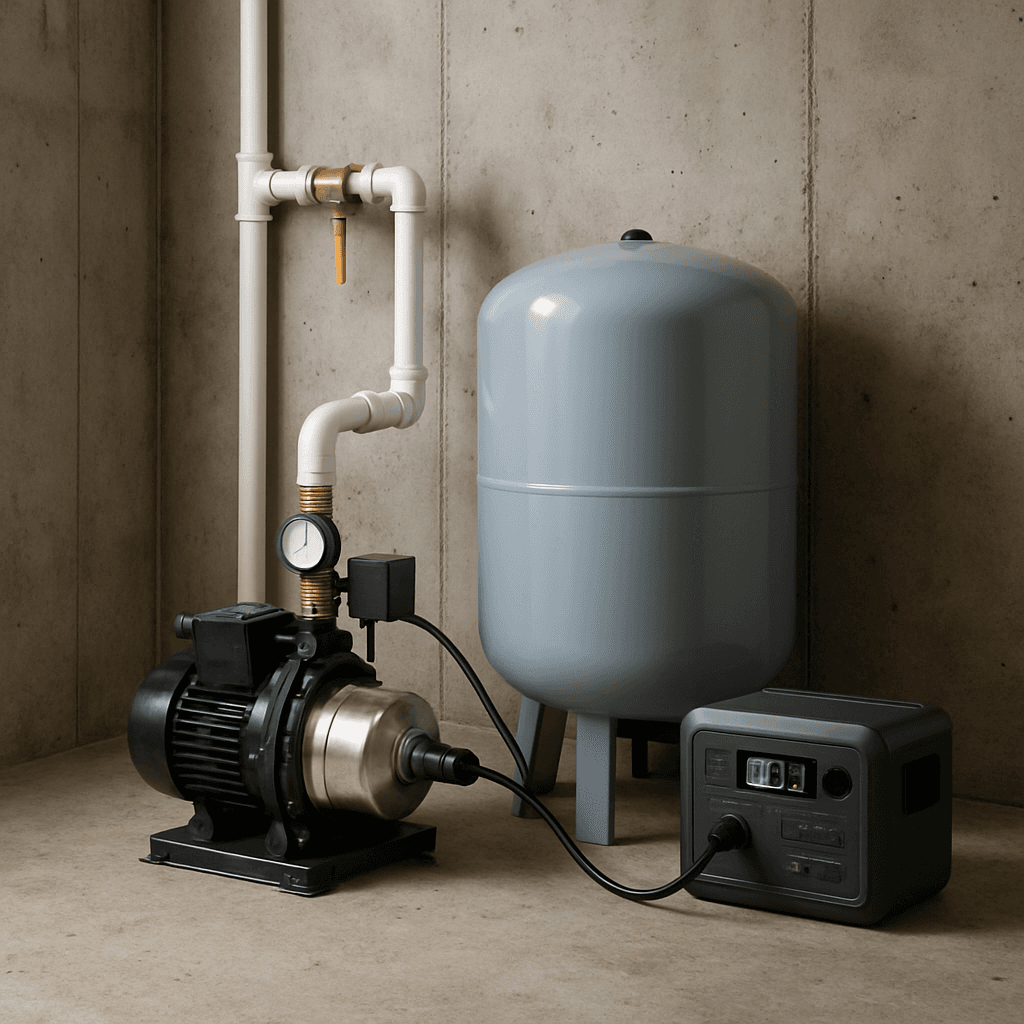
Backup Power for Well Pumps: What You Need to Know
For households on well water rather than municipal supply, a power outage means no running water at all — not just an inconvenience, but a genuine emergency-planning gap that's easy to overlook until it happens.
Well Pump Power Requirements
| Well Pump Type | Running Watts | Startup Surge |
|---|---|---|
| Shallow well pump (up to ~25 ft) | 500-750W | Up to 1,500W+ momentarily |
| Deep well submersible pump | 750-1,500W | Up to 3,000W+ momentarily |
Like sump pumps and mini splits, the startup surge is the critical spec — well pump motors draw a significant momentary spike when starting, which your power station's peak/surge output needs to comfortably exceed, or the pump may fail to start.
How Much Runtime Do You Actually Need?
Well pumps don't run continuously — they cycle on based on your pressure tank and actual water usage. Total daily runtime is often surprisingly short (potentially under an hour of cumulative pump-on time for typical household use), meaning total energy consumption is much lower than the running wattage suggests, even though the continuous/surge output requirement remains high.
Recommended Sizing
For a shallow well pump plus other essentials, a EcoFlow Delta 2 Max (2,400W output) provides comfortable headroom for the startup surge. For a deep well submersible pump with a higher surge requirement, a Jackery Explorer 2000 Plus (3,000W output) gives more margin.
Conserve Water Use During an Outage
Even with backup power for your well pump, conserving water use during an extended outage reduces how often the pump needs to cycle, stretching your power station's capacity further — treat an outage as a good time to minimize non-essential water use (laundry, long showers) regardless of your backup power situation.
Test Before You Need It
Confirm your specific well pump's actual startup surge and running wattage (check the pump's nameplate or your well system documentation) and test the combination with your power station during a calm period — don't wait for an actual outage to discover an incompatibility. Many pump nameplates list amps rather than watts; our watts to amps calculator converts between the two.
Understanding Your Pressure Tank's Role
Your well system's pressure tank stores a buffer of already-pressurized water, which is why taps don't lose pressure the instant the pump stops running — this buffer is exactly what makes intermittent pump cycling (rather than continuous running) possible, and it's also your built-in grace period at the very start of an outage. A properly charged pressure tank typically provides a household with normal water pressure for a short stretch even before backup power kicks in, giving you a few minutes of breathing room to get a power station connected rather than an instant loss of water pressure the moment the grid drops.
Multi-Story Homes Need More Pump Margin
Homes with multiple stories or long horizontal runs from the well to the point of use ask more of the pump to maintain adequate pressure throughout the house, which can mean a real-world power draw toward the higher end of your pump's rated range rather than the lower end. If your home has more than two stories, or the well is unusually far from the house, don't assume the lowest published wattage for your pump type applies to your specific setup — check your pump's actual nameplate rating rather than a generic table.
Whole-House Pressure Boosters Are a Different, Larger Load
Some homes with weak well output or long plumbing runs add a dedicated pressure booster pump separate from the main well pump — if you have one, it's an additional continuous or intermittent load to size for on top of the primary pump, not something to overlook because "the well pump" is already accounted for. Check whether your home has a separate booster system before finalizing your backup power sizing.
Frequently Asked Questions
What happens if my power station can't handle my well pump's startup surge?
The pump may fail to start, or your power station's overload protection may trip. Always verify your unit's surge/peak output rating comfortably exceeds your well pump's startup requirement before relying on it.
Can I run my well pump and other appliances at the same time?
Yes, as long as the combined continuous load (well pump plus everything else running simultaneously) stays within your power station's continuous output rating — check the total against your unit's spec before running everything at once.
Related Articles
 Emergency Preparedness
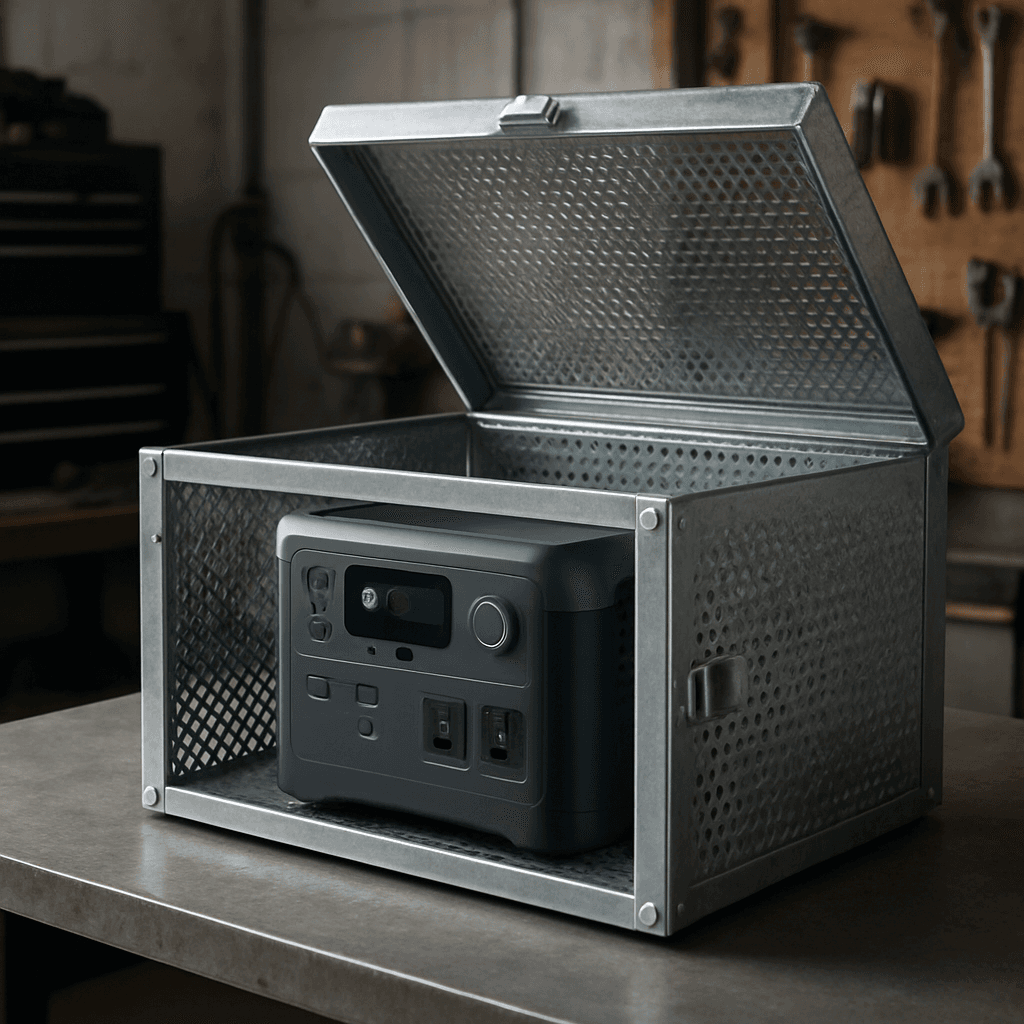
Can an EMP Destroy Your Power Station? What the Science Actually Says
Batteries are more EMP-resistant than most people assume, but the electronics inside a power station aren't. Here's the real science of EMP risk and Faraday cage protection.
 Emergency Preparedness
Winter Storm Power Outage Preparedness Guide (Texas Edition)
The 2021 Texas winter storm exposed how unprepared the grid can be for extreme cold. Here's how to plan backup power for Texas winter weather specifically.
 Emergency Preparedness
What to Do When the Power Goes Out: Step-by-Step Guide
The first 15 minutes after a power outage matter. Here's a clear, step-by-step guide for what to do the moment your power goes out.